
Layered Rooftops and Calçada Portuguesa Streets in Lisbon
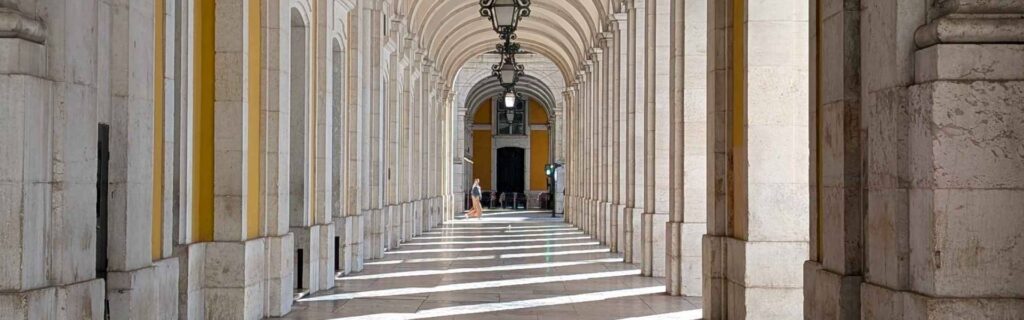
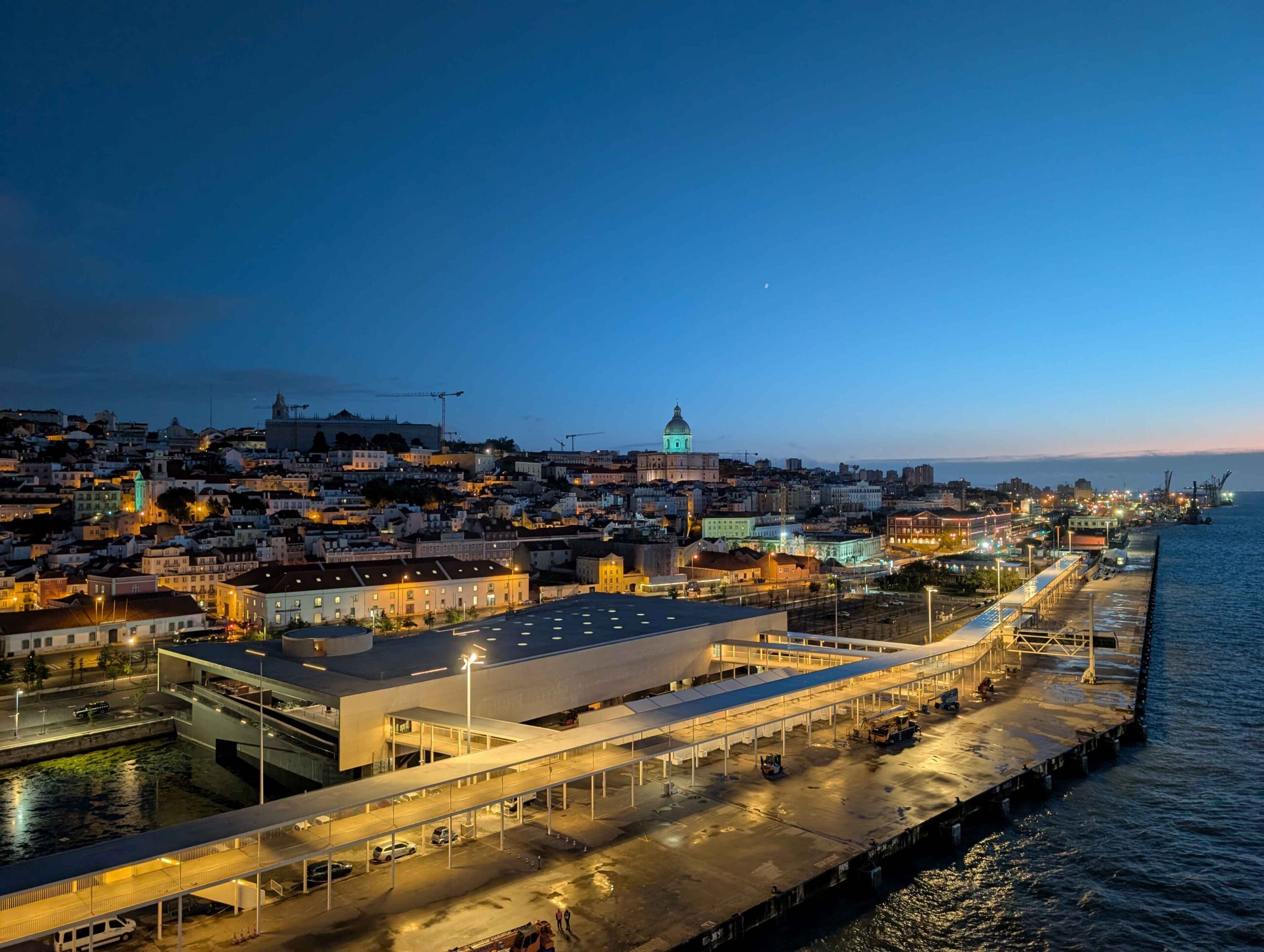
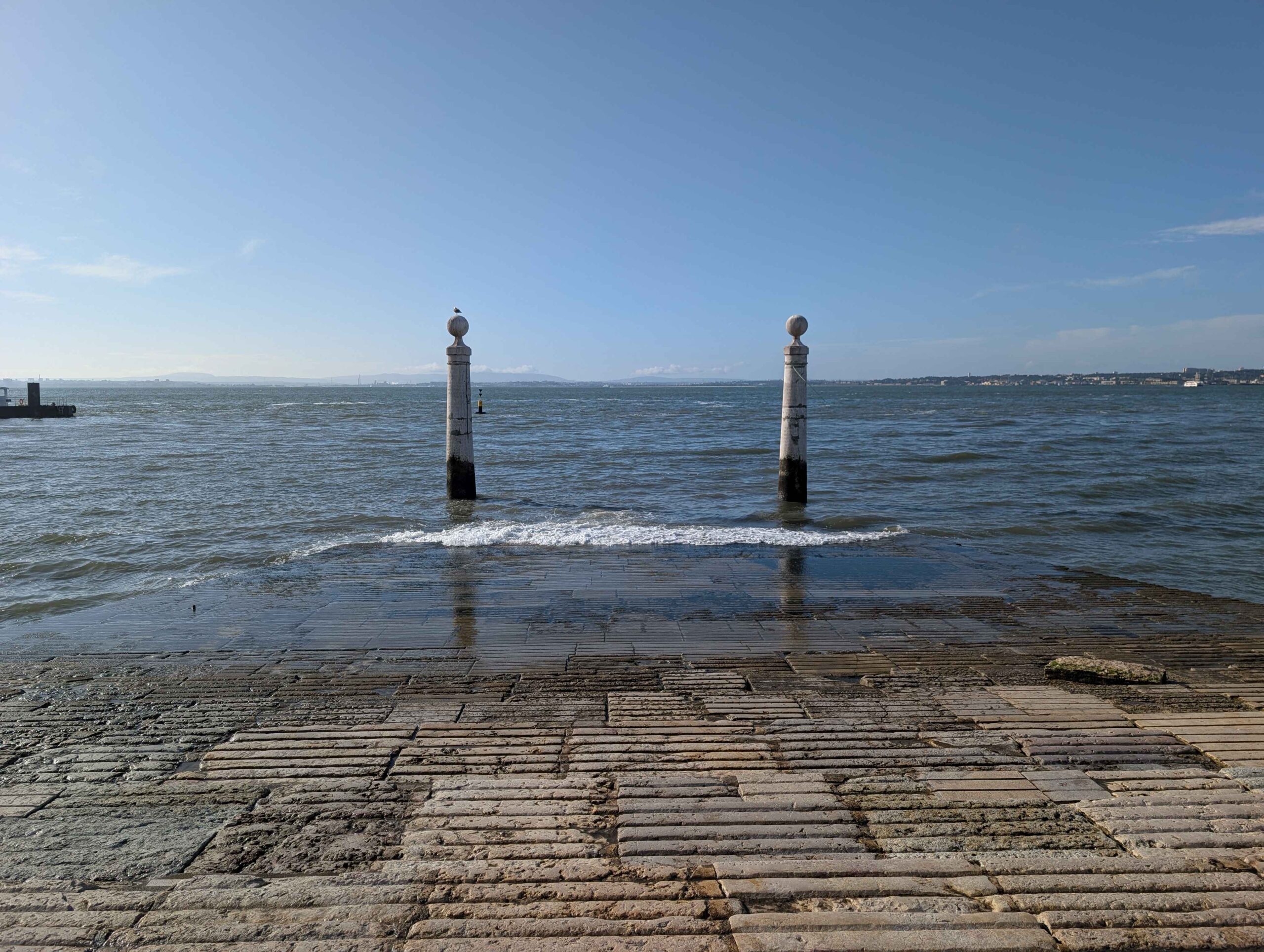
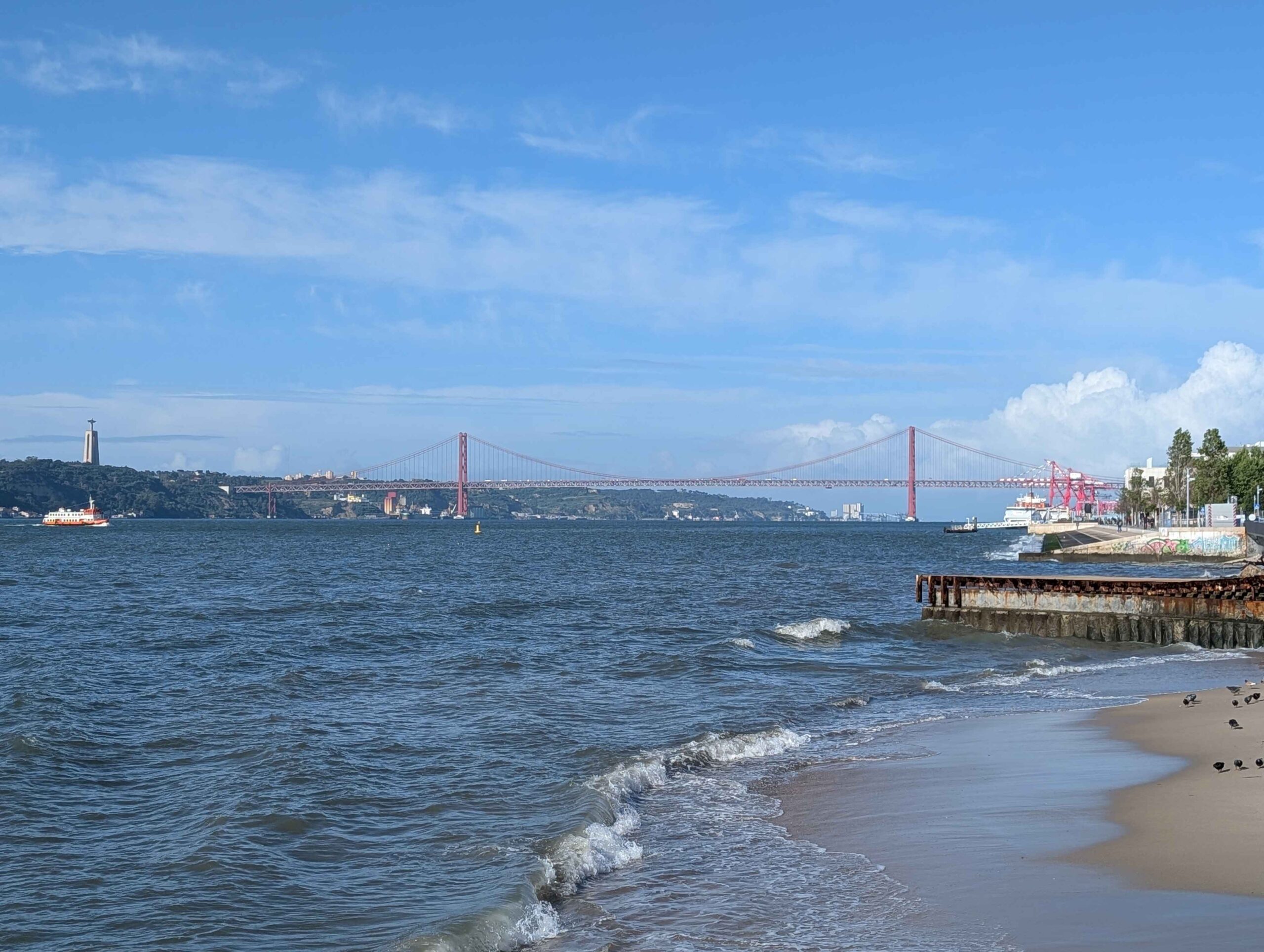
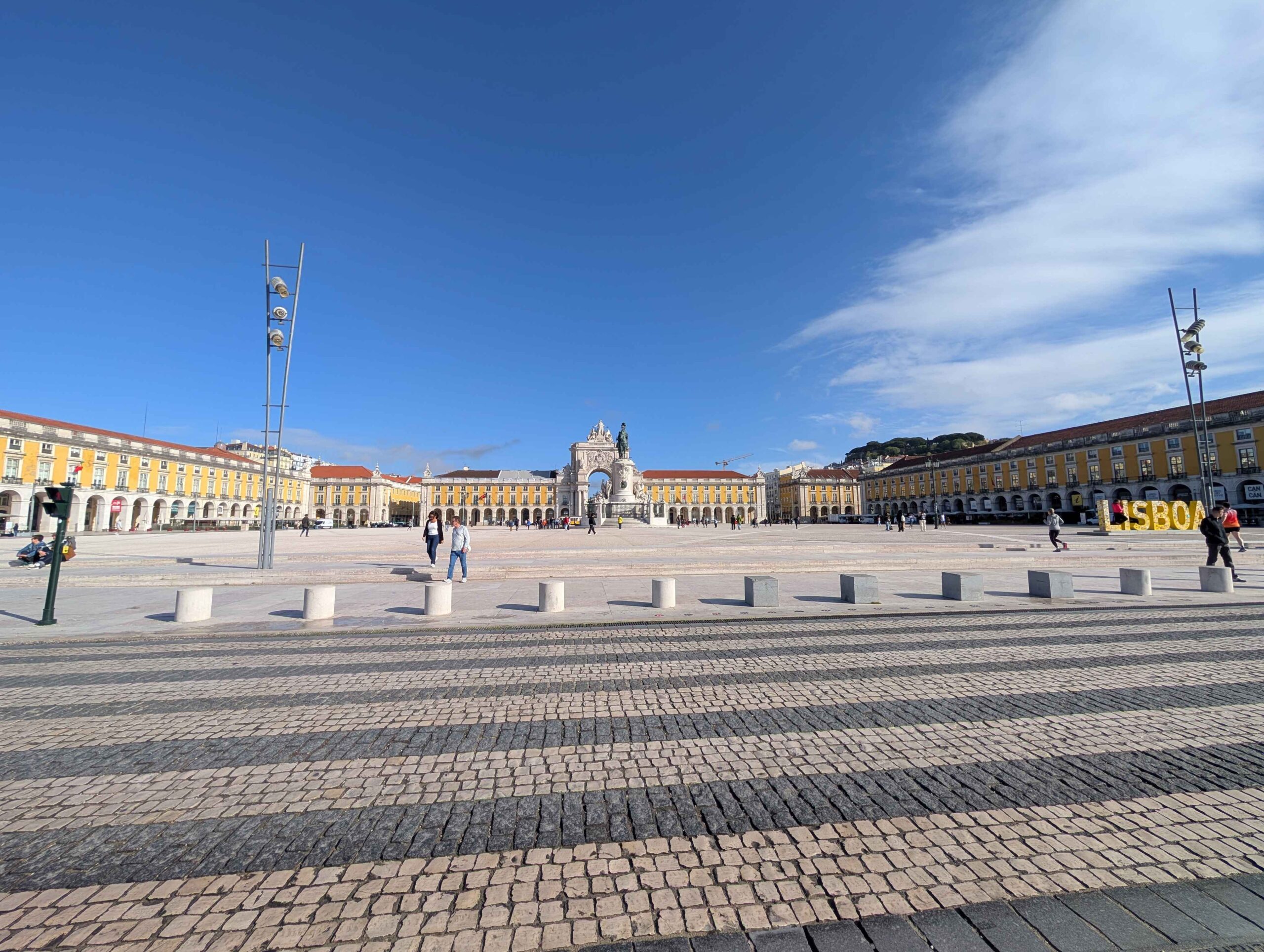
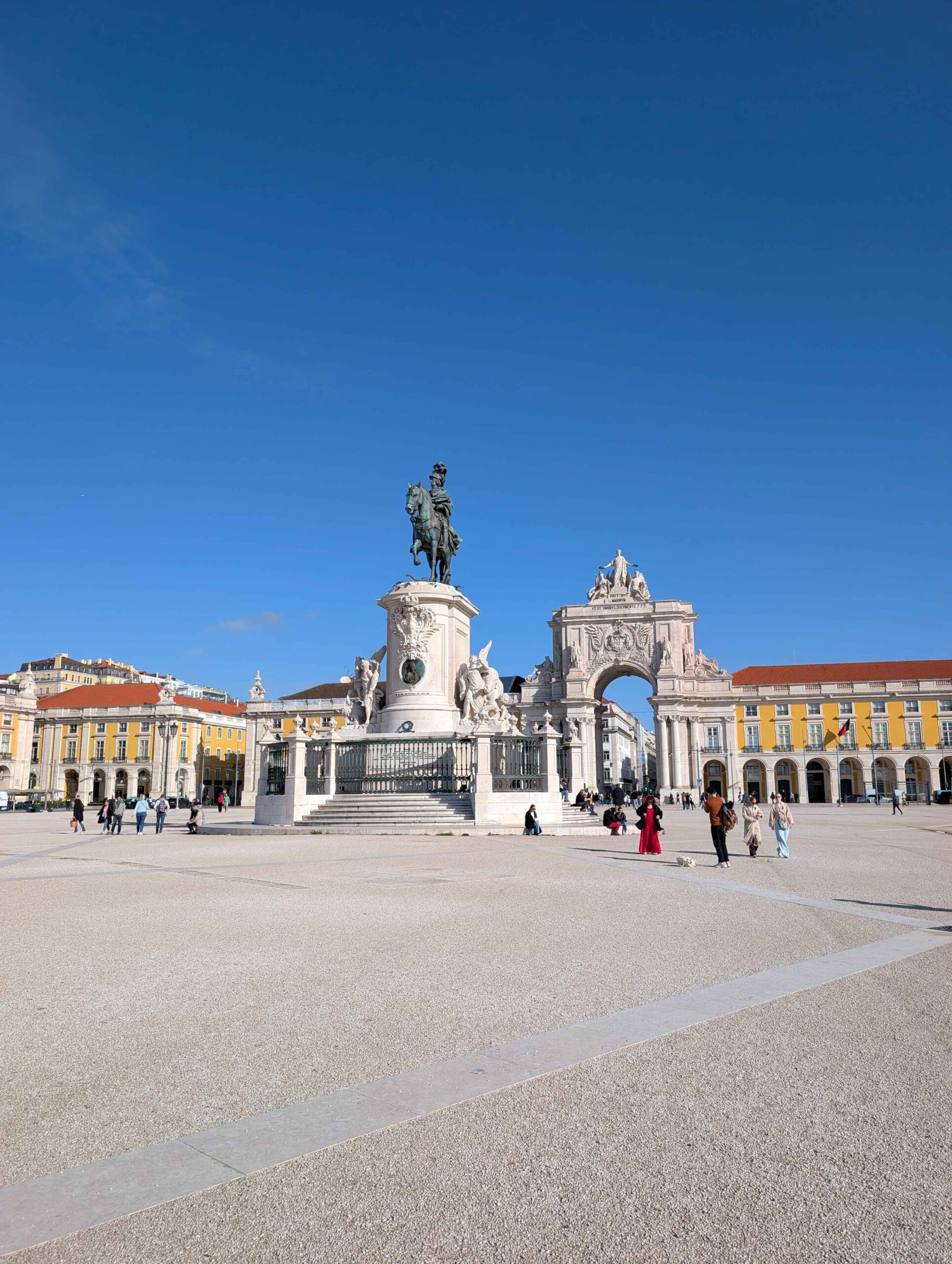
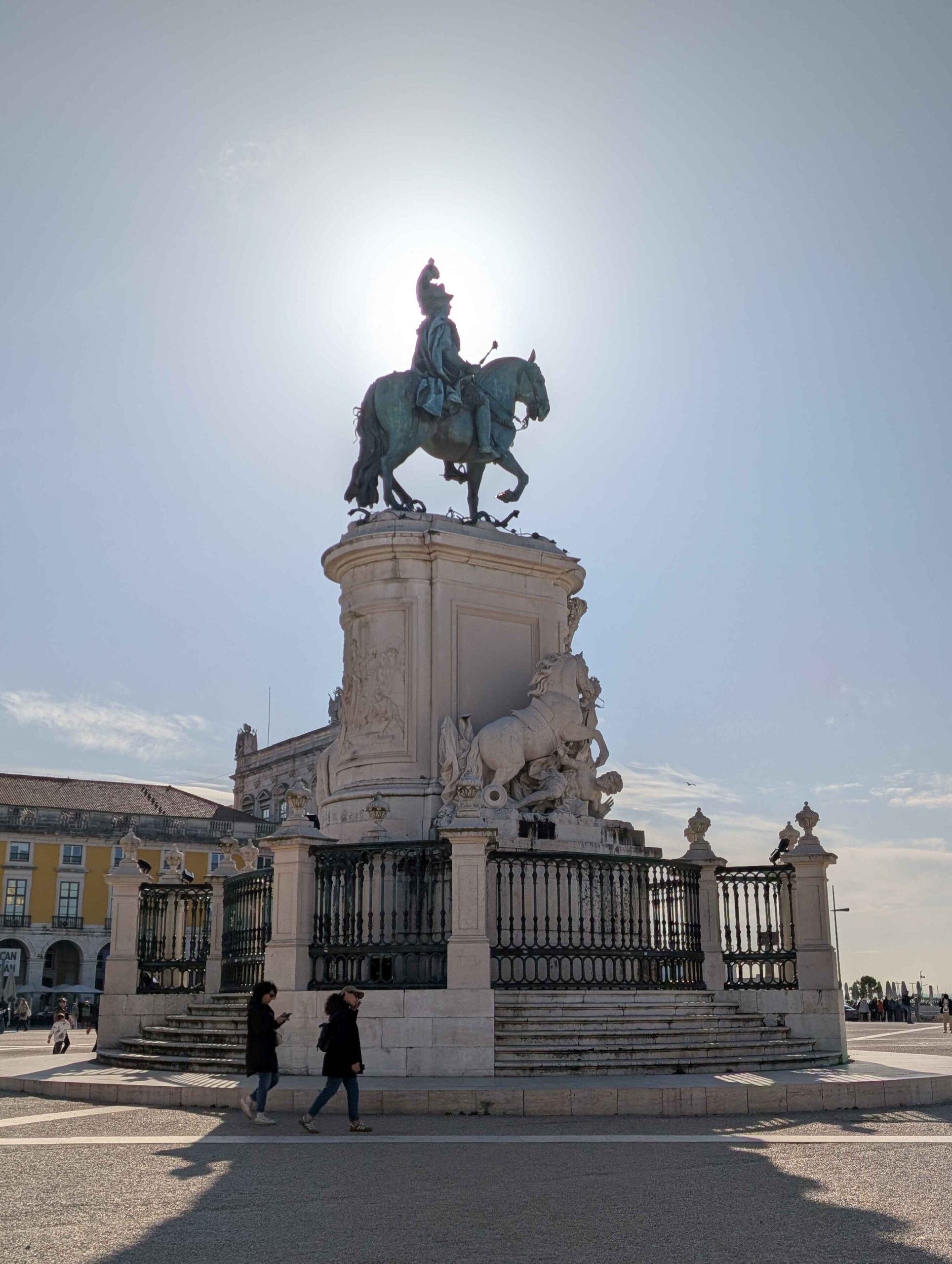
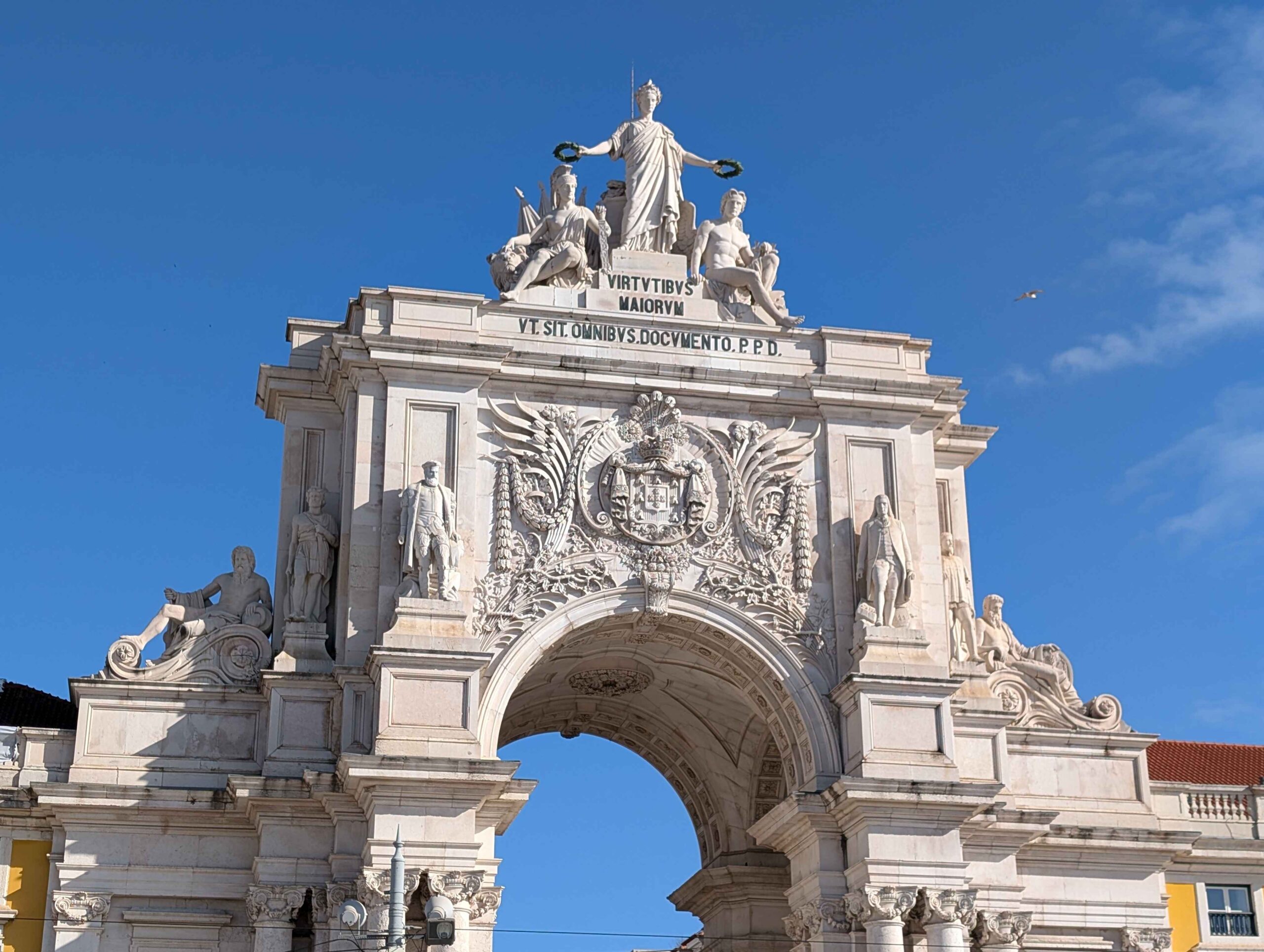
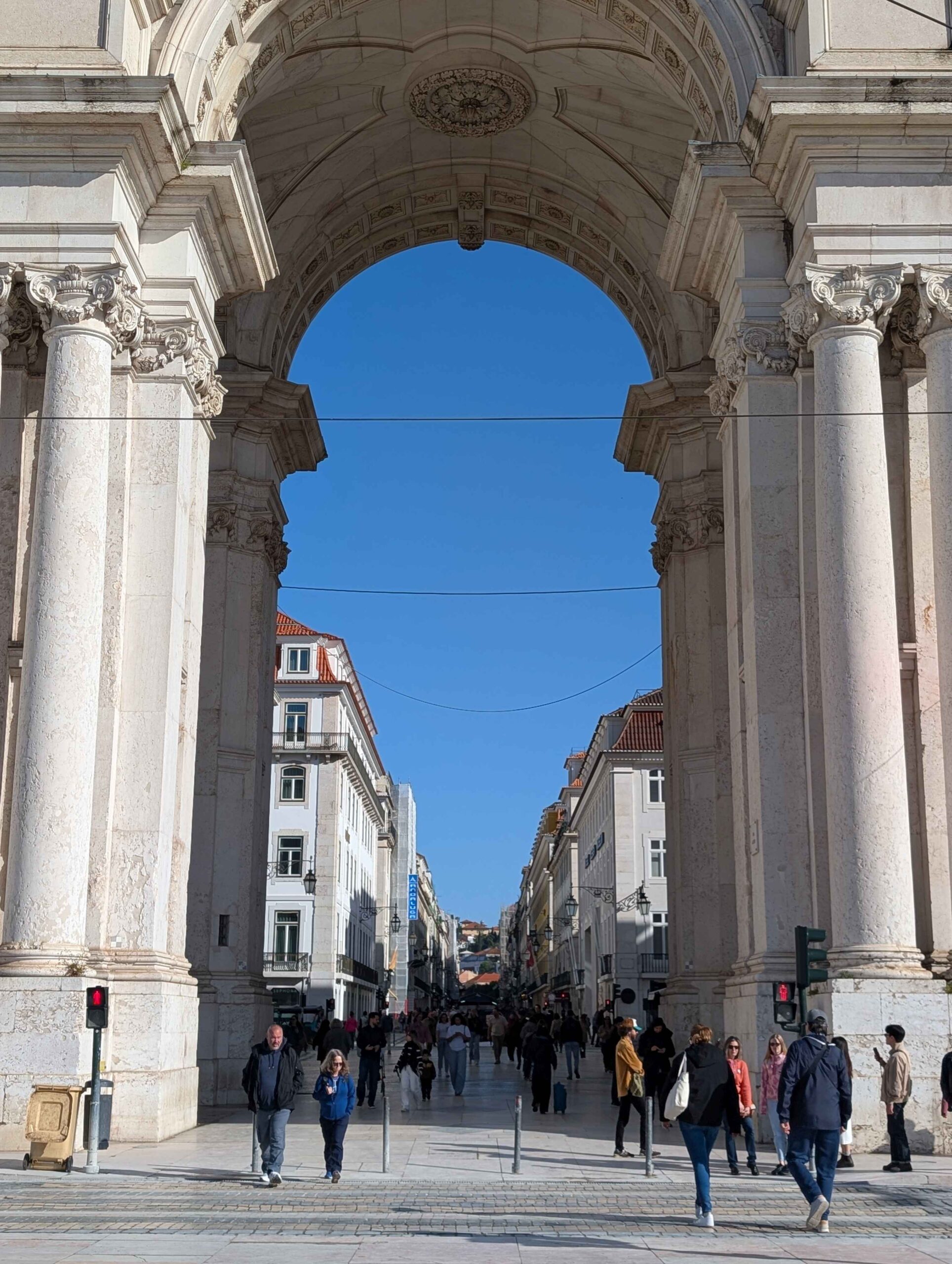
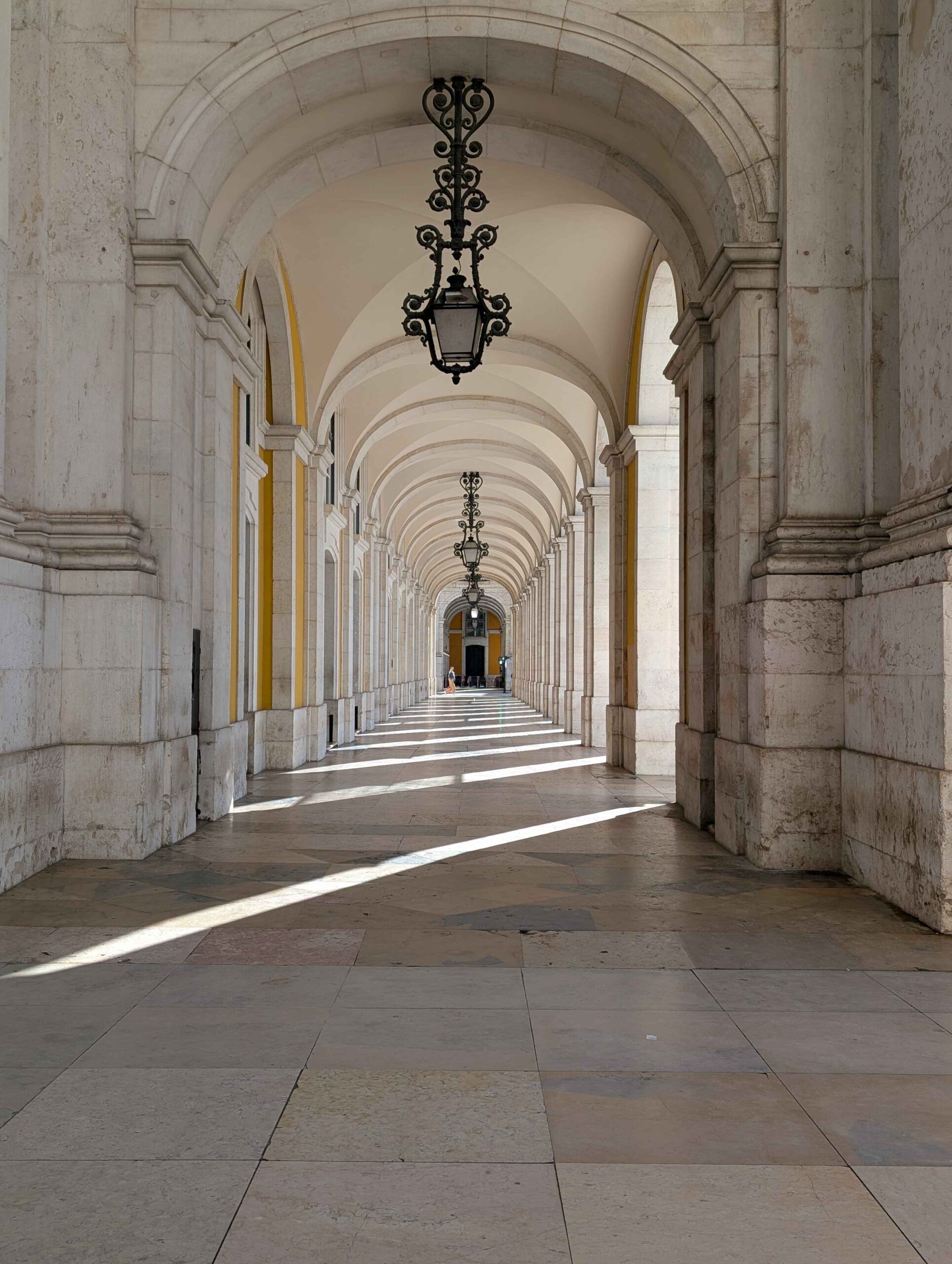
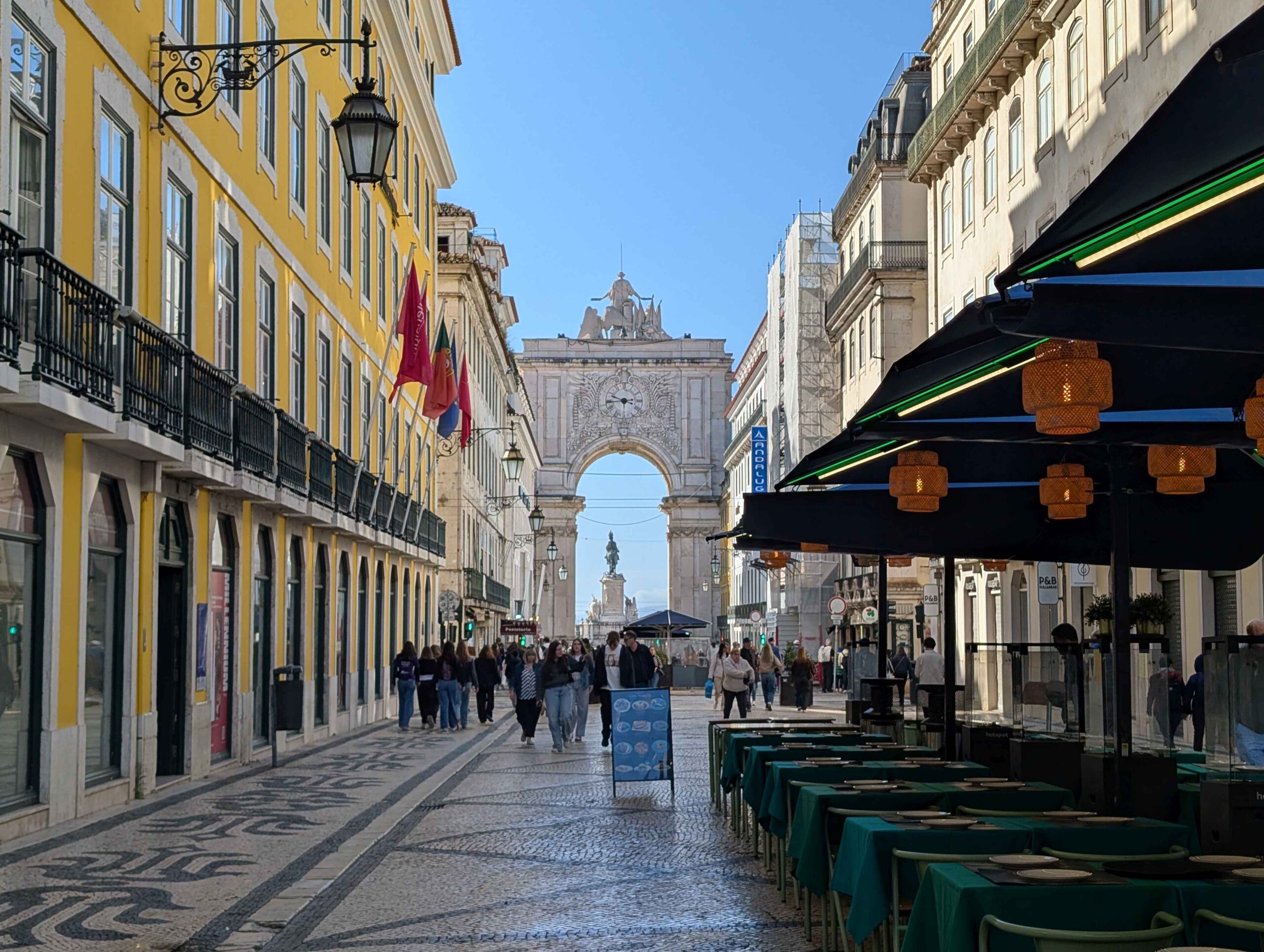
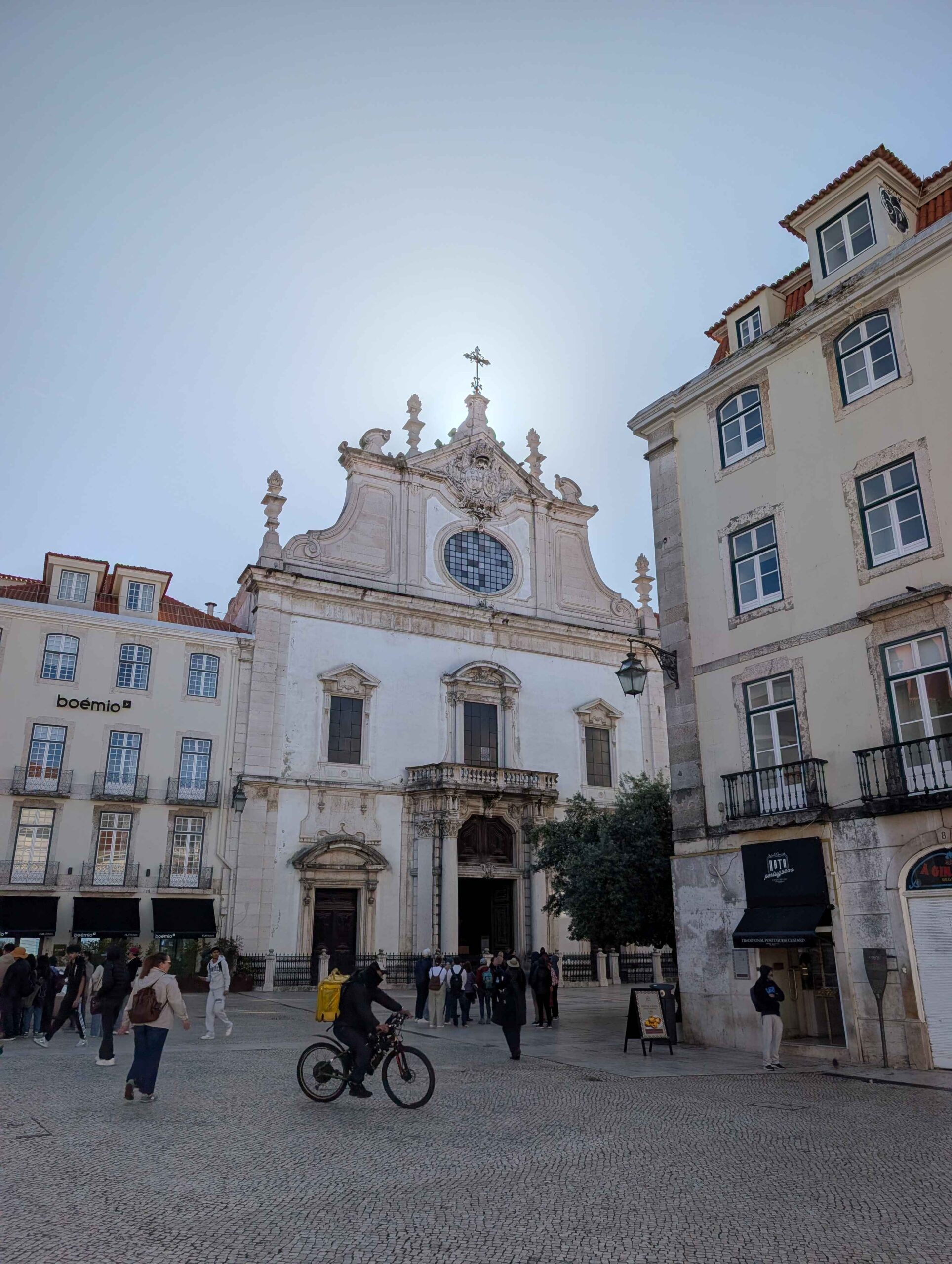
The city was already awake when I stepped off the ship. Arriving by cruise into Lisbon just before sunrise gave me a full transition from city lights fading out to the morning glow settling across the rooftops. By the time I reached Praça do Comércio and passed under the Arco da Rua Augusta, the streets of Baixa were coming alive and I knew the easy part of the day was already behind me.
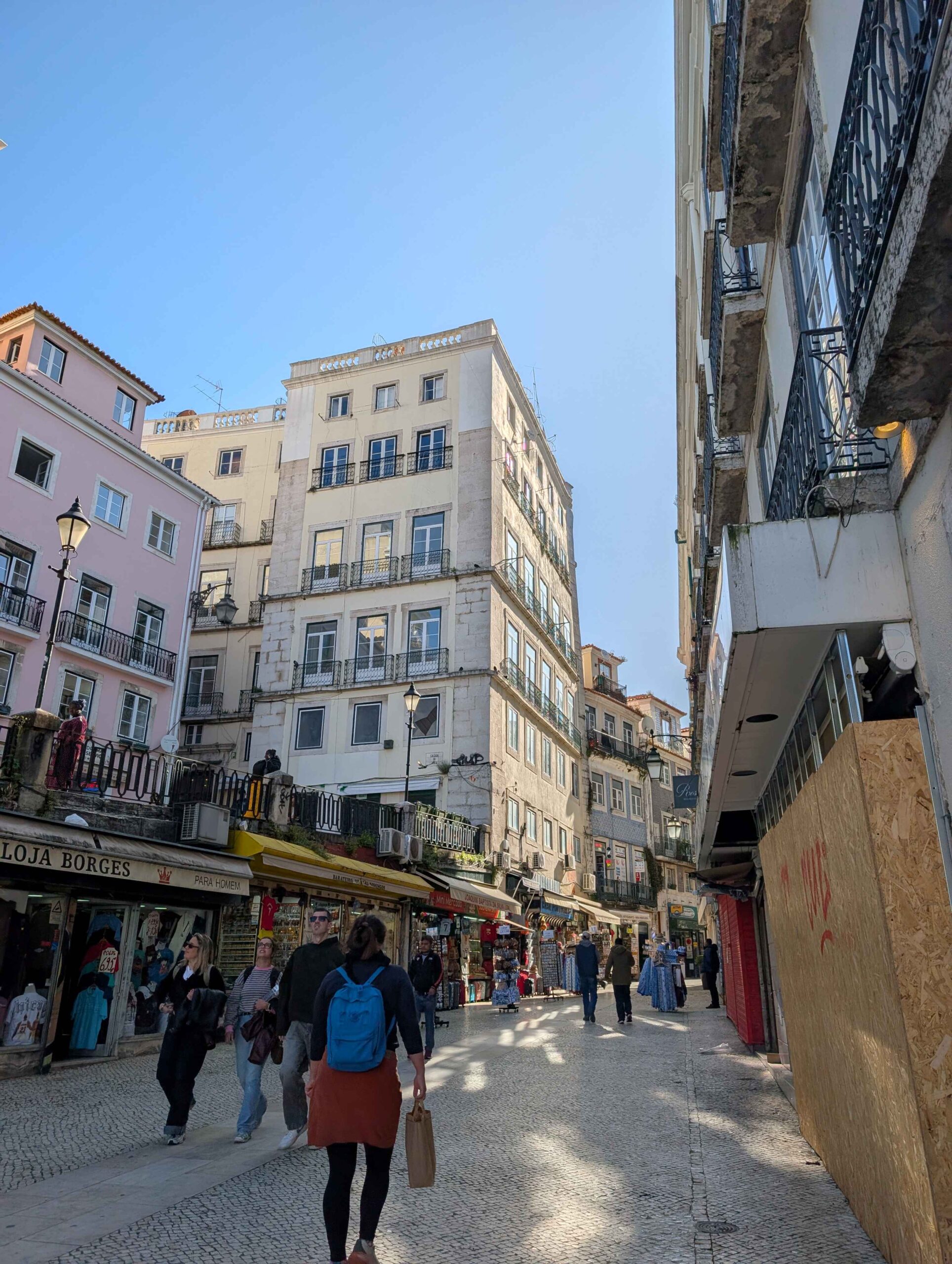
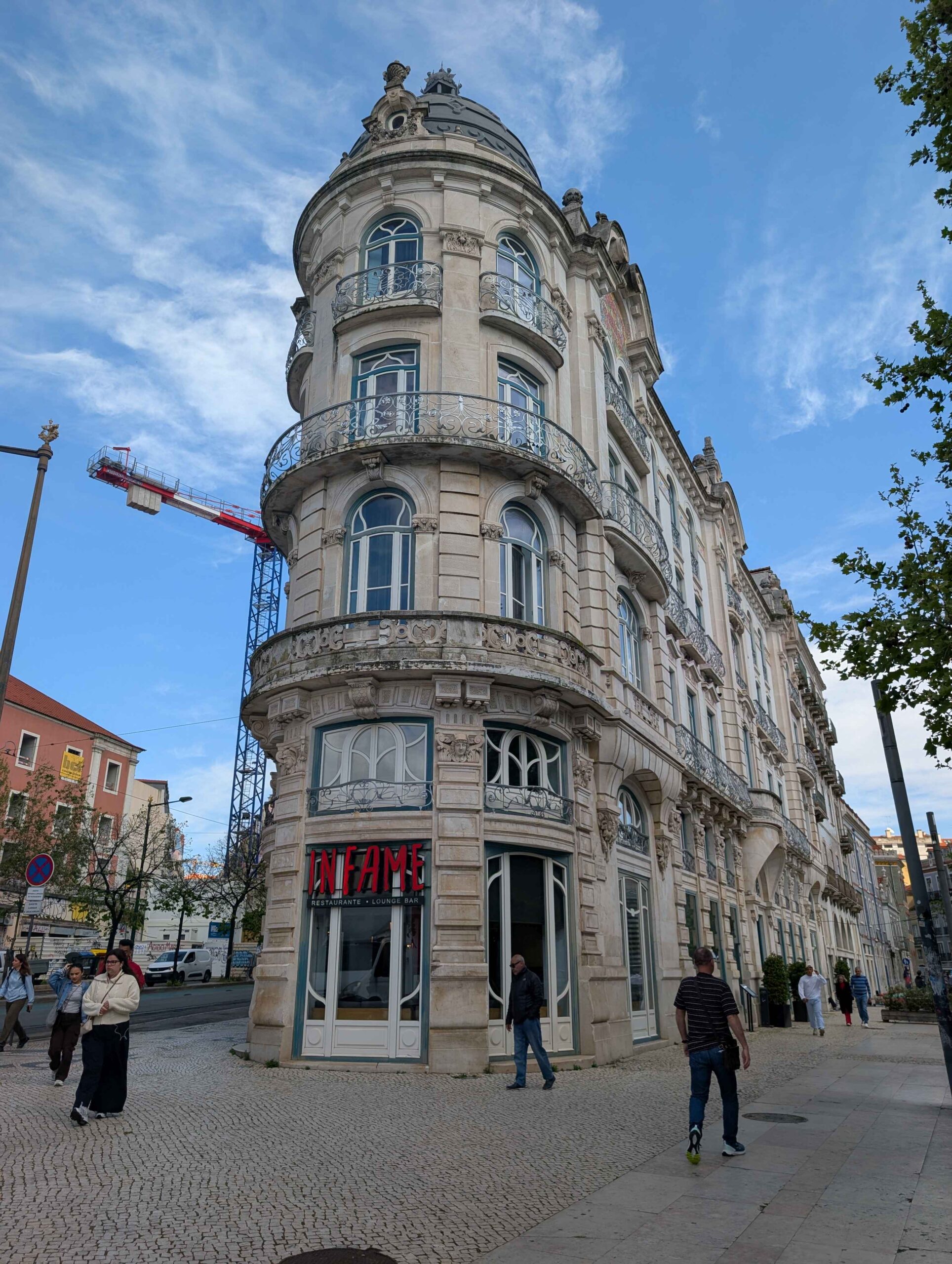
Lisbon, or Lisboa (pronounced leesh-BOH-ah), doesn’t reveal itself all at once. It builds upward. The streets pull you in one direction, then shift, then narrow, then climb again. It feels structured until it doesn’t, and then suddenly you are somewhere else entirely.
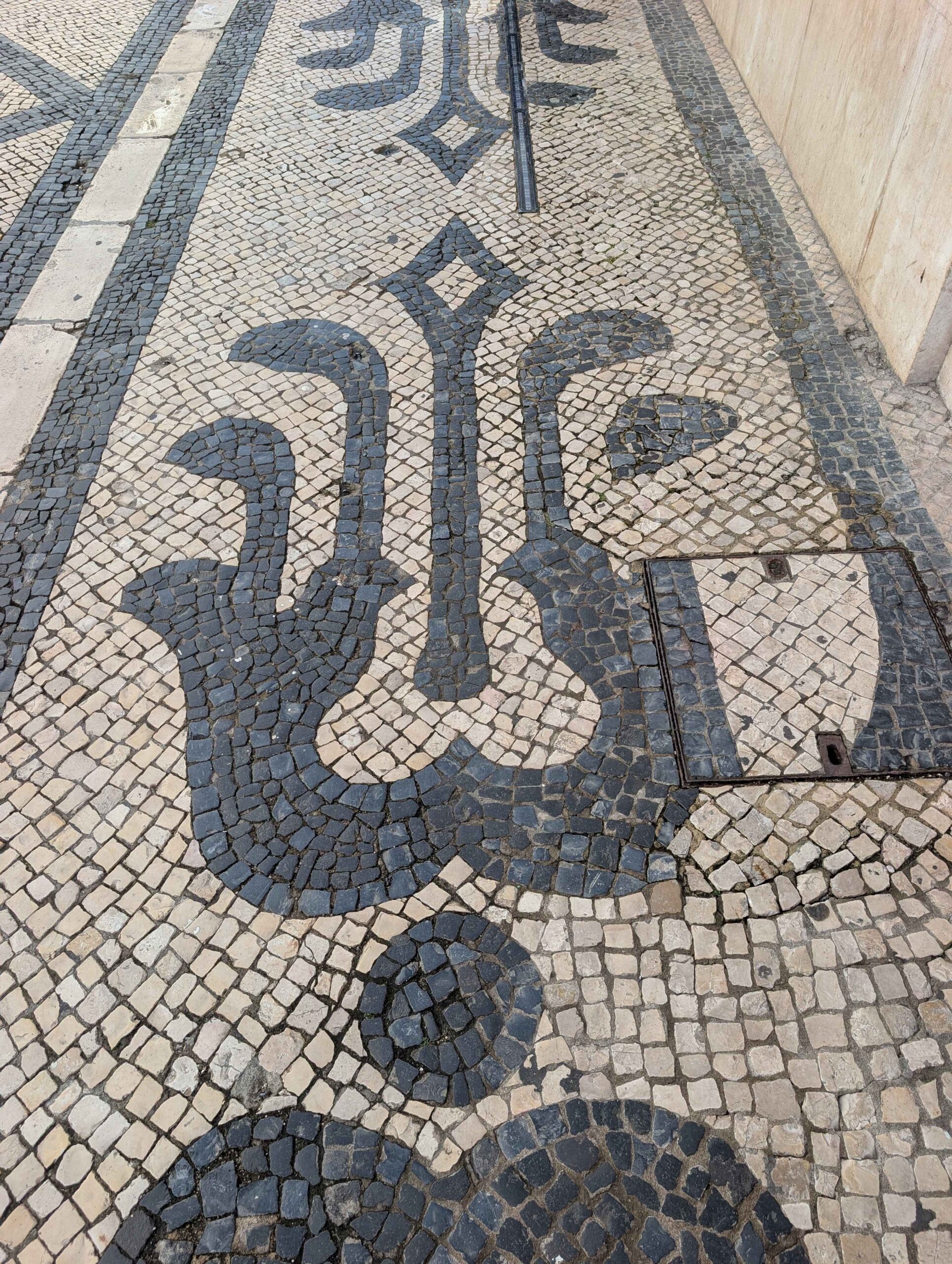
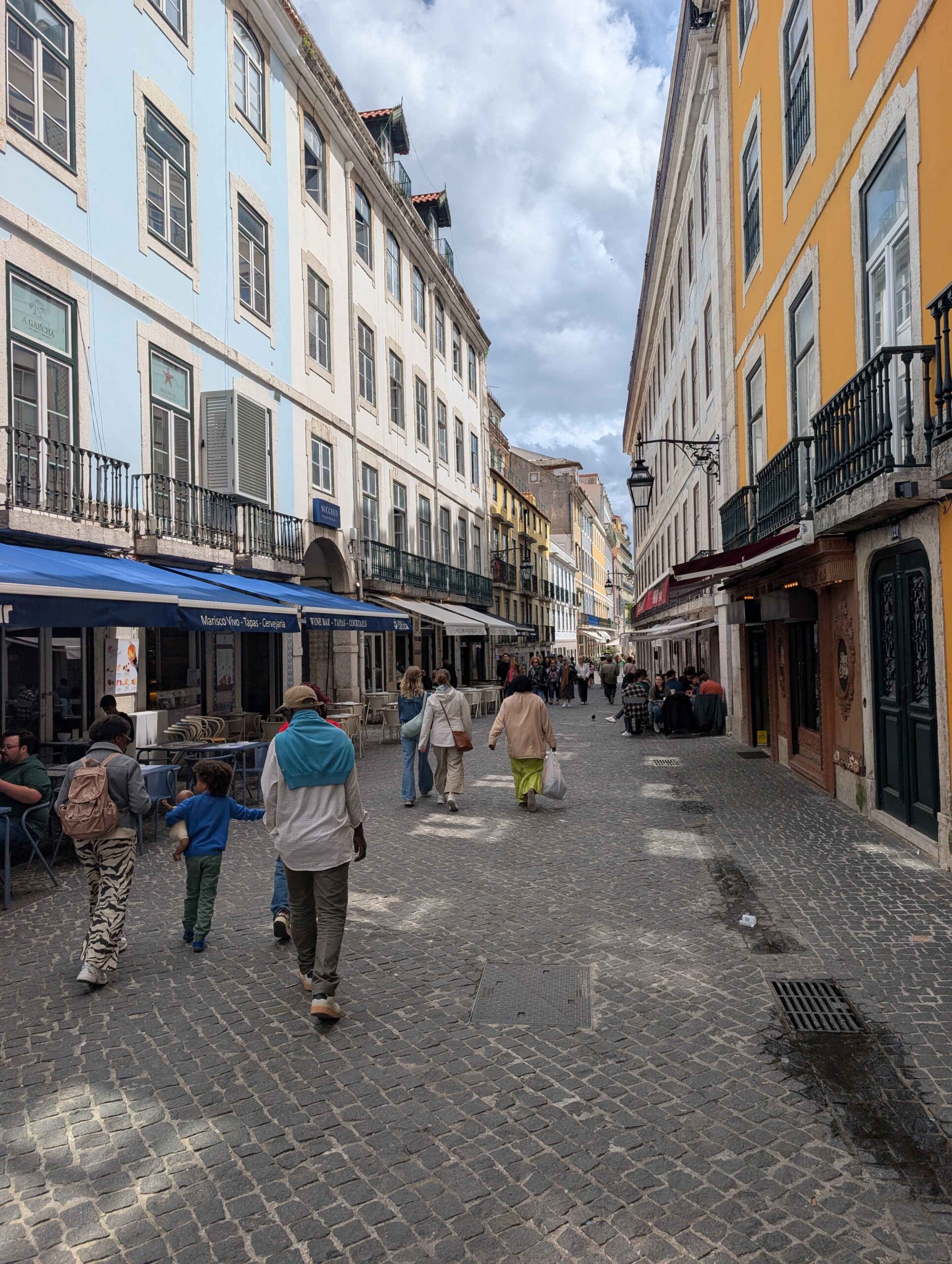
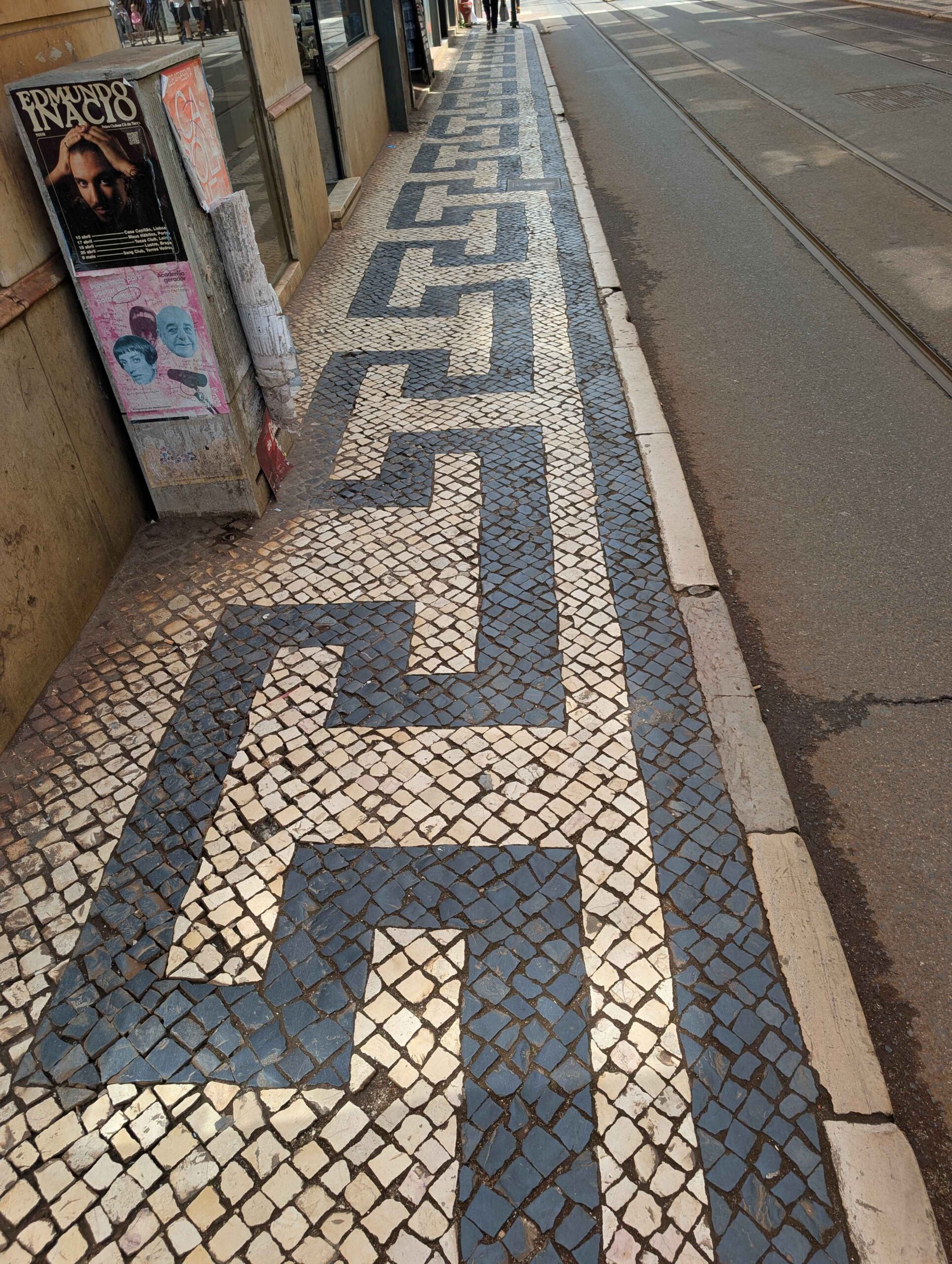
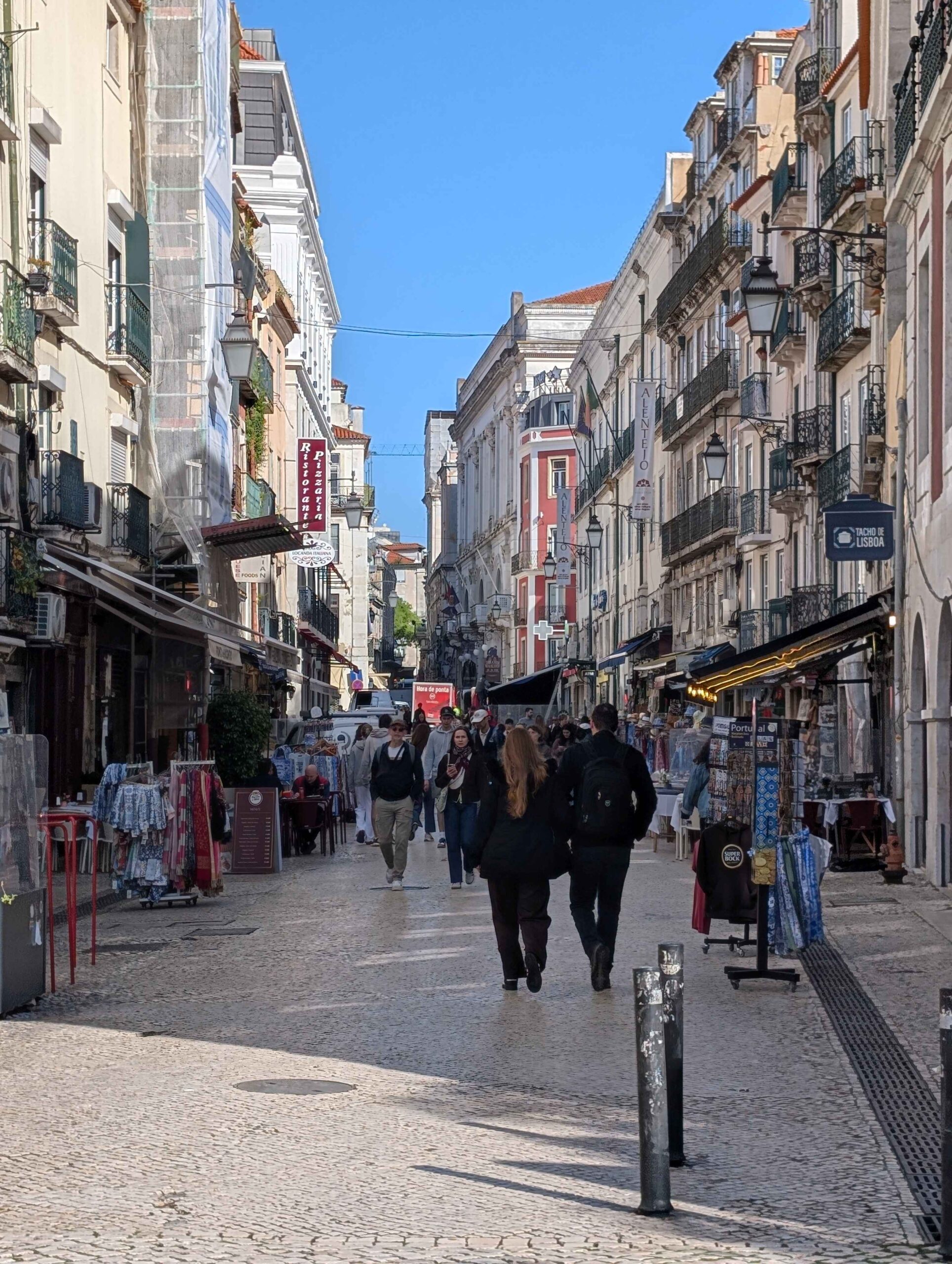
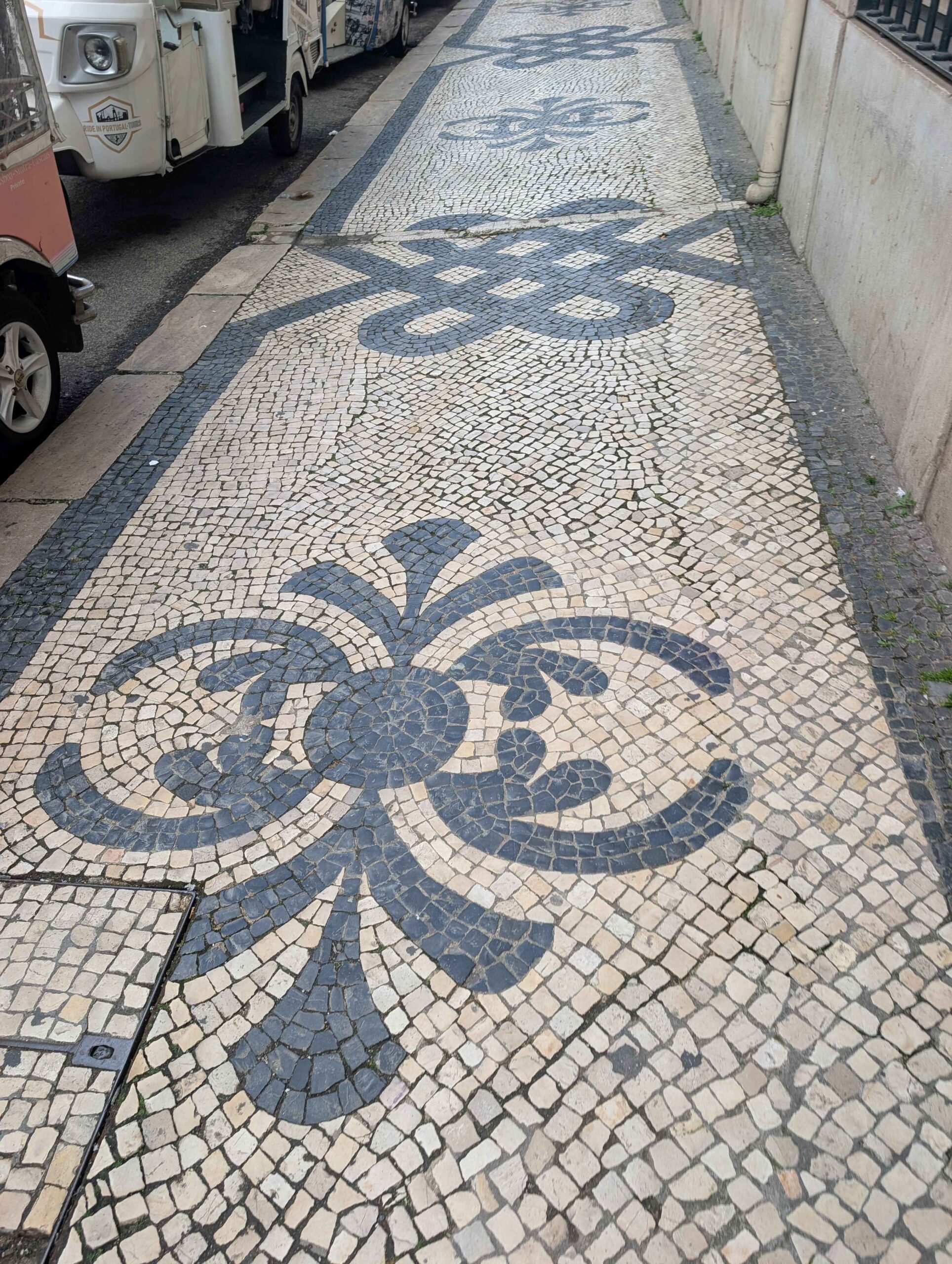
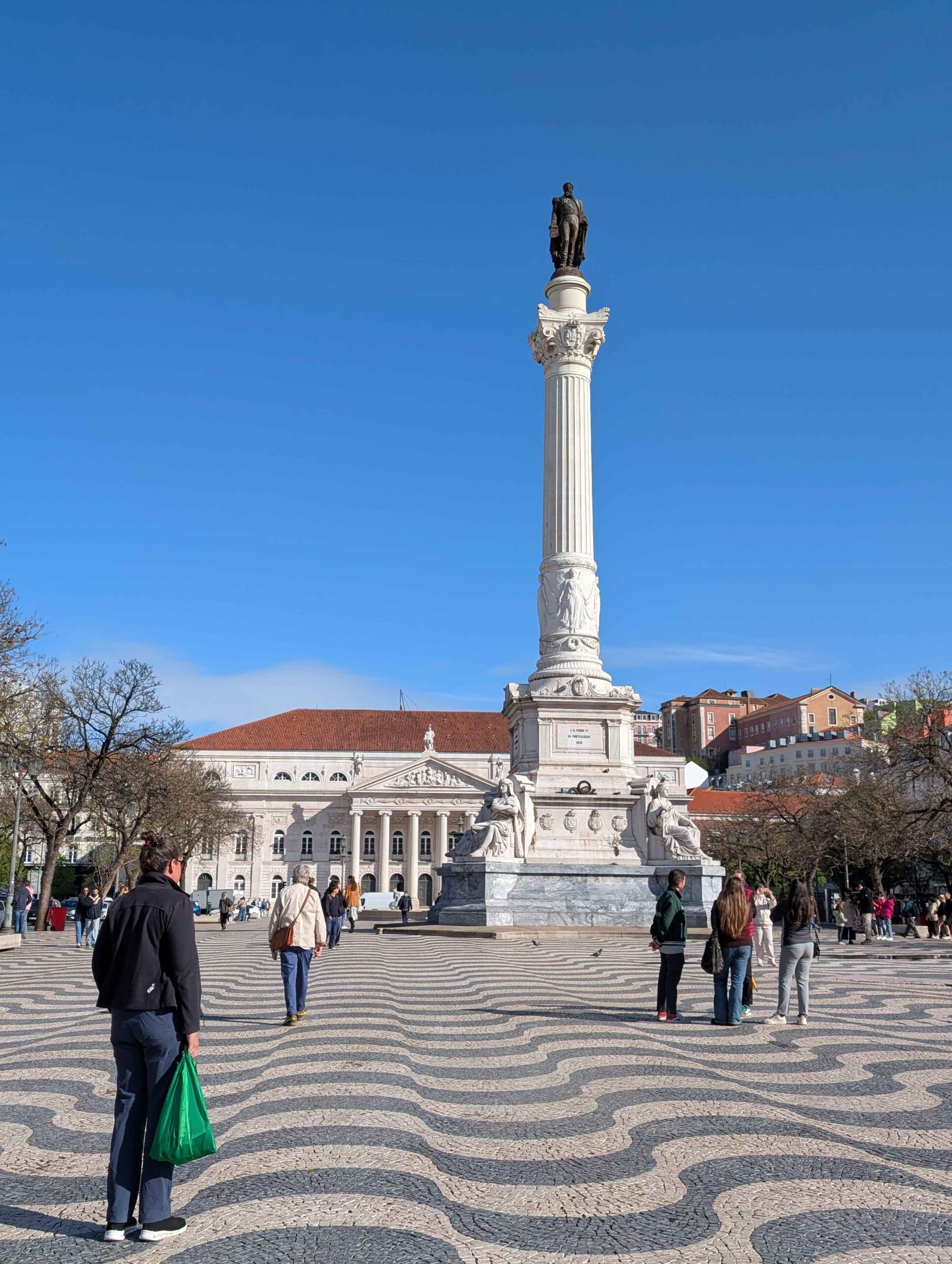
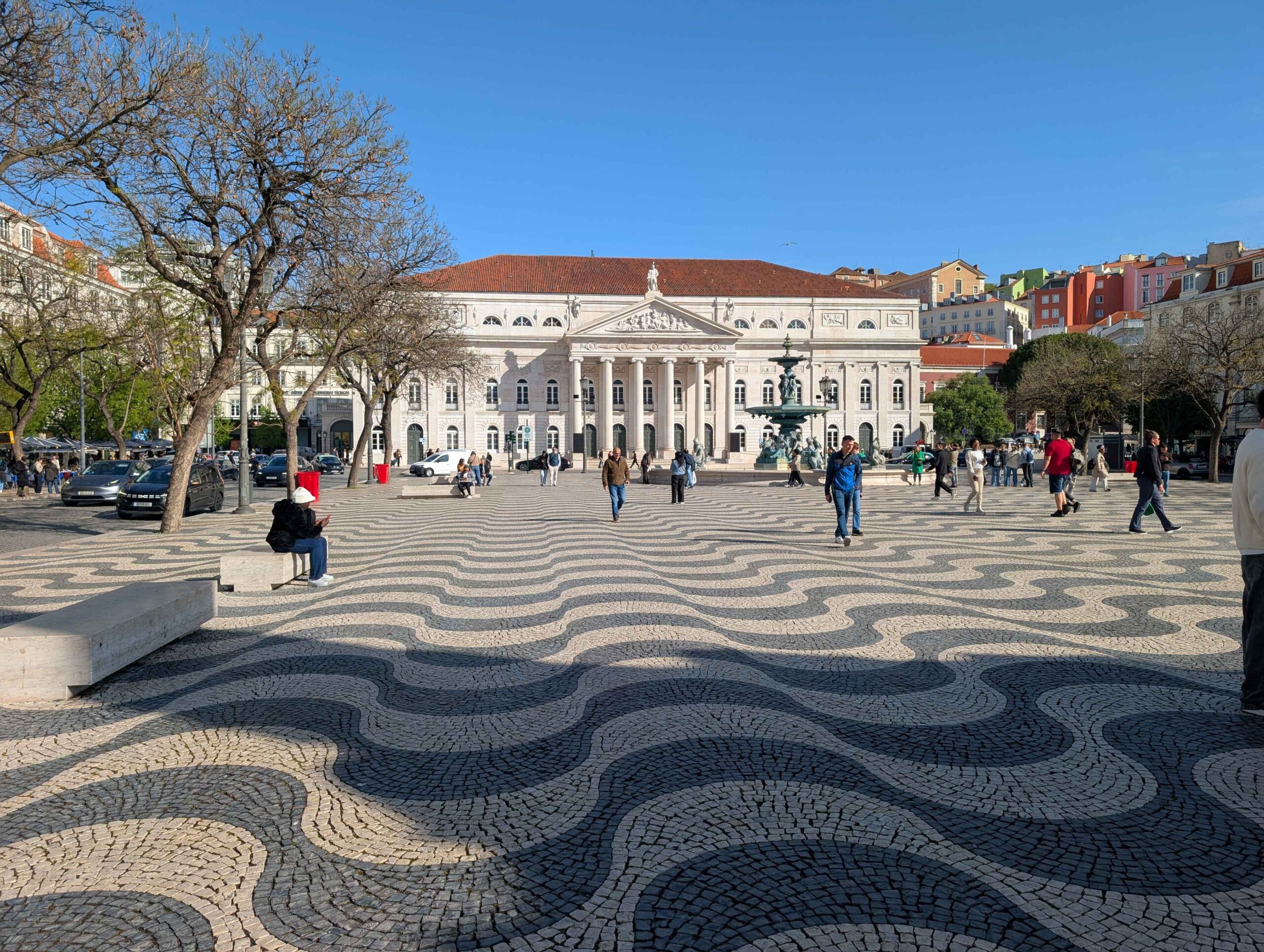
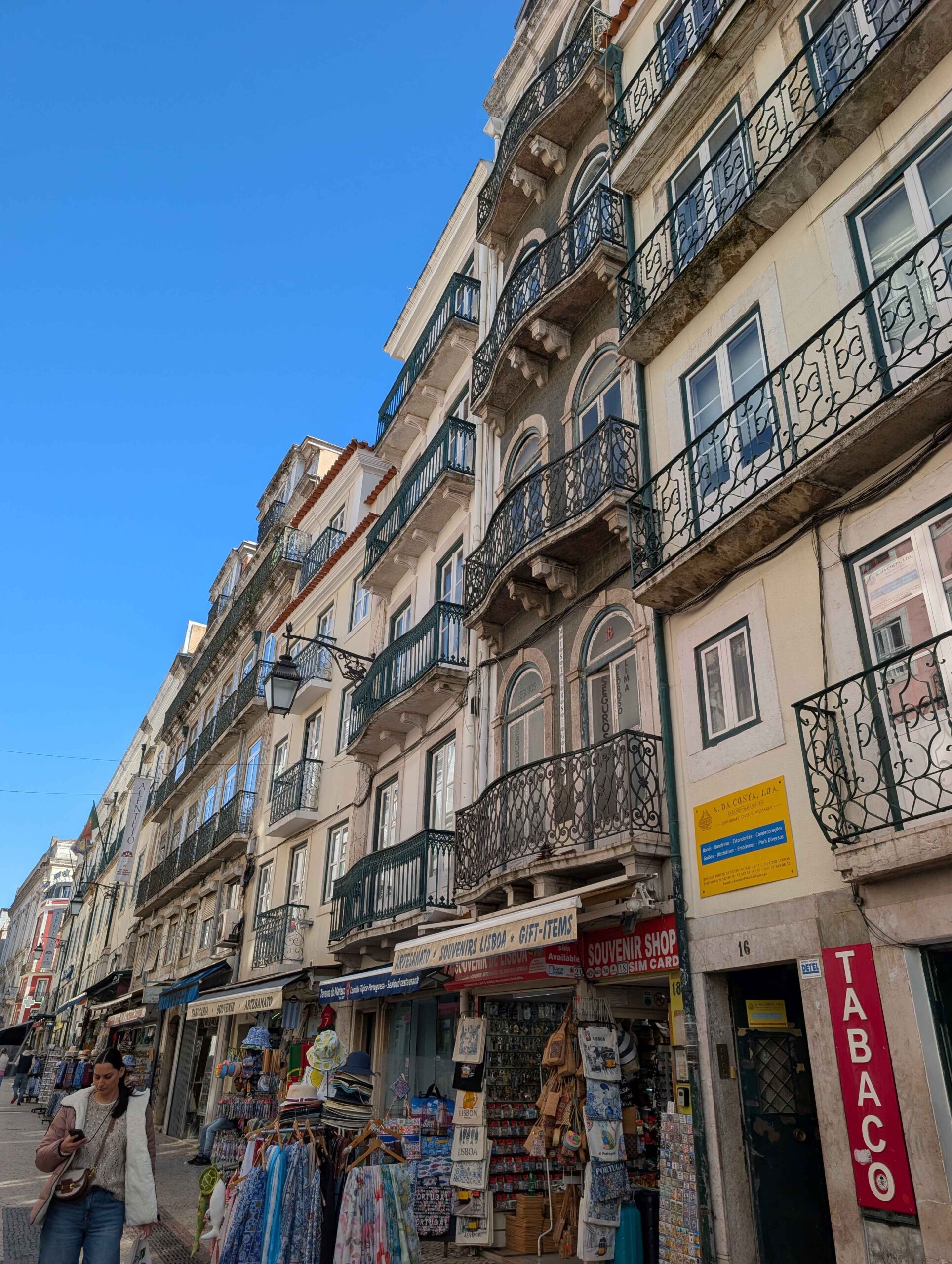
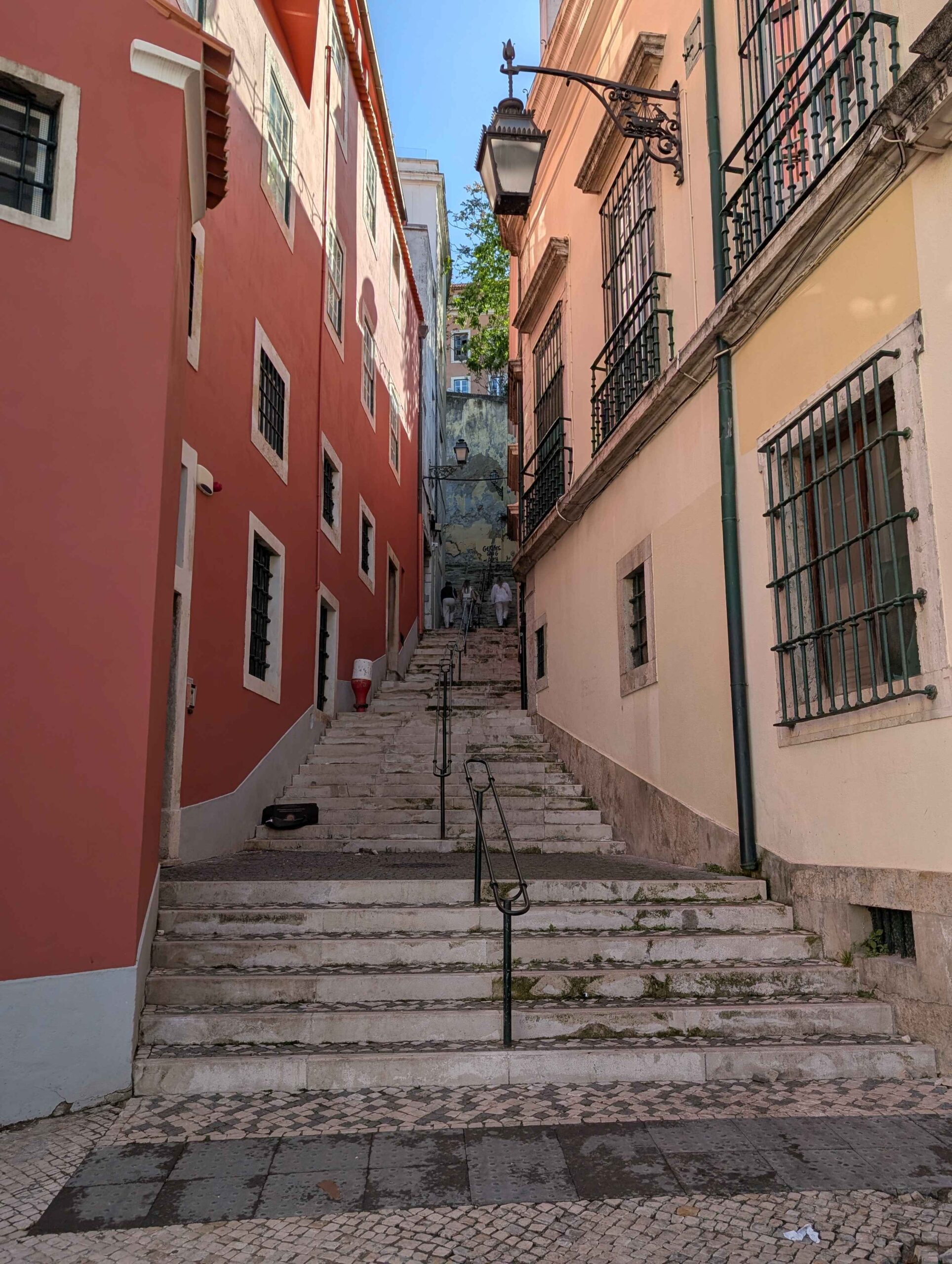
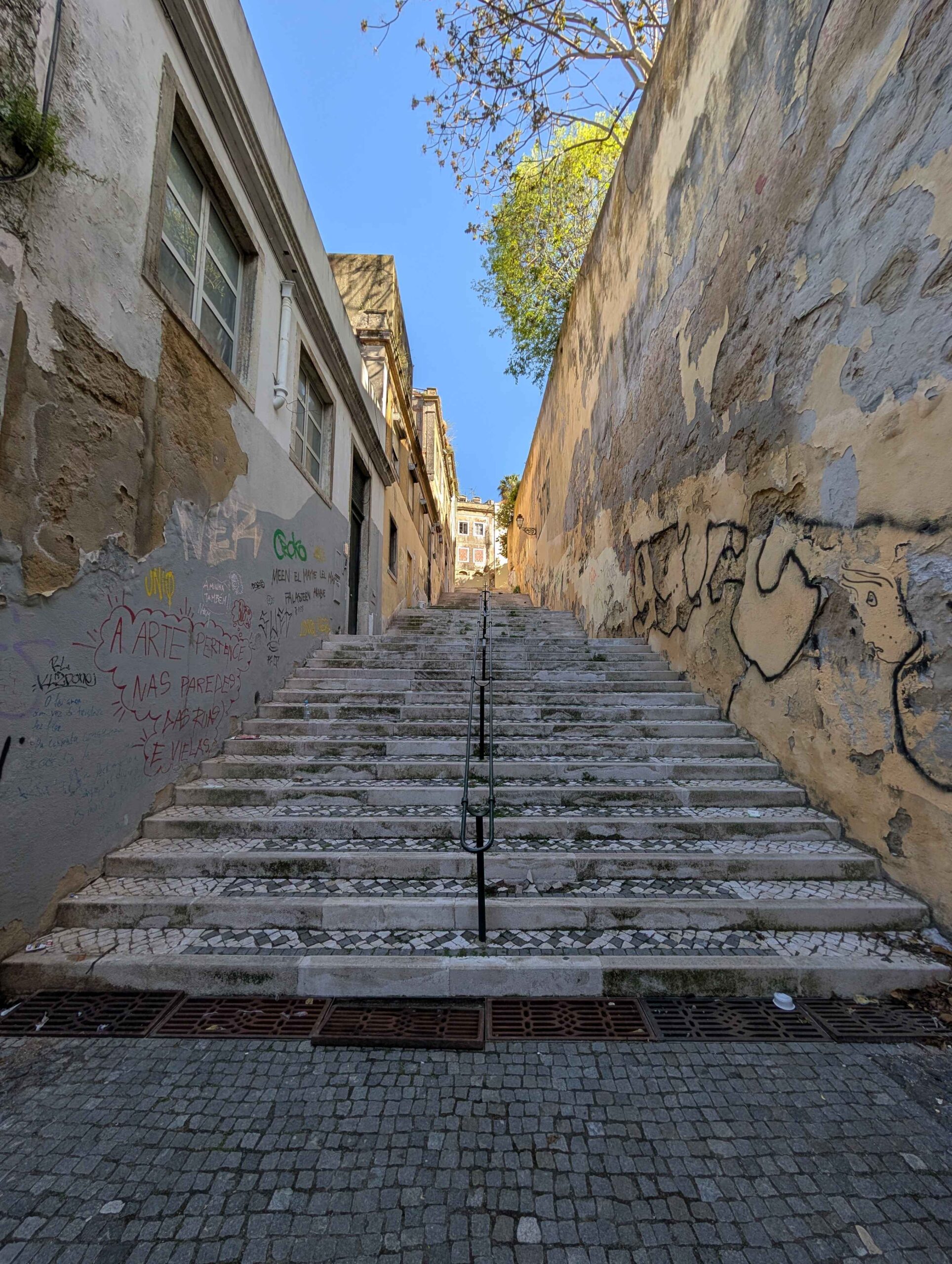
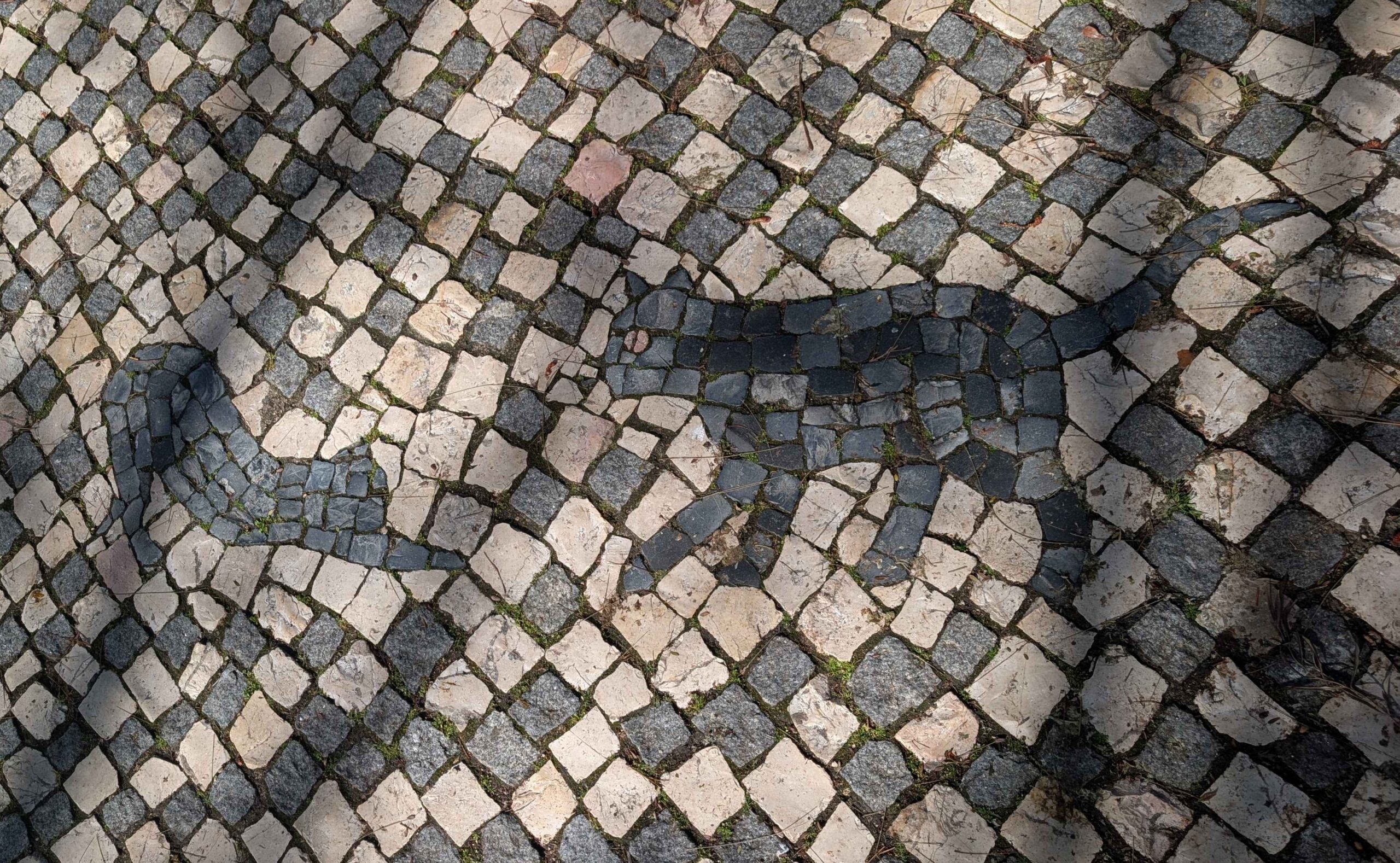
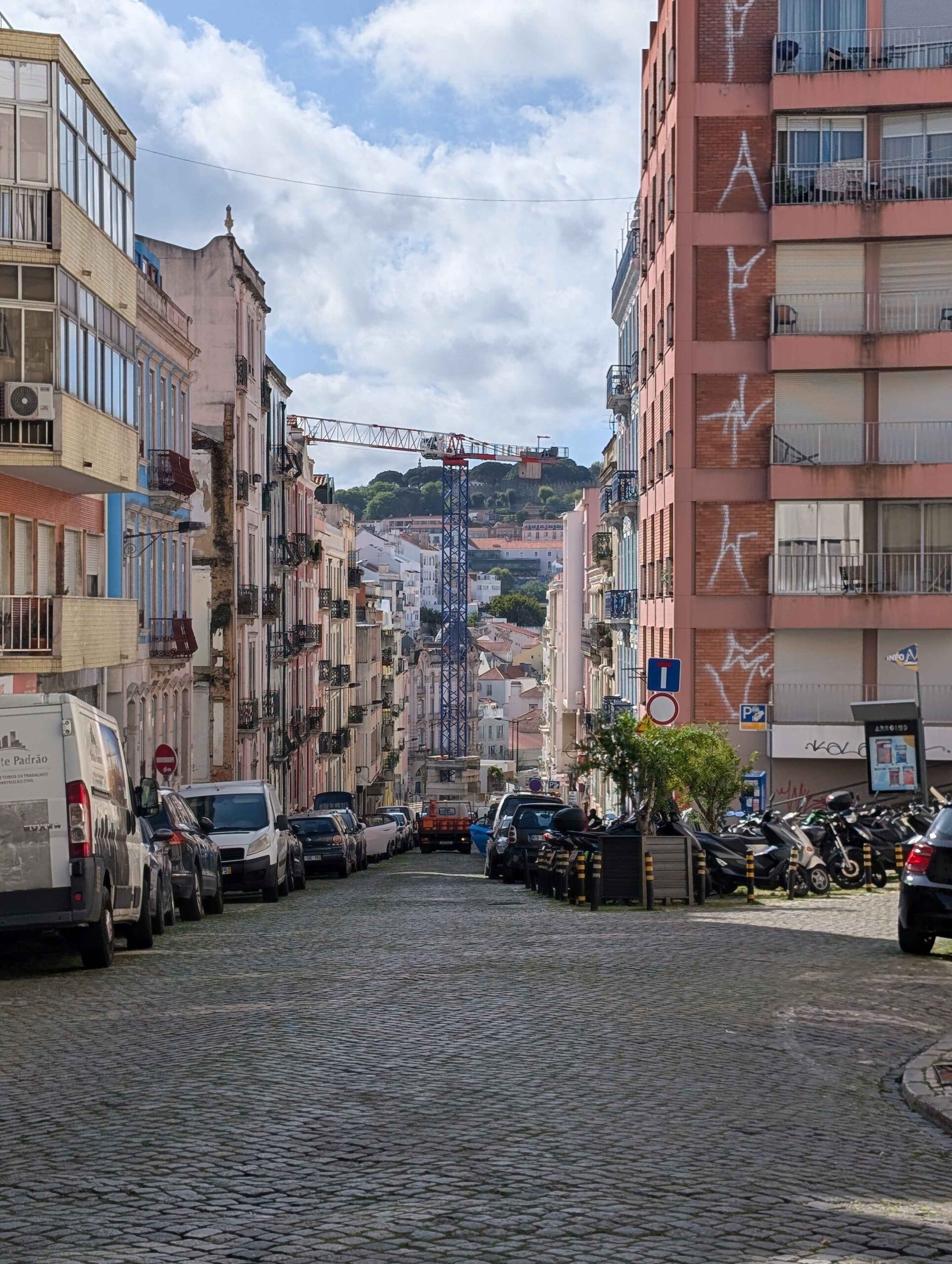
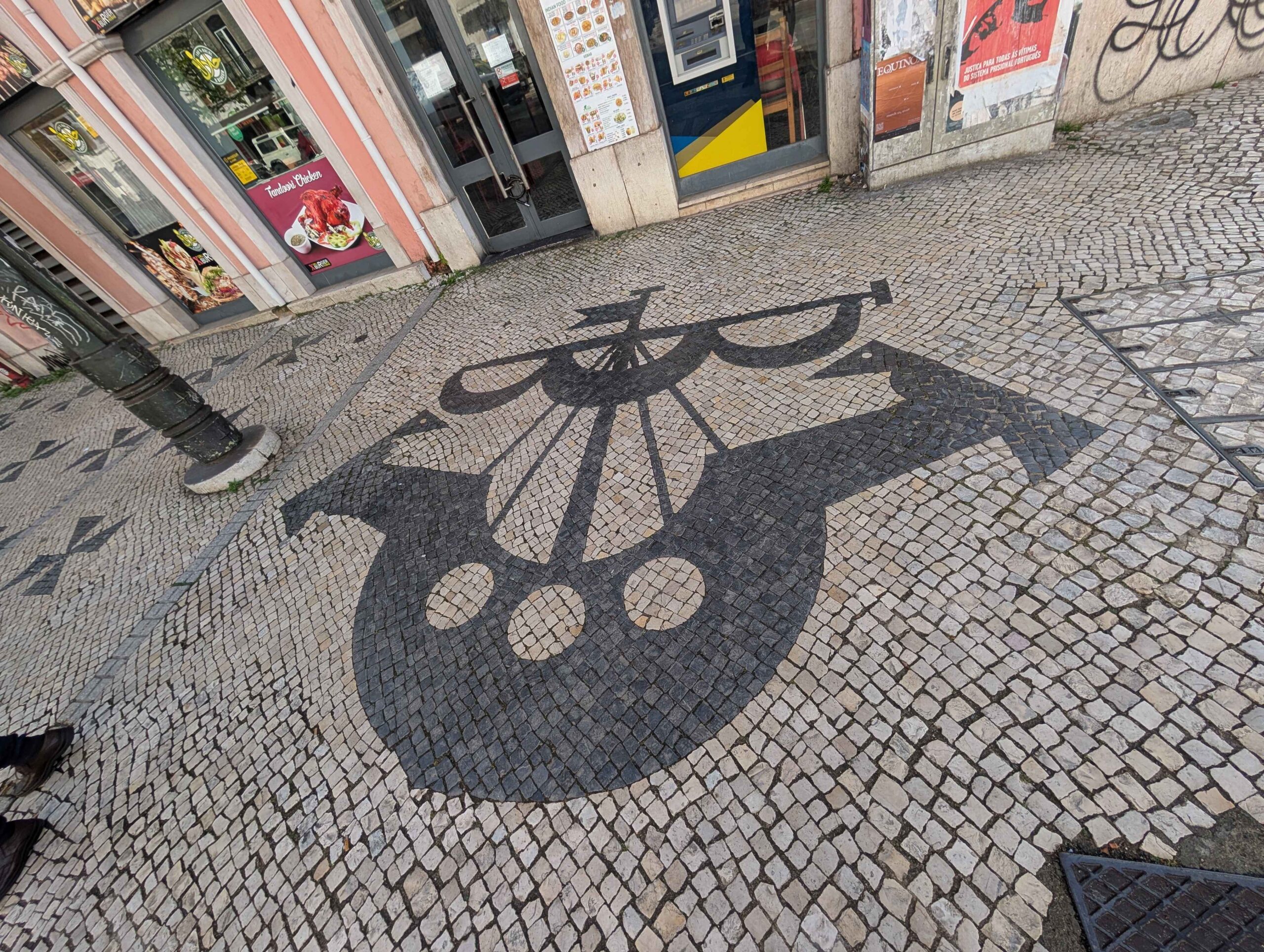
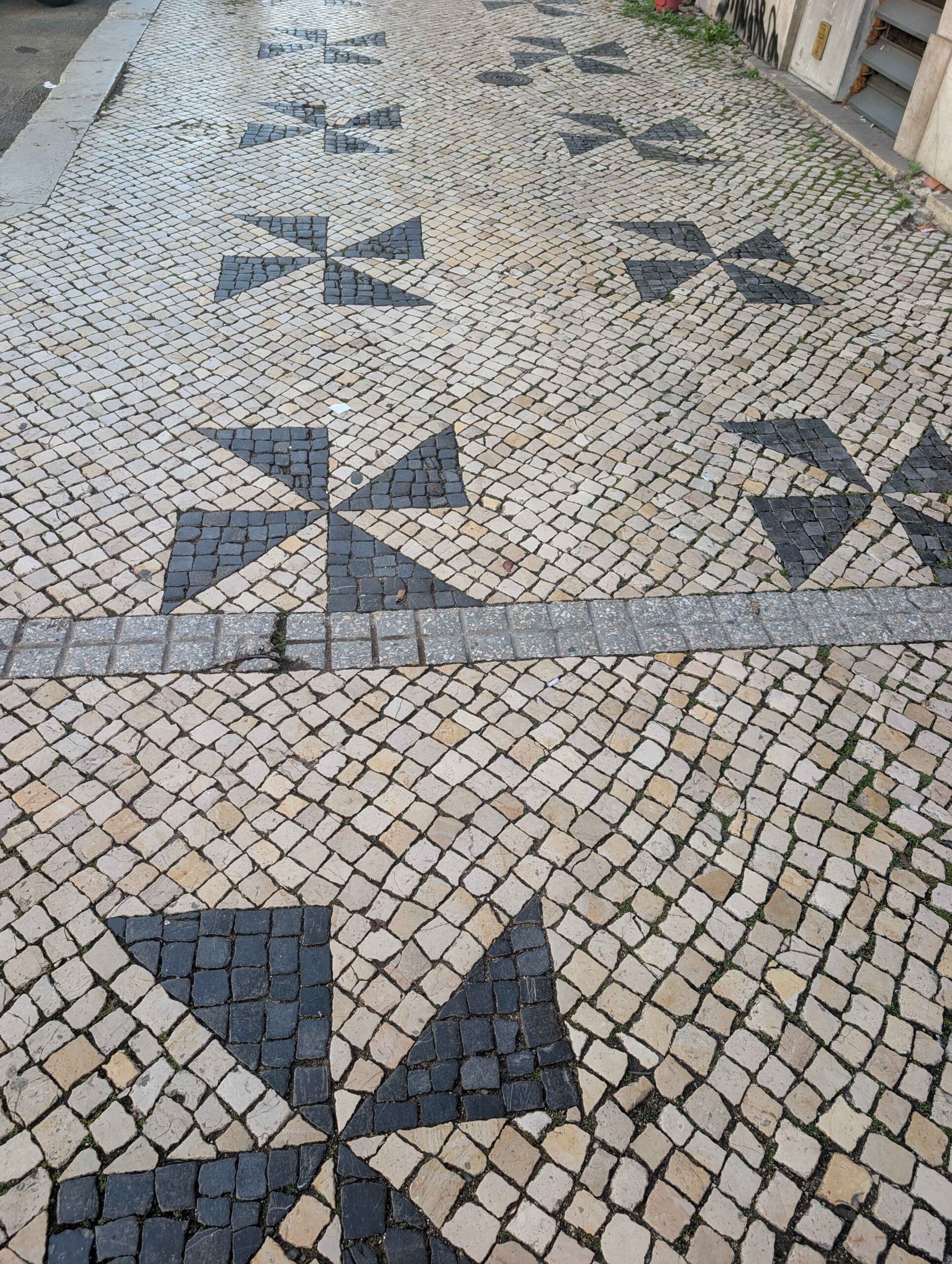
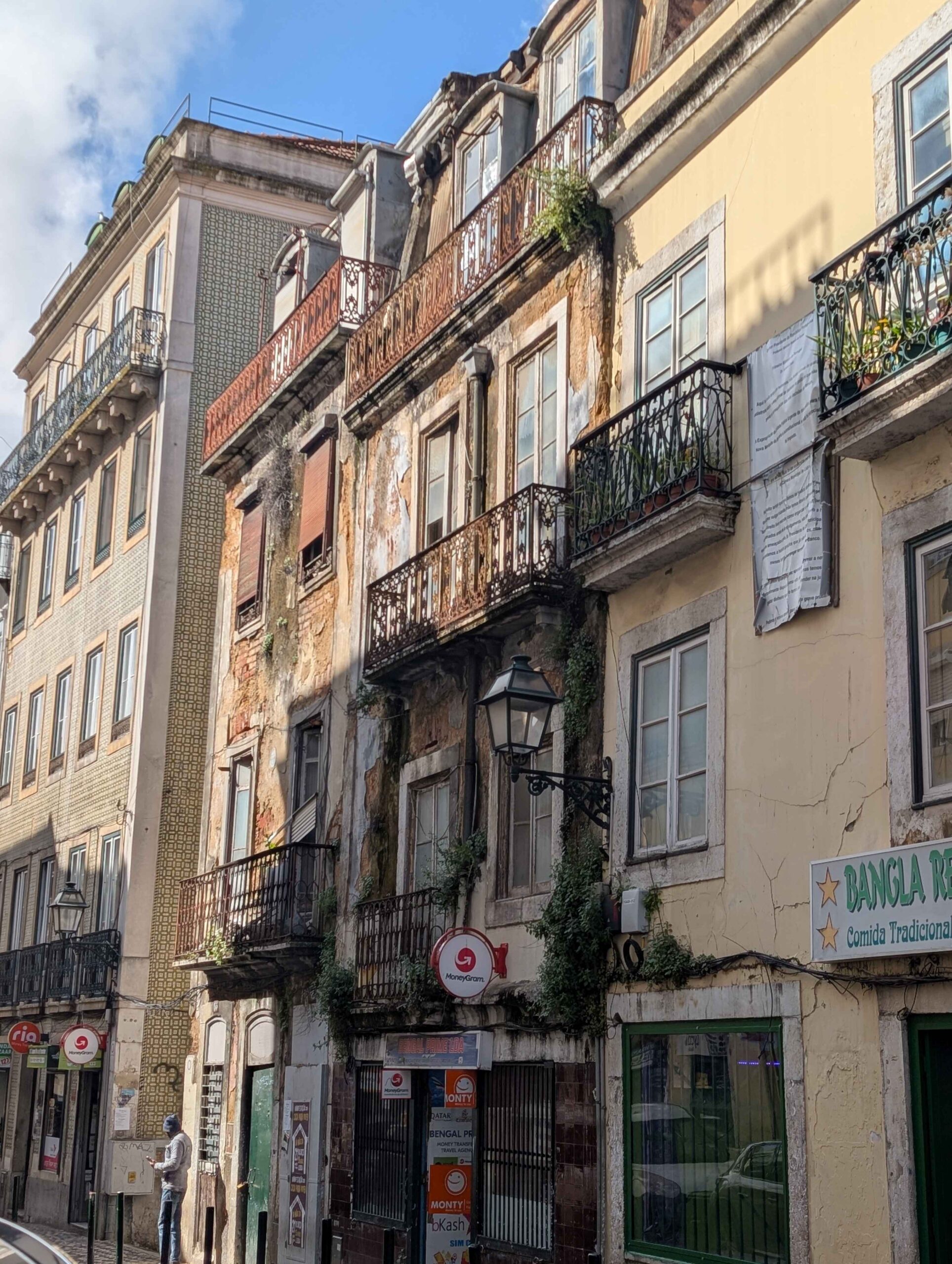
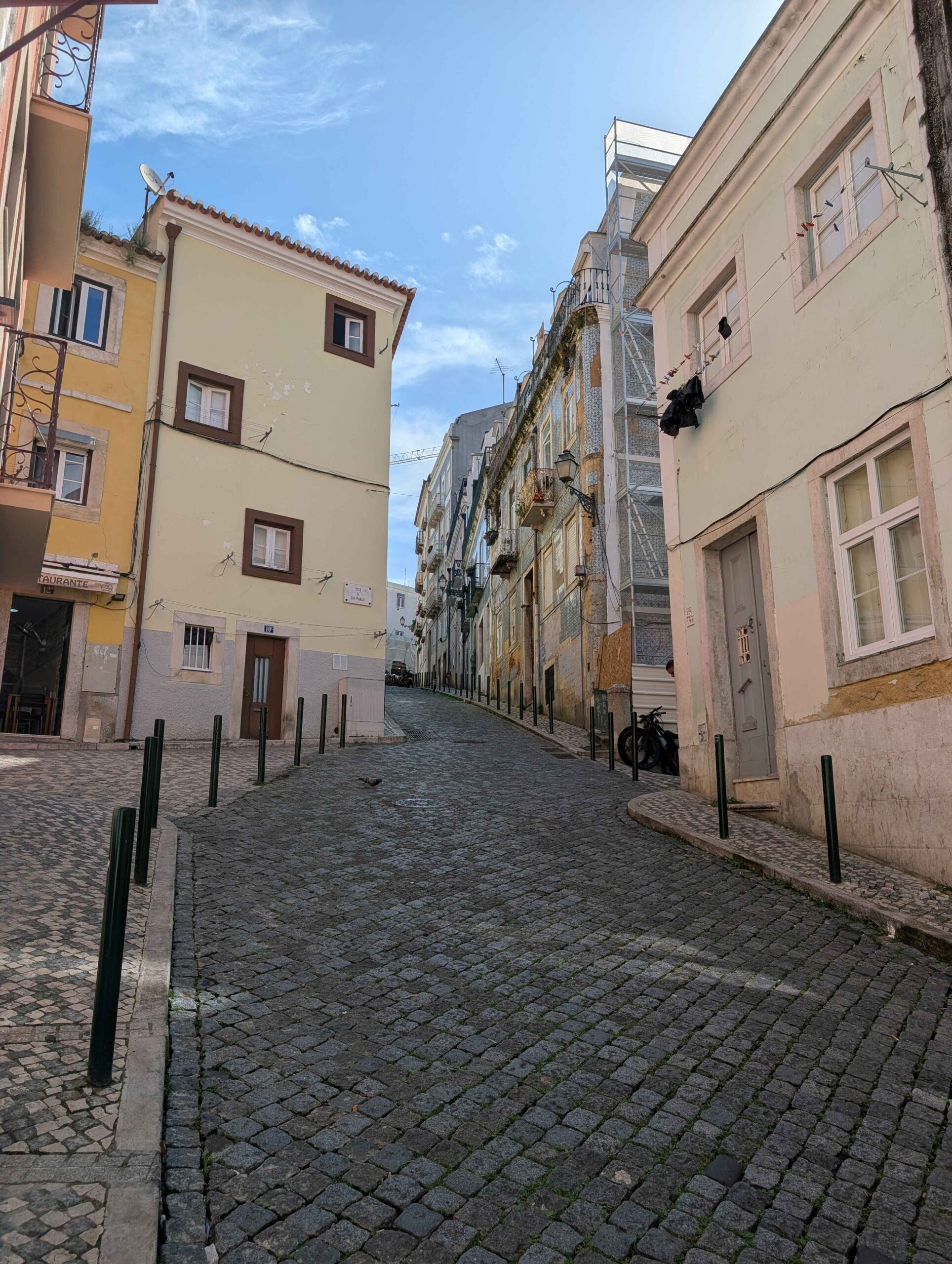
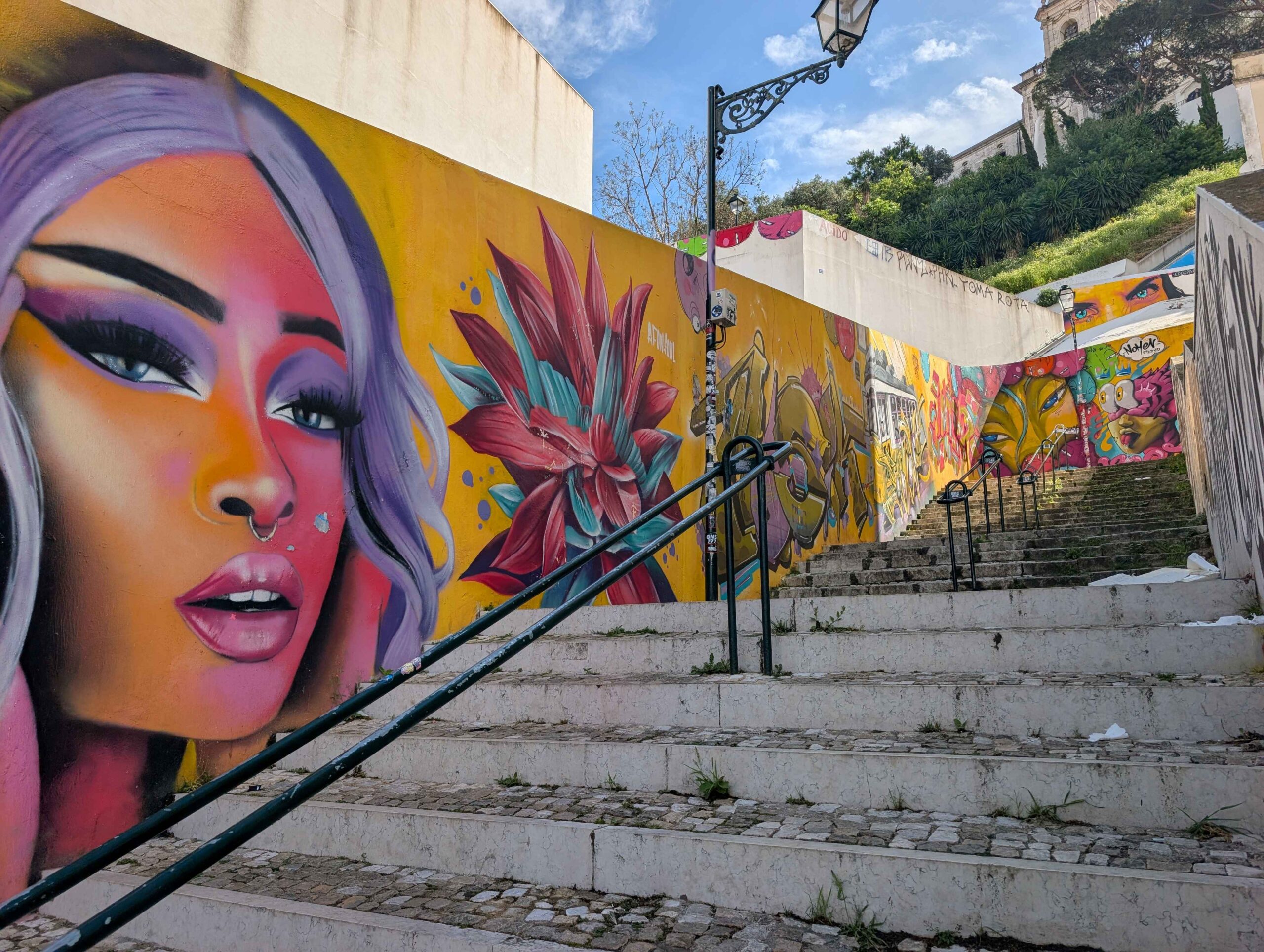
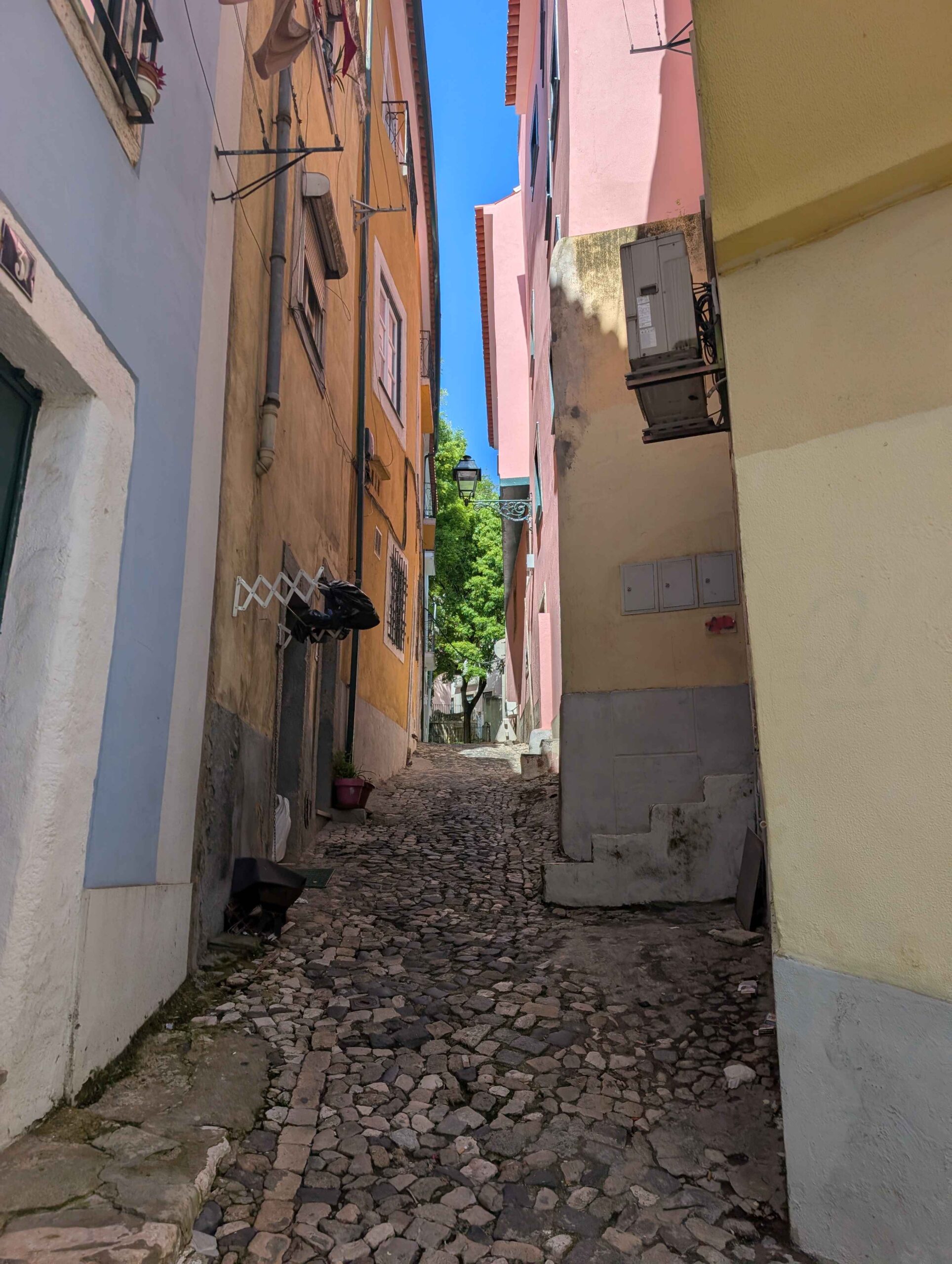
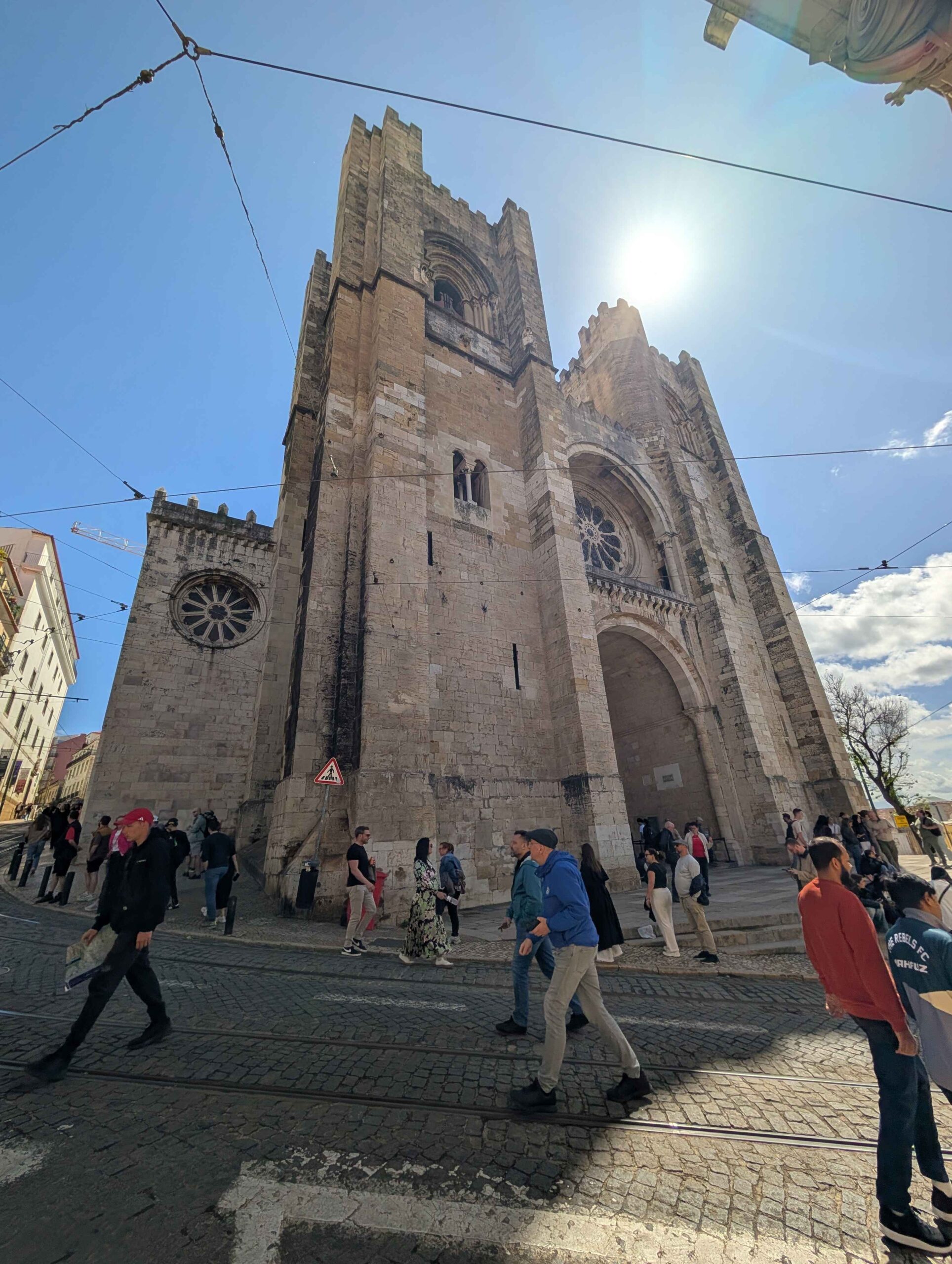
From Baixa, it was all uphill. The Calçada Portuguesa underfoot changed pattern every few blocks, black and white stone arranged in designs that were easy to appreciate and not so easy to walk on after a while. I had a loose route, but I let myself wander, which meant I spent a lot of time doubling back or realizing the path I chose ended without a view. It took effort to find the overlooks, and more than once I ended up surrounded by tightly packed buildings with no clear line of sight.
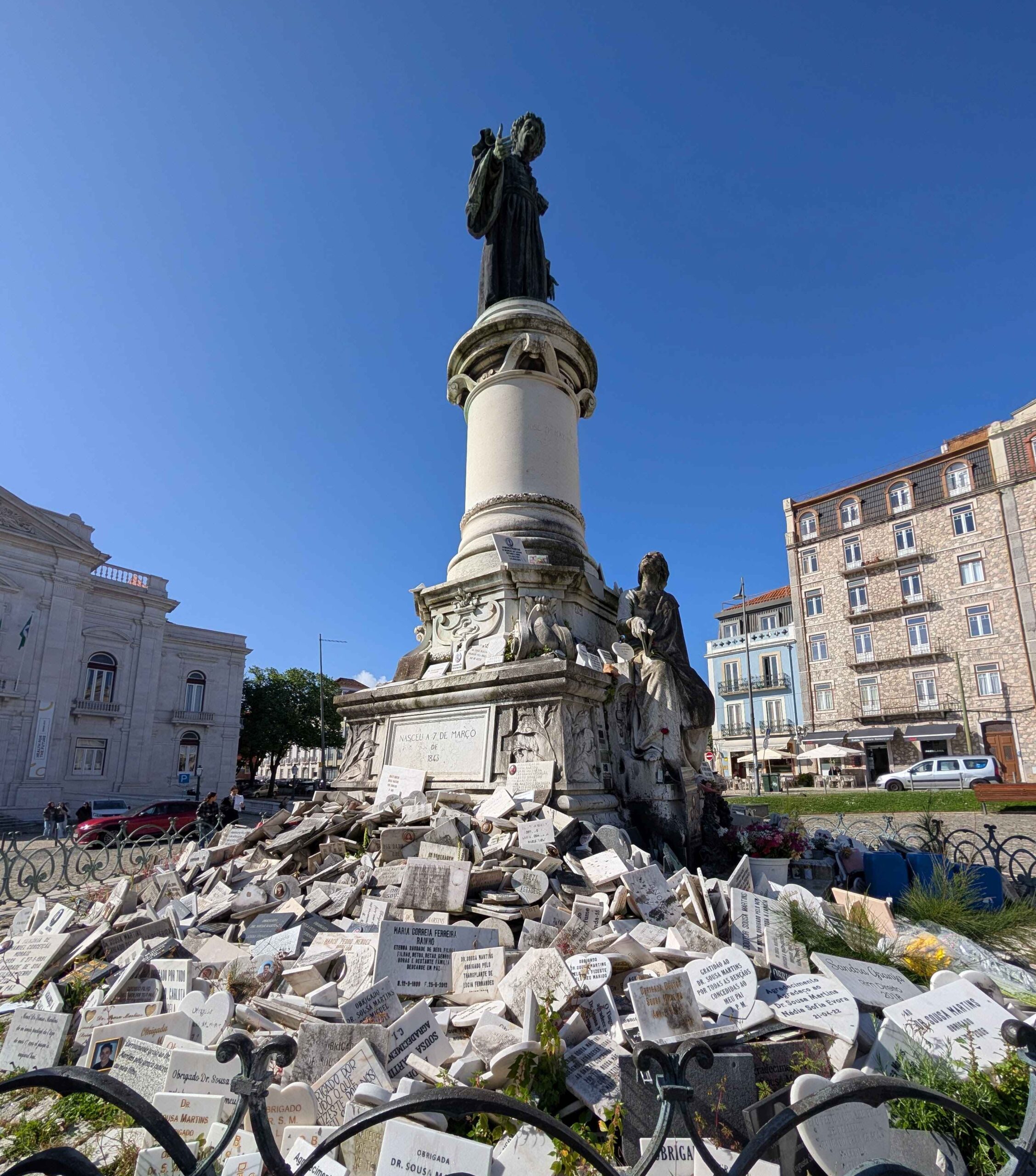
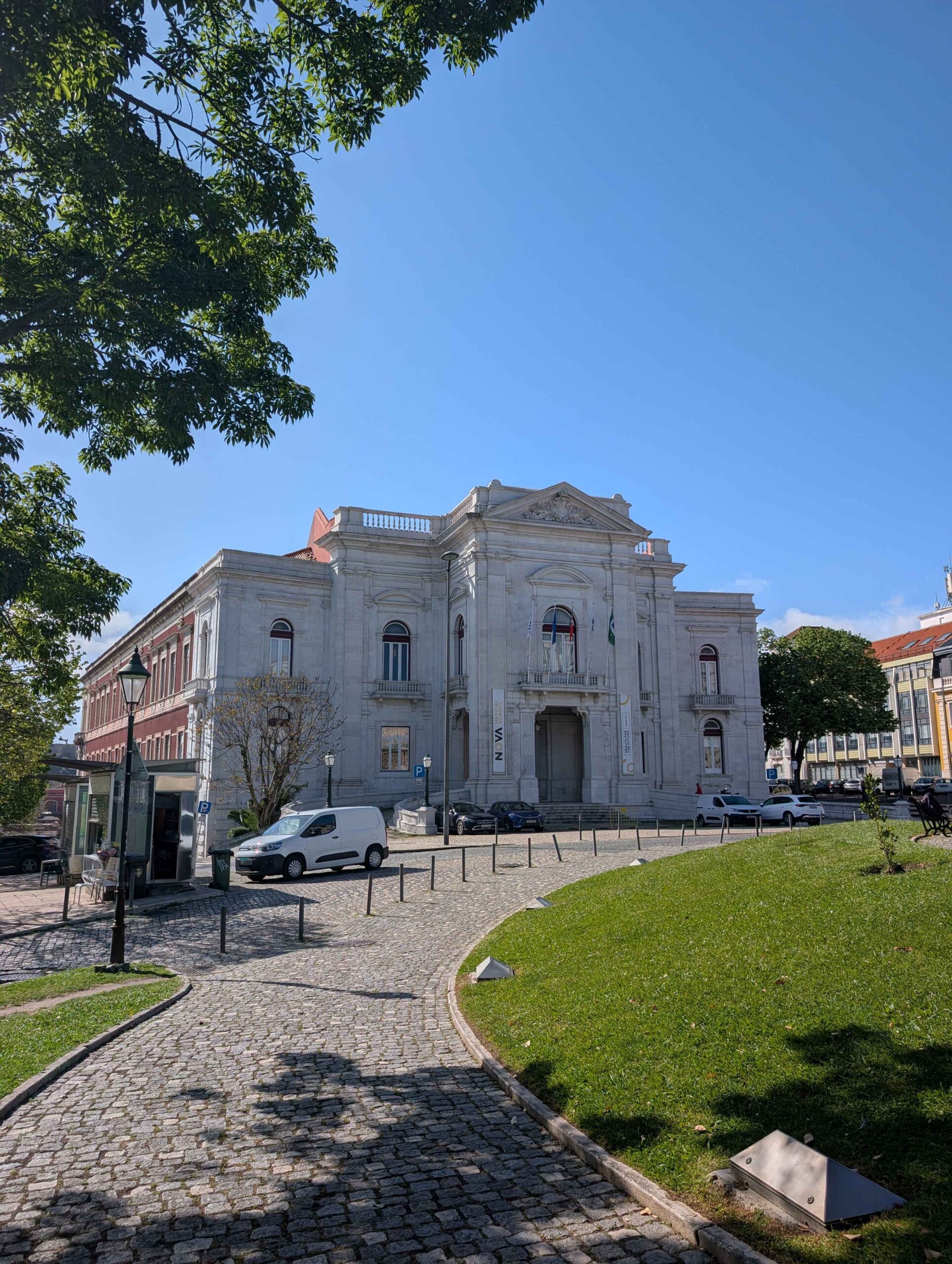
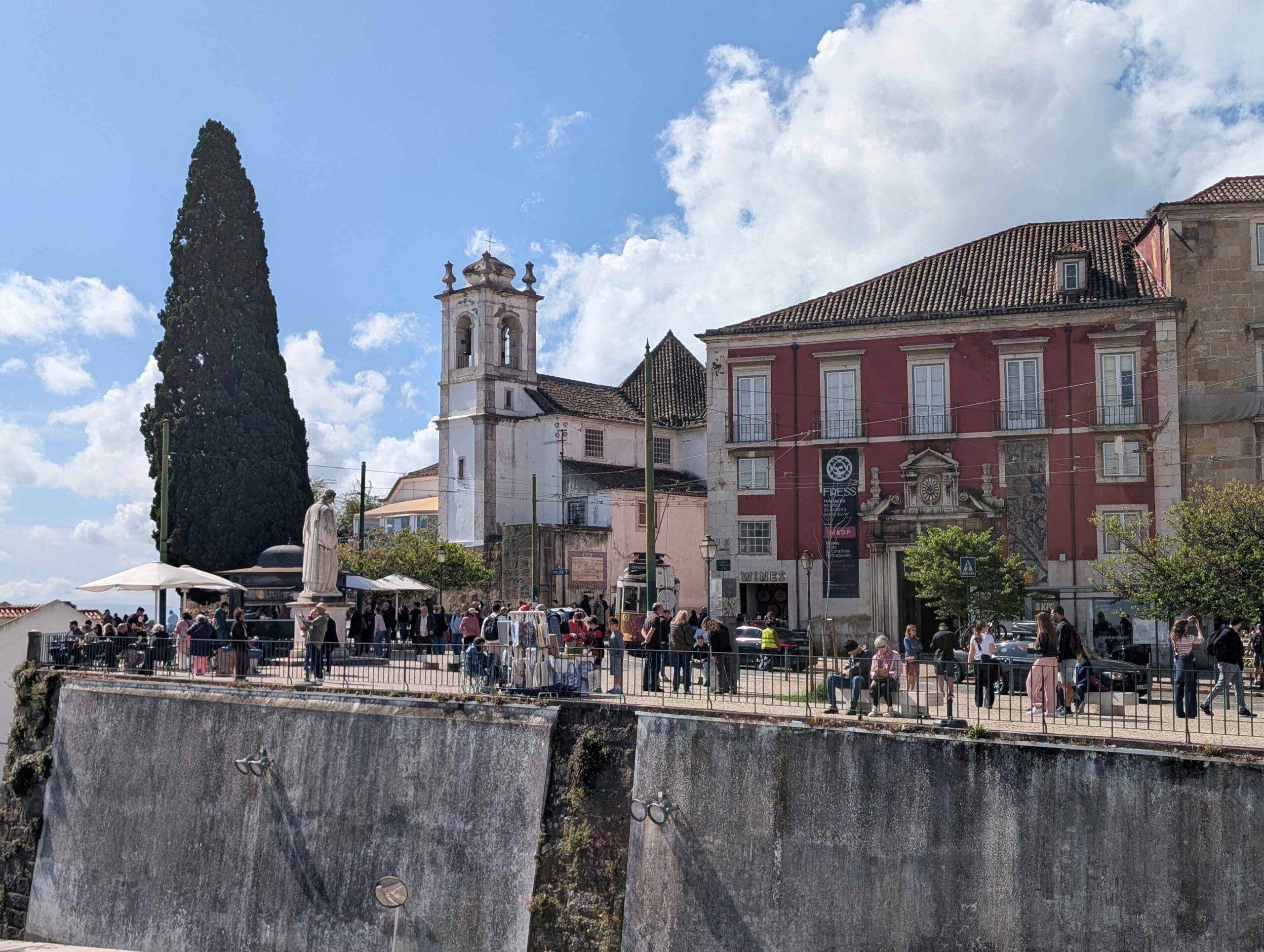
Somewhere along the way I reached Campo dos Mártires da Pátria without realizing it. The statue of Dr. José Tomás de Sousa Martins stood quietly in the park, surrounded by flowers and marble plaques that felt more like memorials than decoration. It was one of those moments where I had no idea where I was, but it made me stop long enough to look closer and understand it.
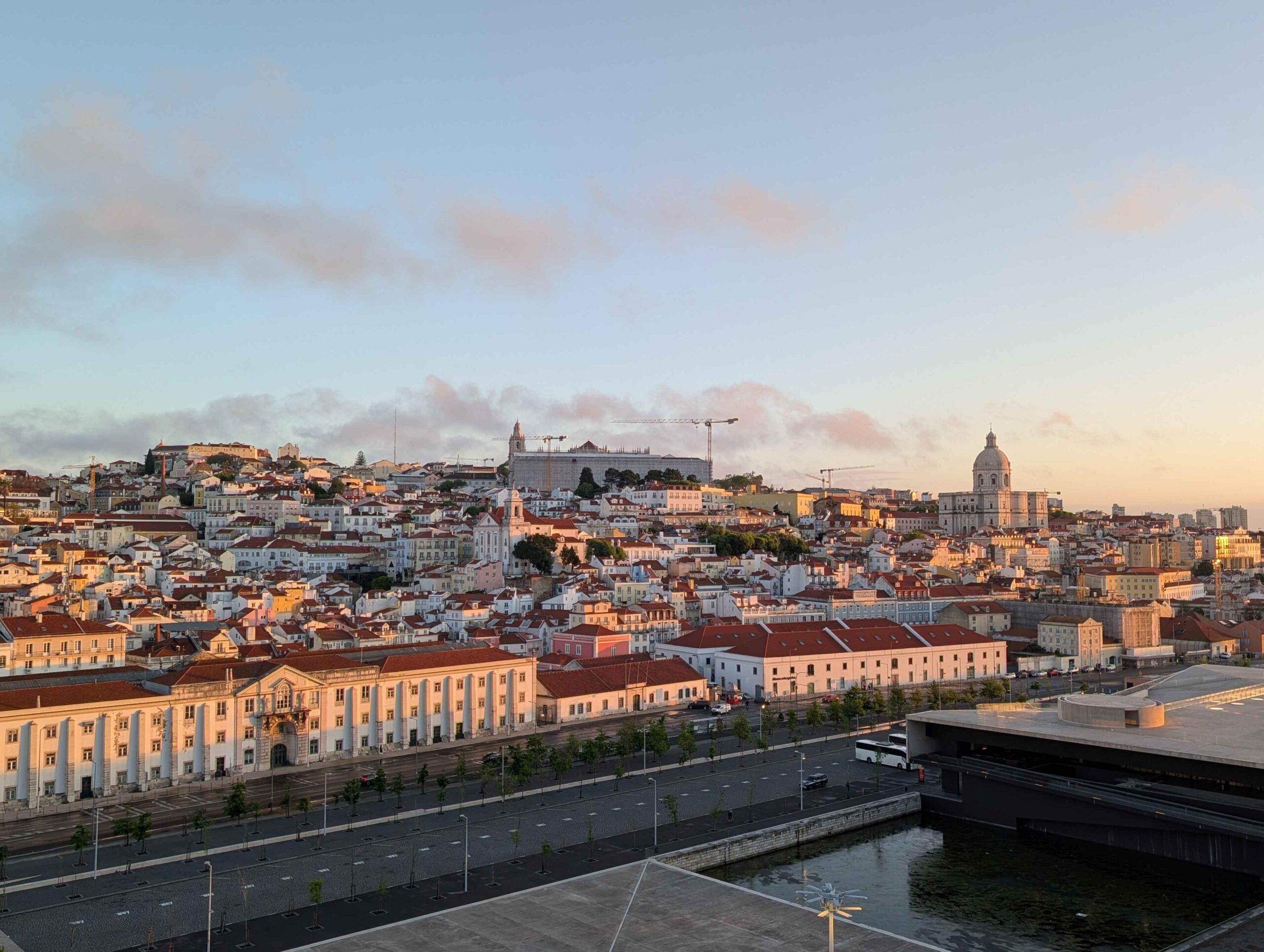
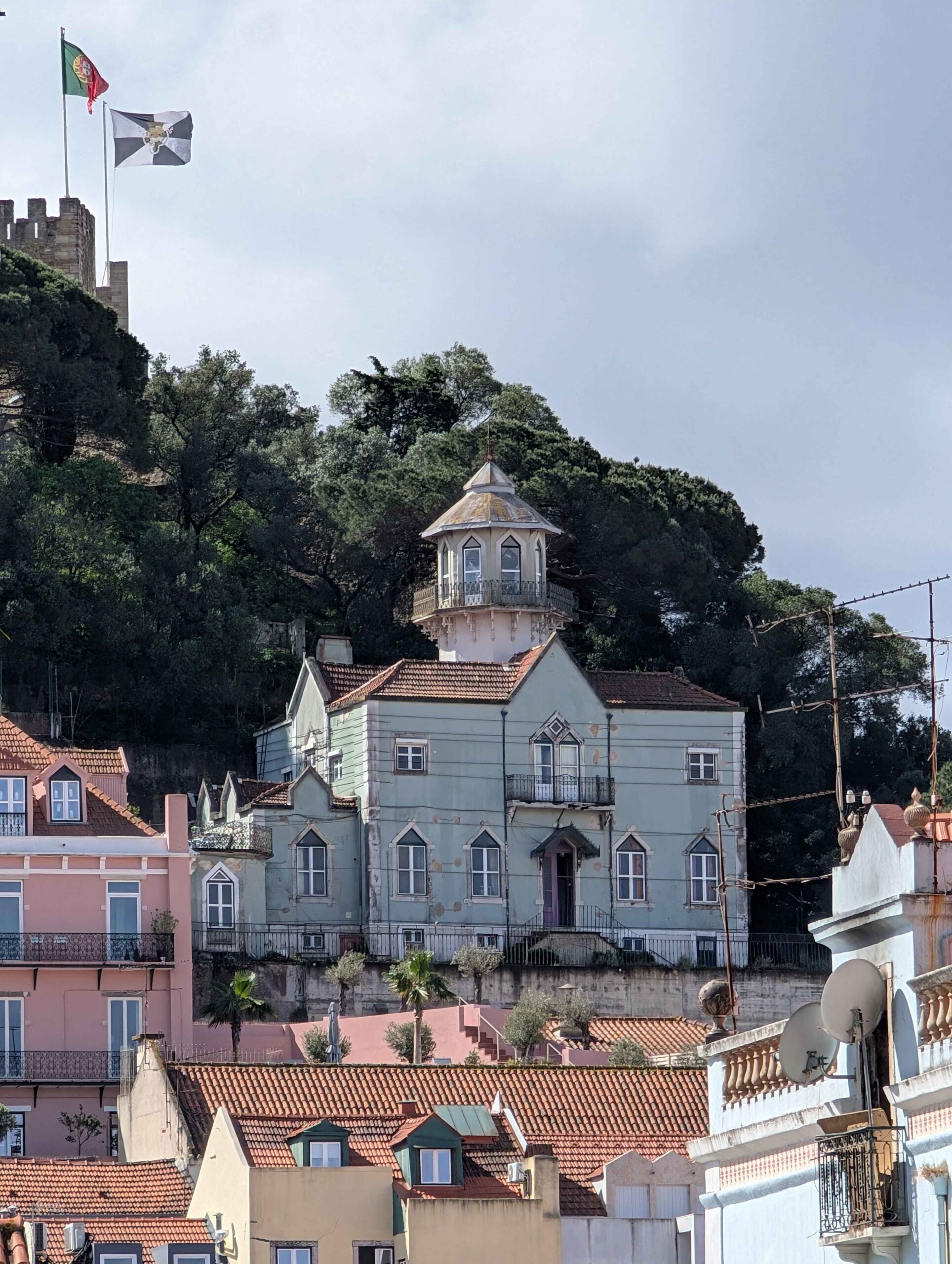
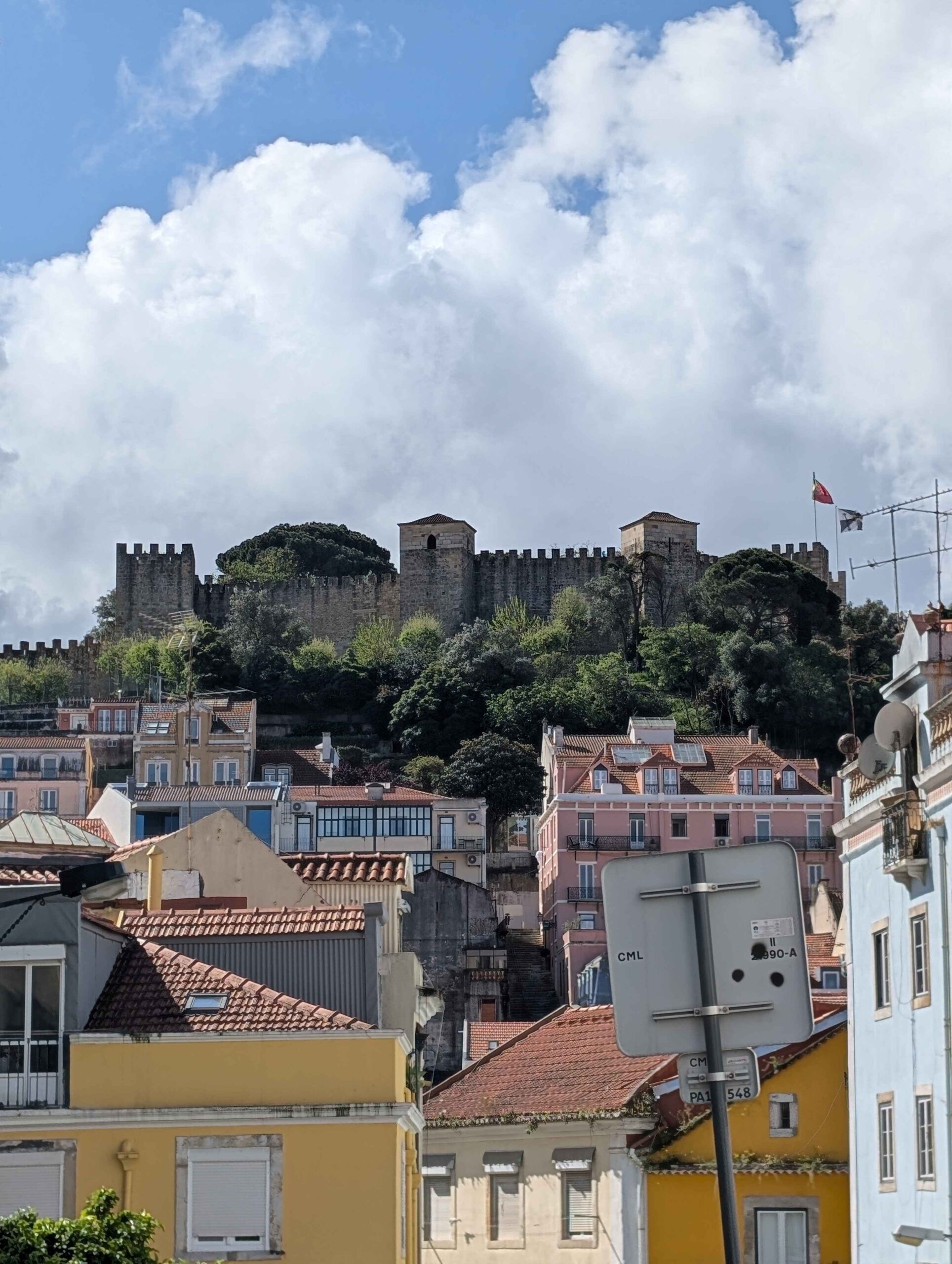
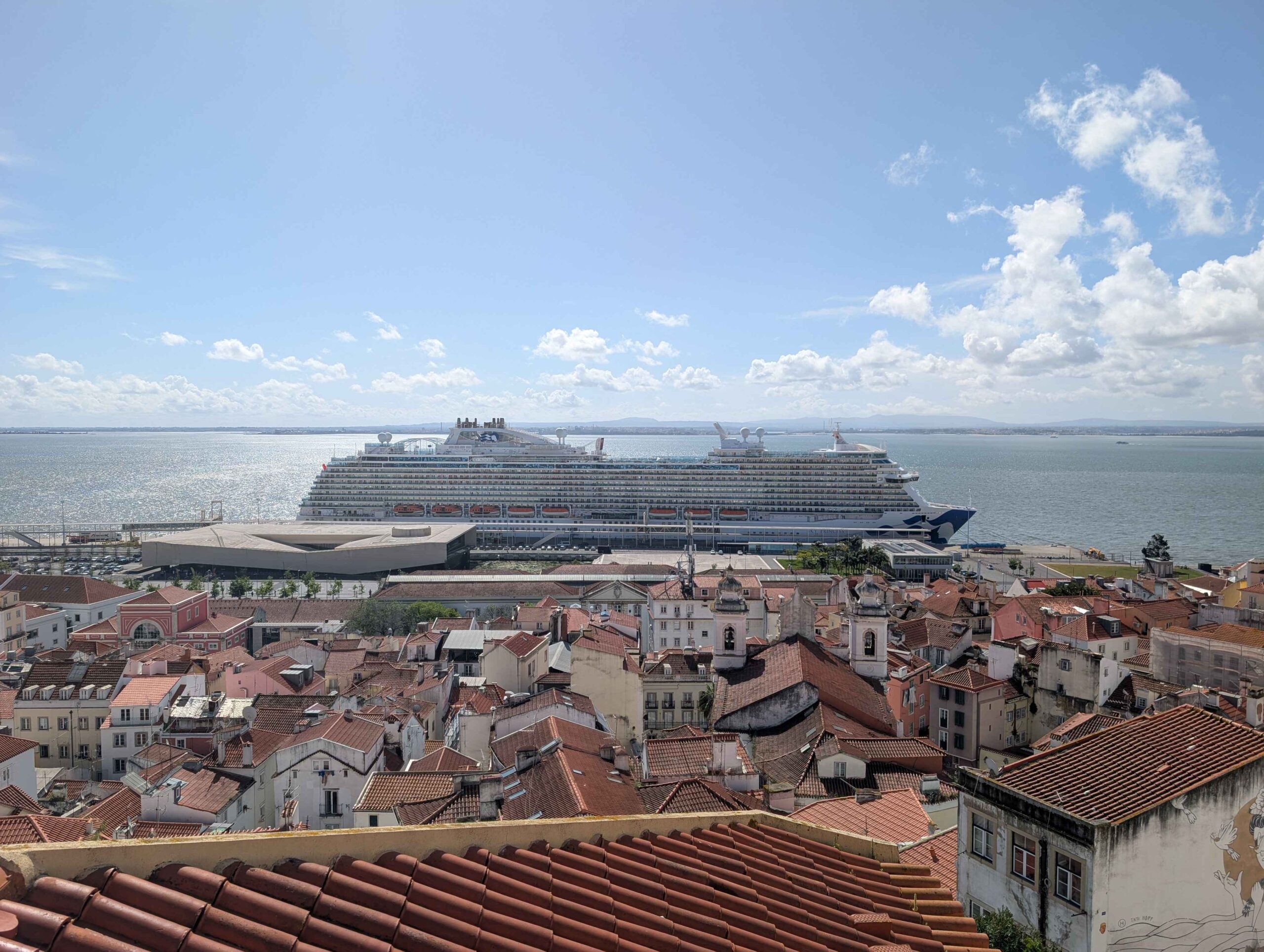
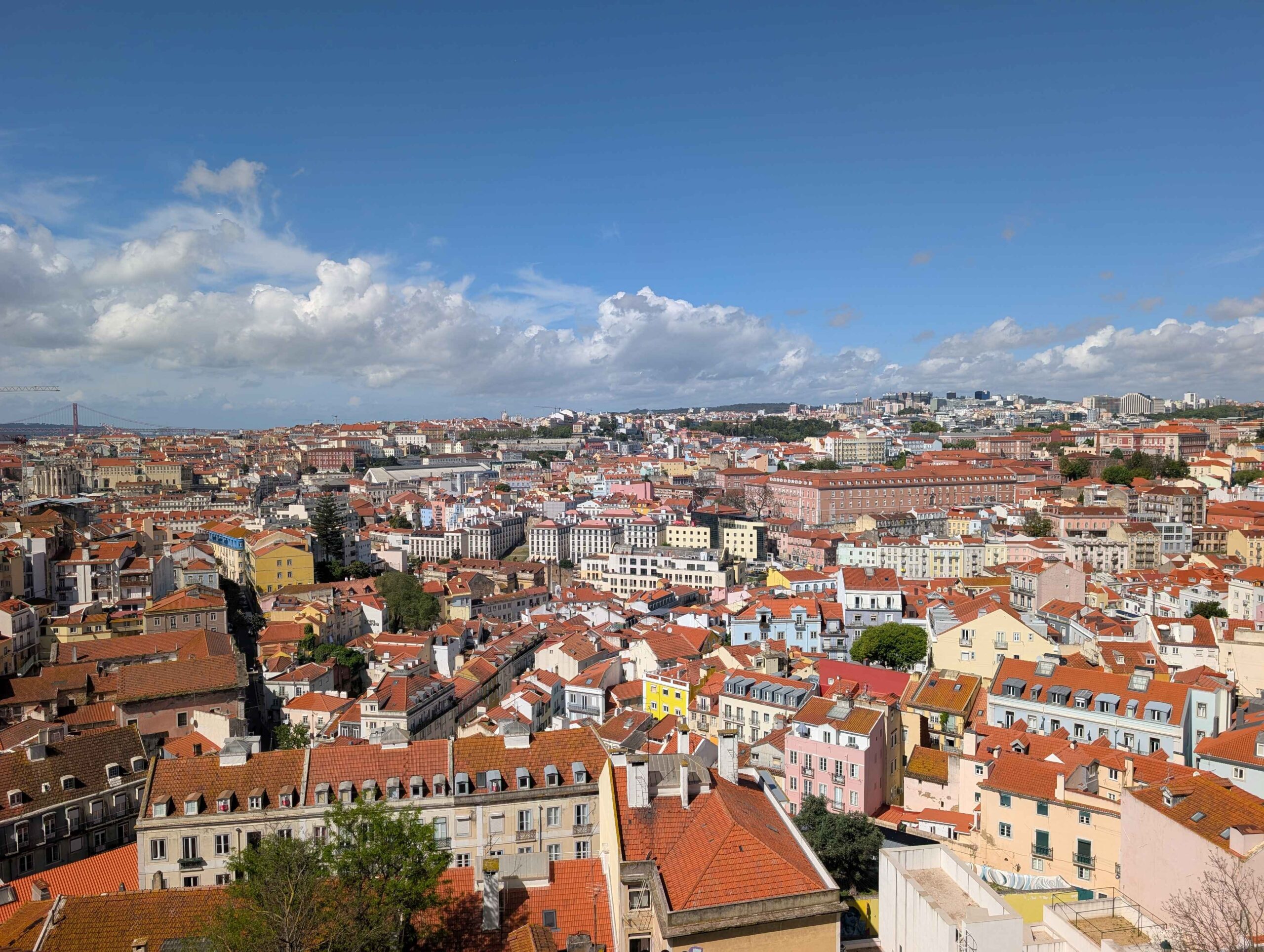
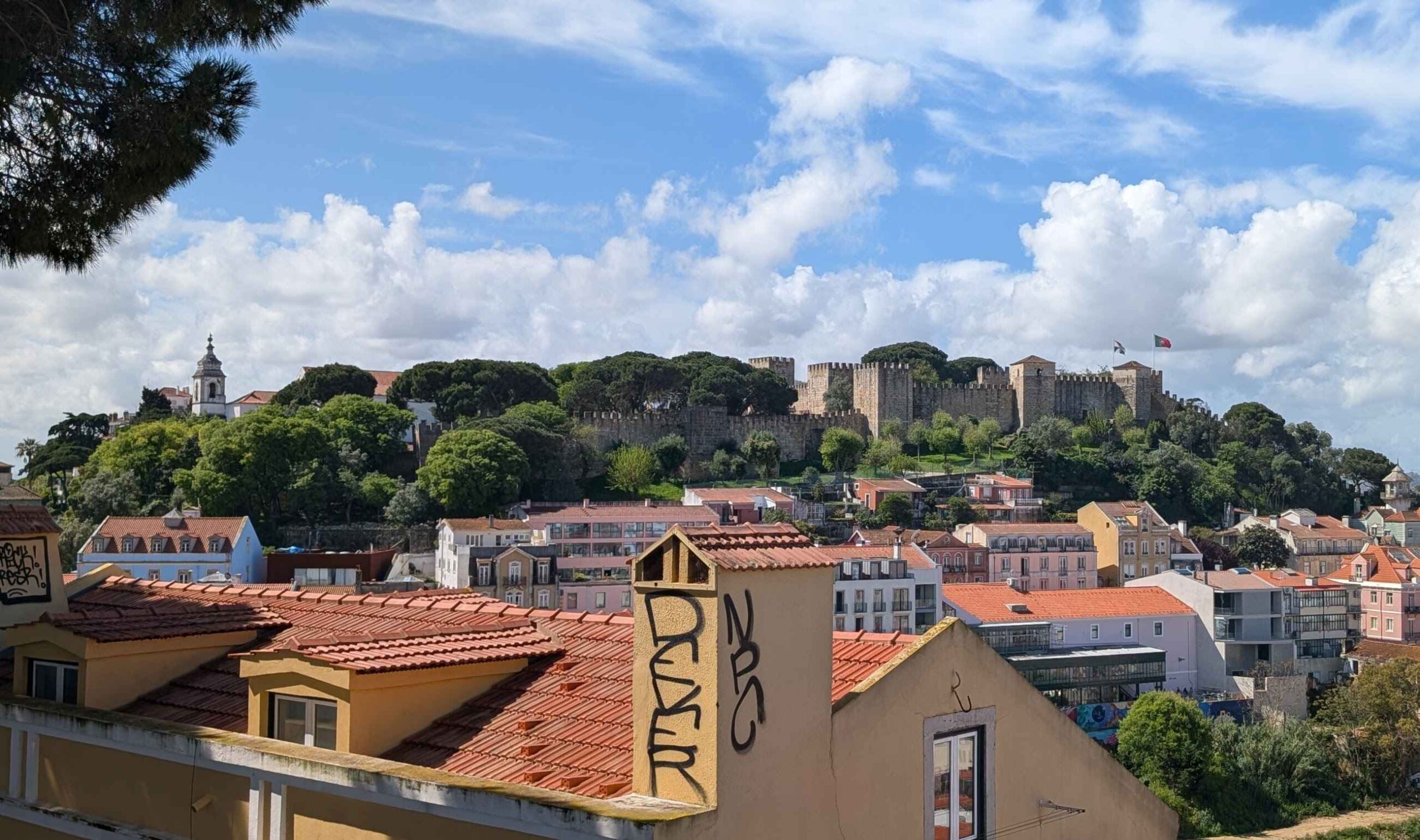
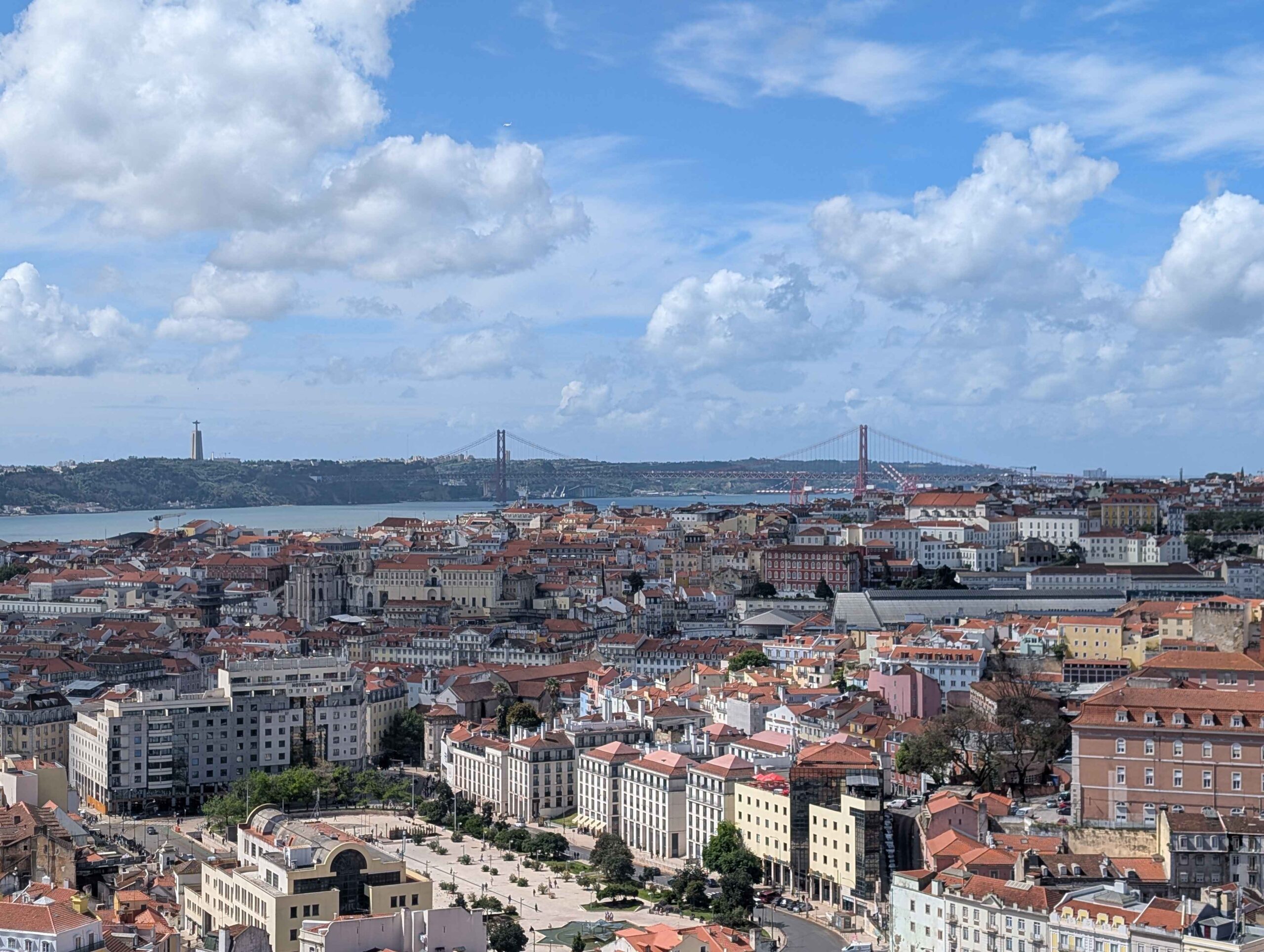
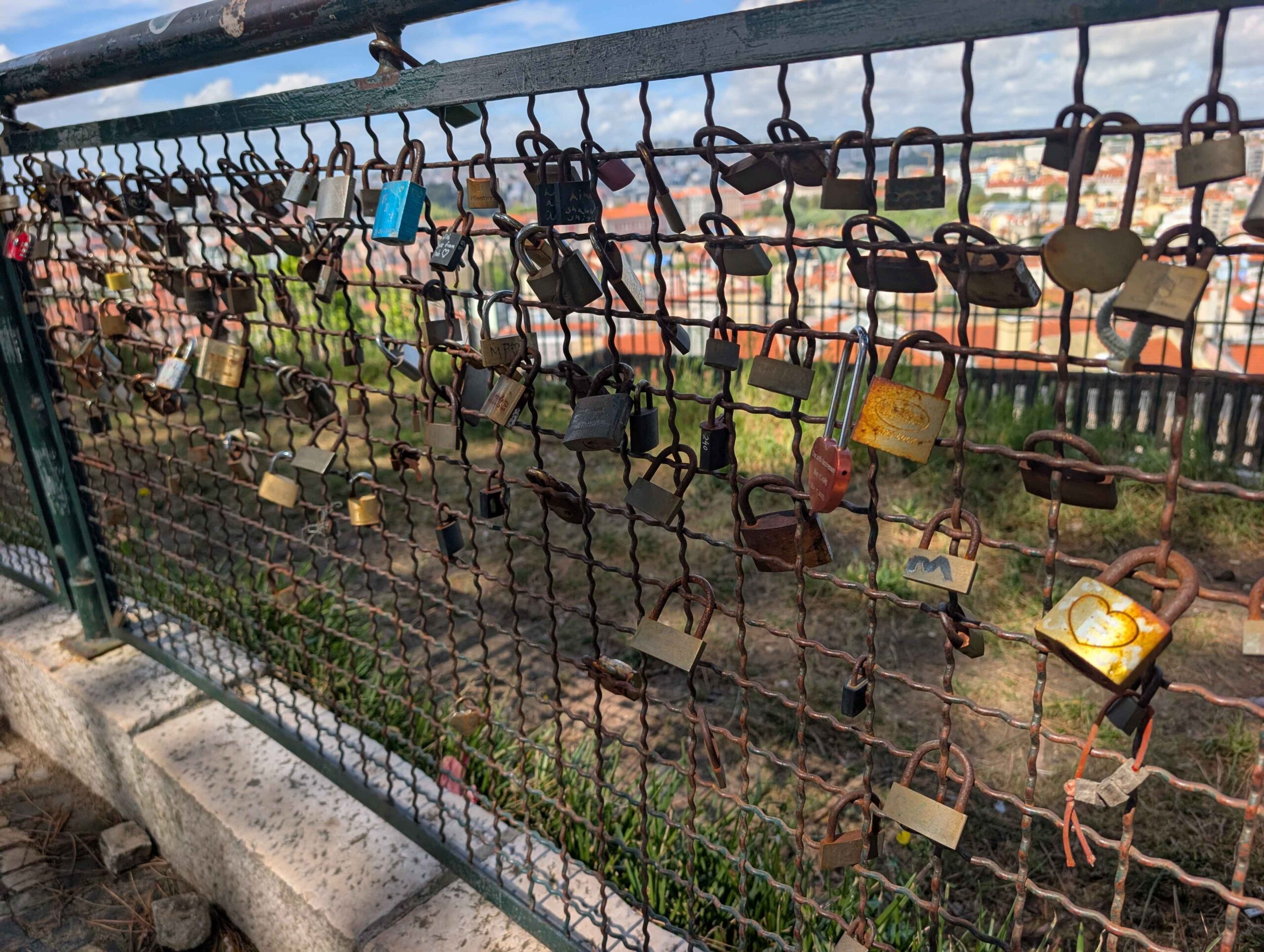
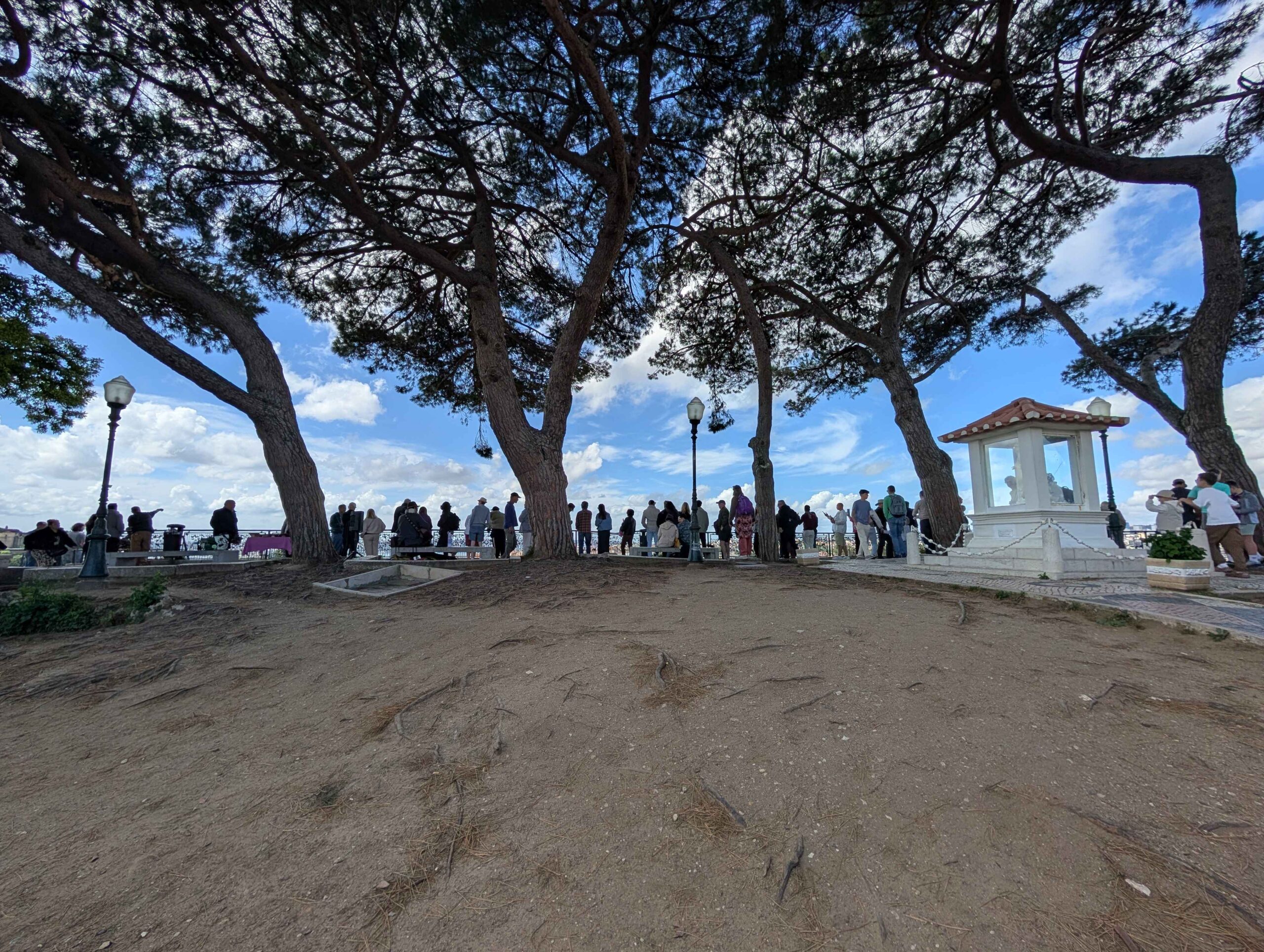
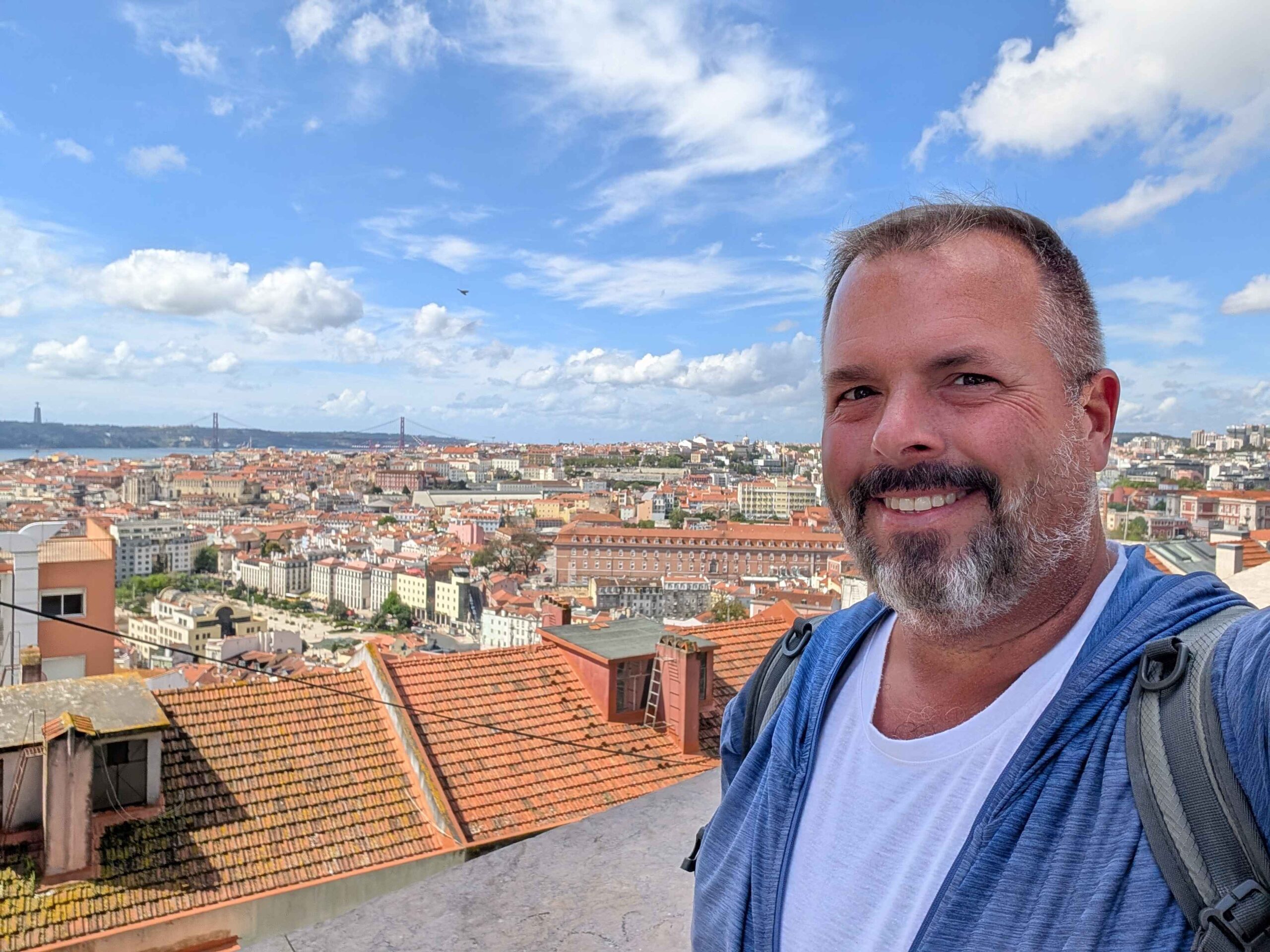
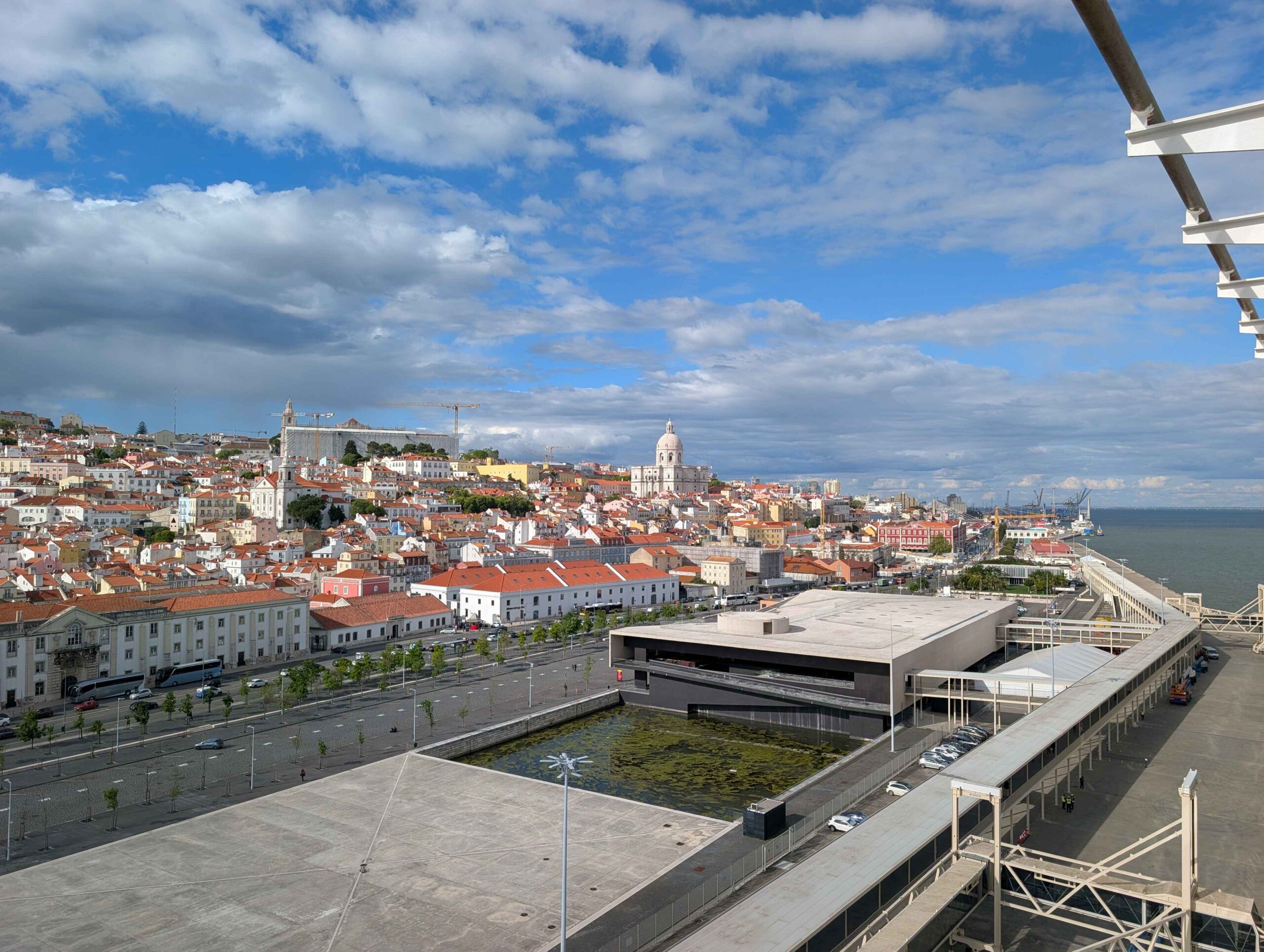
I adjusted from there. Instead of continuing upward in that direction, I turned back toward Alfama where the views finally opened up. That first overlook gave me exactly what I had been working toward, layered rooftops with the cruise ship sitting in the distance. It felt earned. I kept going higher to Miradouro da Senhora do Monte, which turned out to be the best view of the day, but also the most physically demanding stretch to reach.
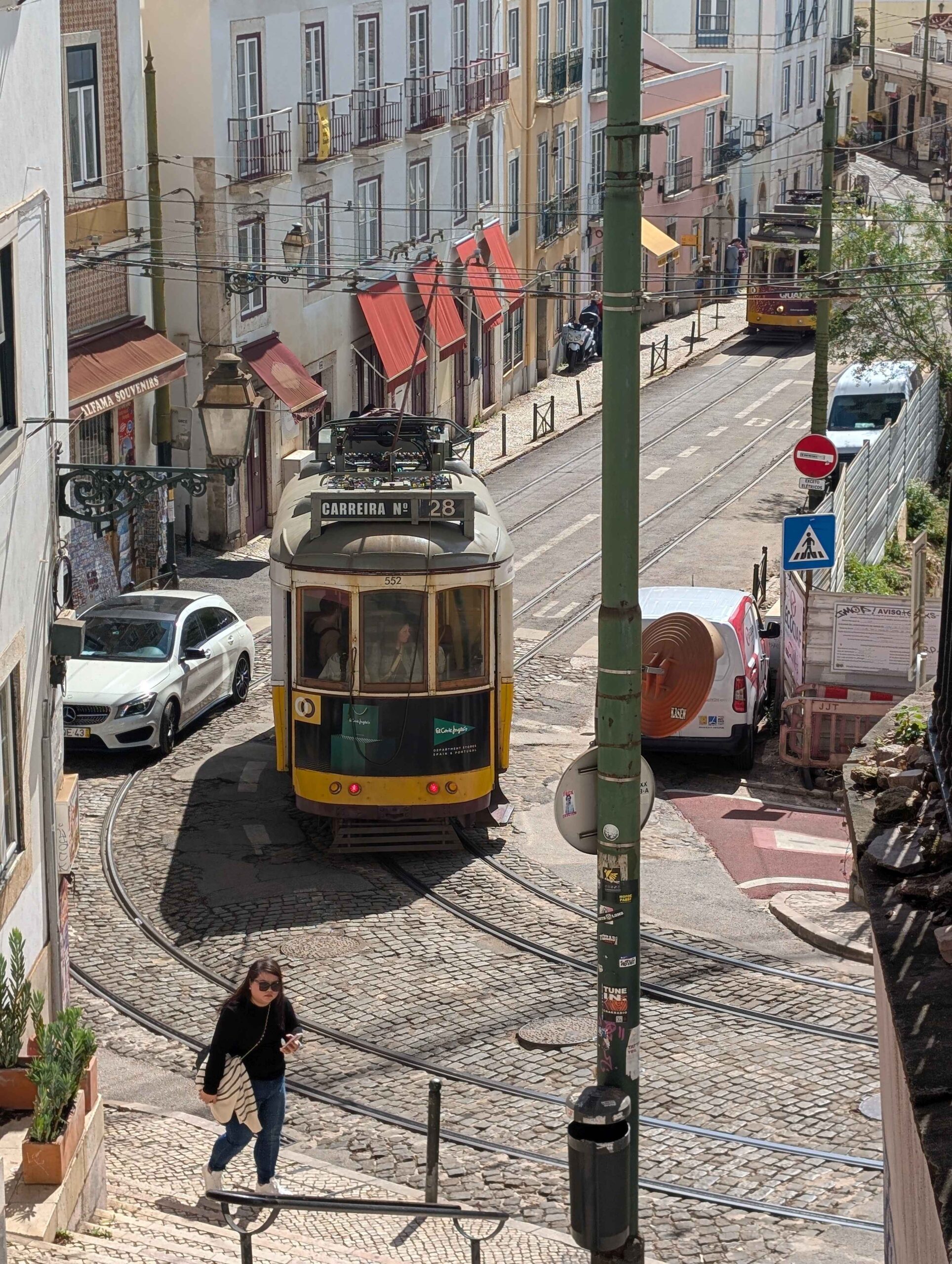
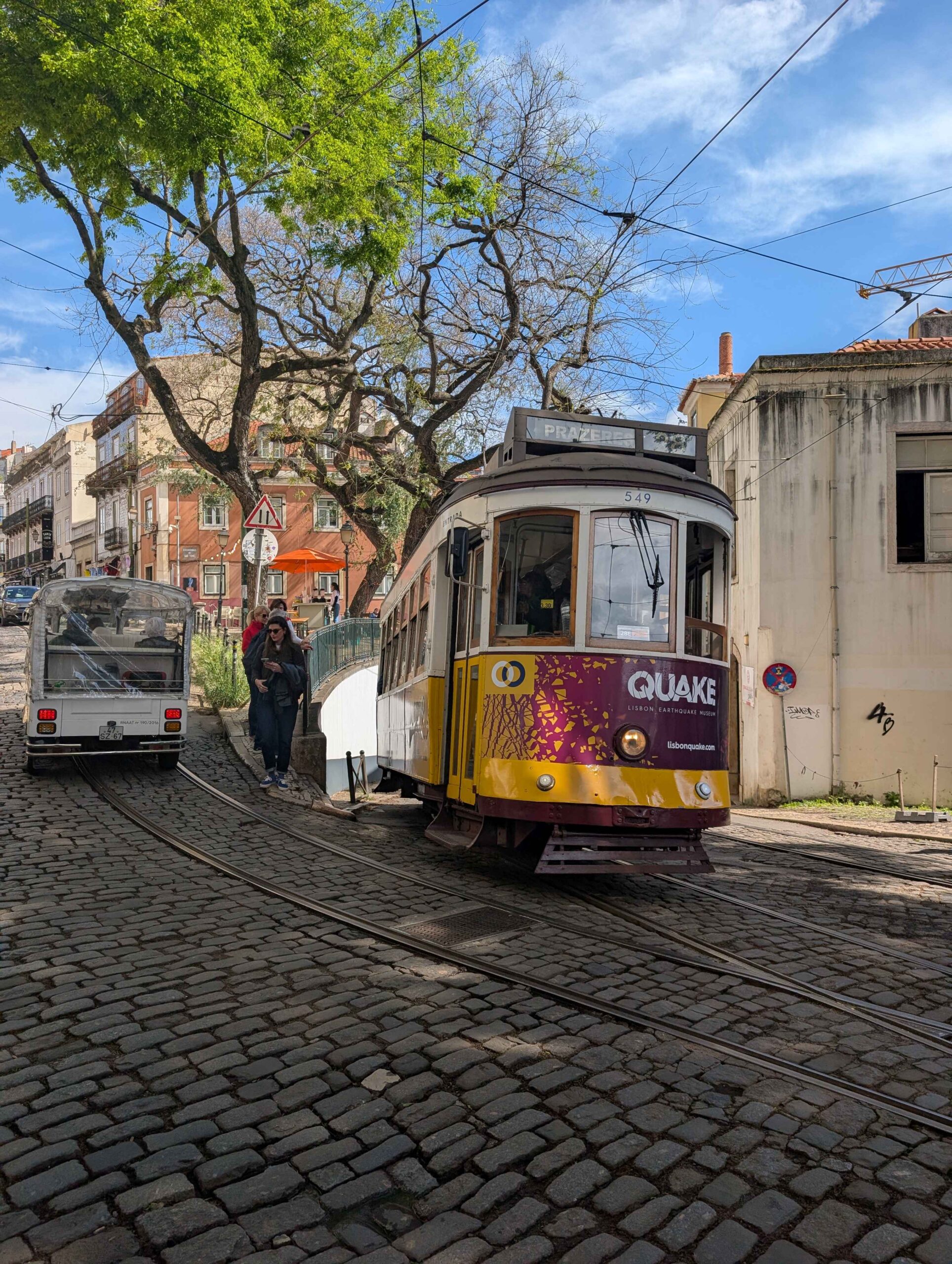
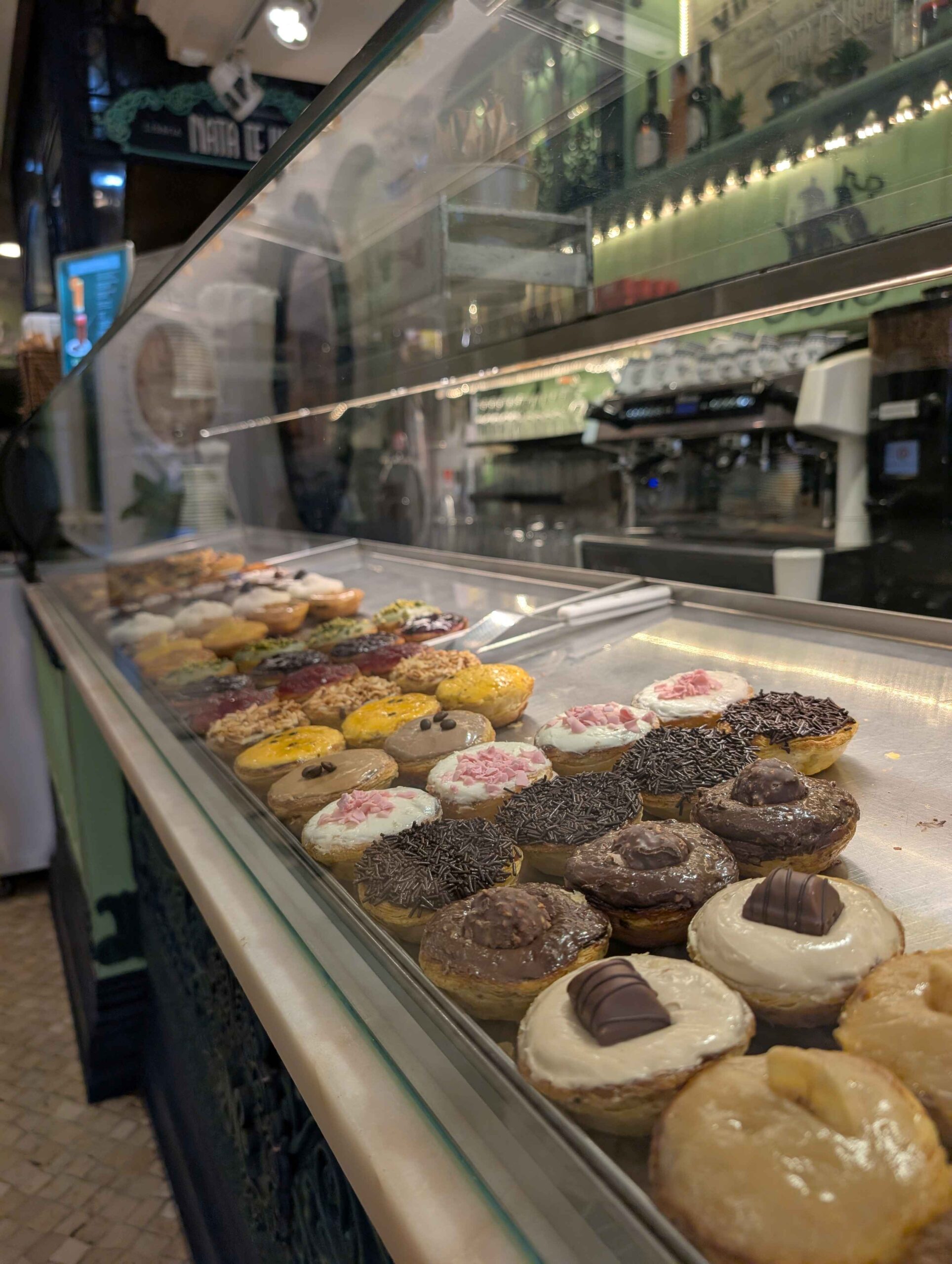
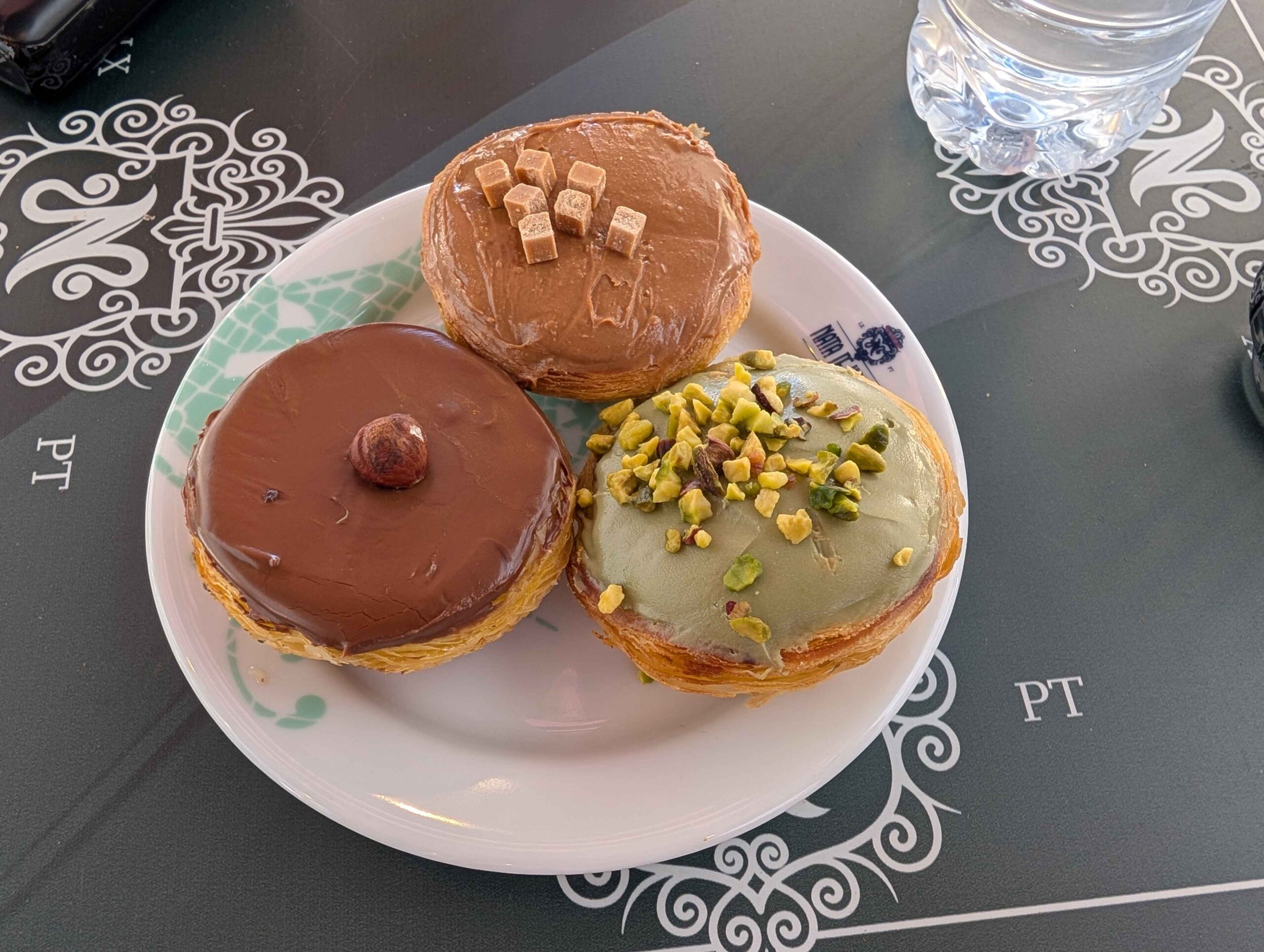
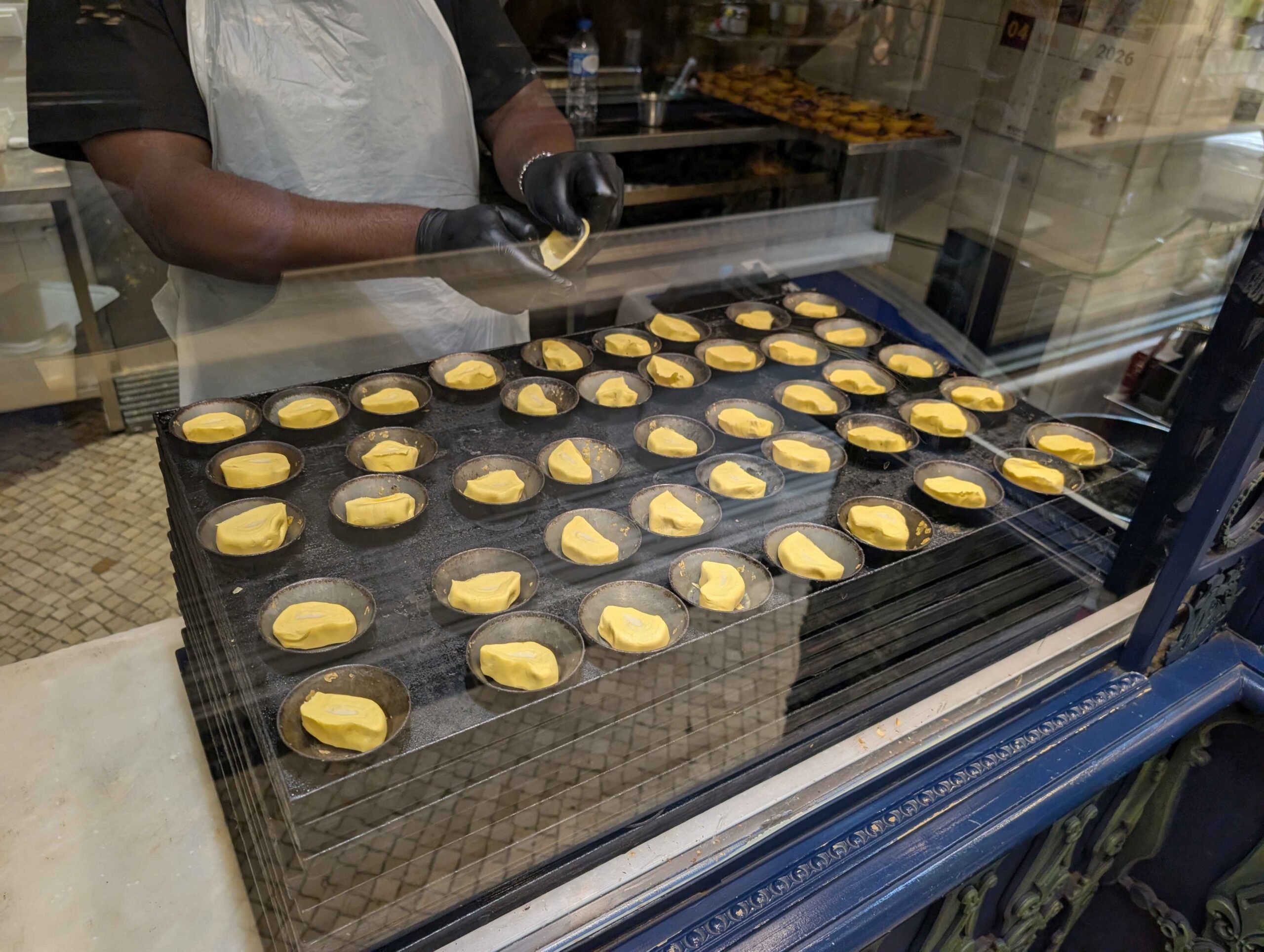
By the time I made it back down, I had covered close to 20,000 steps. I skipped the streetcars and committed to doing it on foot, which made the payoff feel more personal. I ended the day at Nata De Lisboa with three pastel de nata in pistachio, salted caramel, and hazelnut spread. After everything it took to get up those hills, it felt like the right way to close it out.
Lisbon’s layout is shaped as much by necessity as it is by history. The hills, the river, and centuries of rebuilding have created a city that stacks on itself rather than spreading out. Those layered views are not accidental. They are the result of a place that grew upward and adapted over time, which is exactly what you feel as you move through it.

If You Have More Time…
- Miradouro de Santa Catarina – A more relaxed viewpoint with river views and fewer climbs than Senhora do Monte. It is a good alternative if you want a scenic stop without committing to a long uphill walk.
- LX Factory – A converted industrial complex filled with shops, cafés, and street art. It offers a completely different side of Lisbon that contrasts with the historic districts.
- Belém Tower – Located along the waterfront west of the city center, this historic fort is tied to Portugal’s Age of Discovery and works well as a short tram or taxi ride from the port.
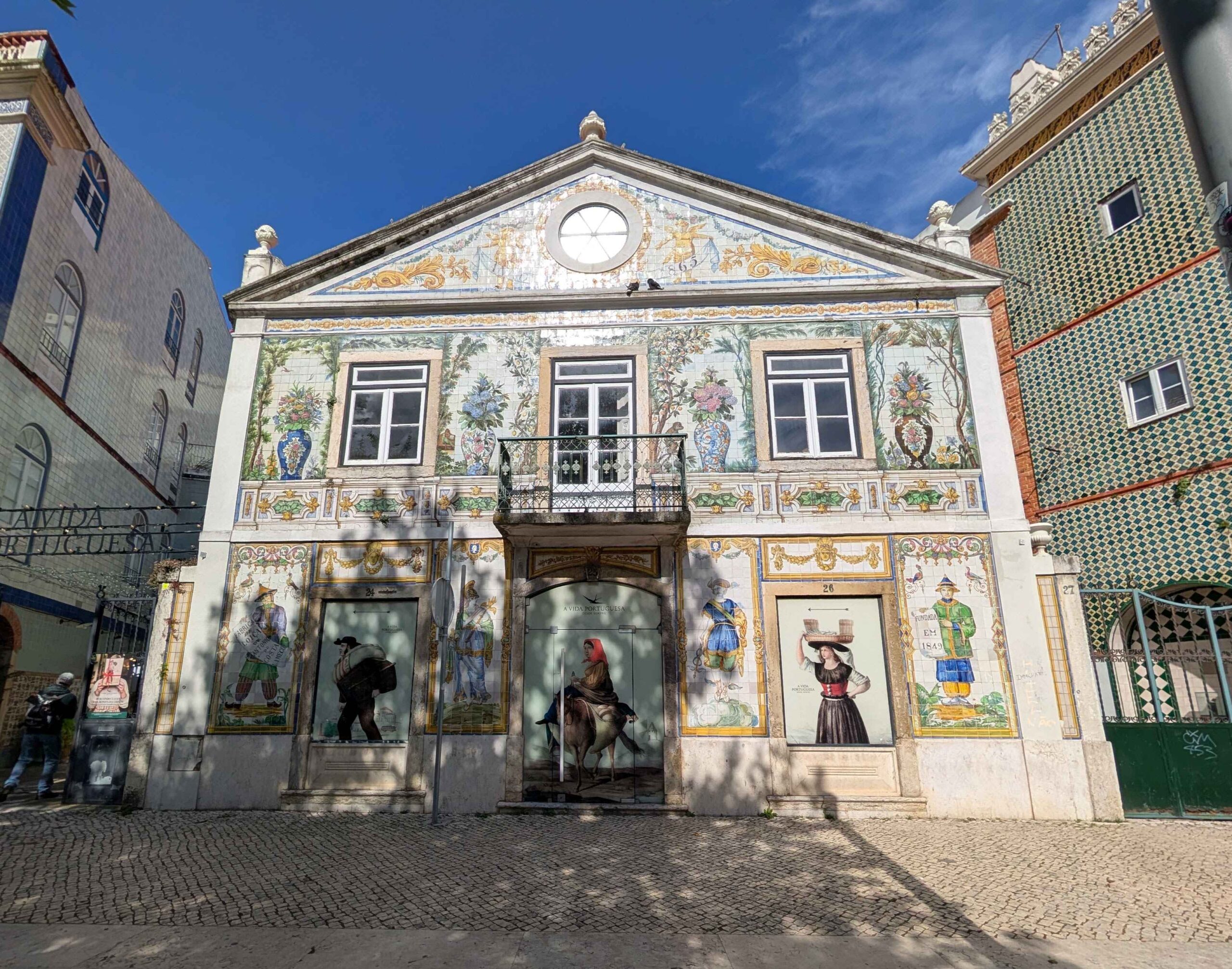
- National Tile Museum – A deep dive into azulejo tilework that helps explain the patterns you see across Lisbon’s buildings and streets.
- Elevador de Santa Justa – A vertical lift in Baixa that provides an easier way to gain elevation and access views without committing to a full uphill walk.