
Cherry Blossoms and Sankyo Warehouses in Sakata
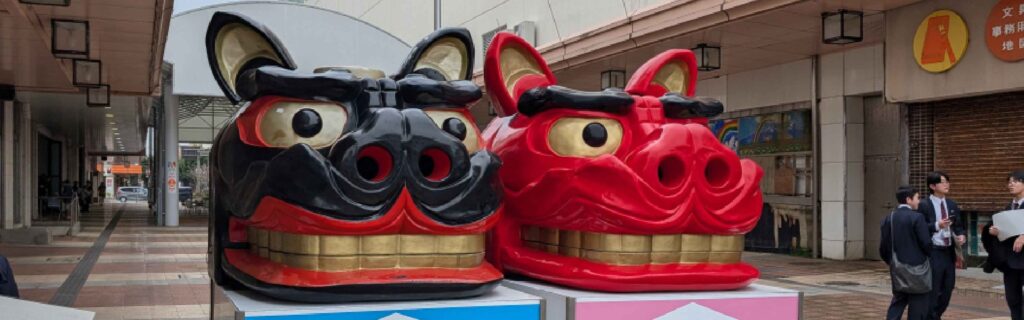
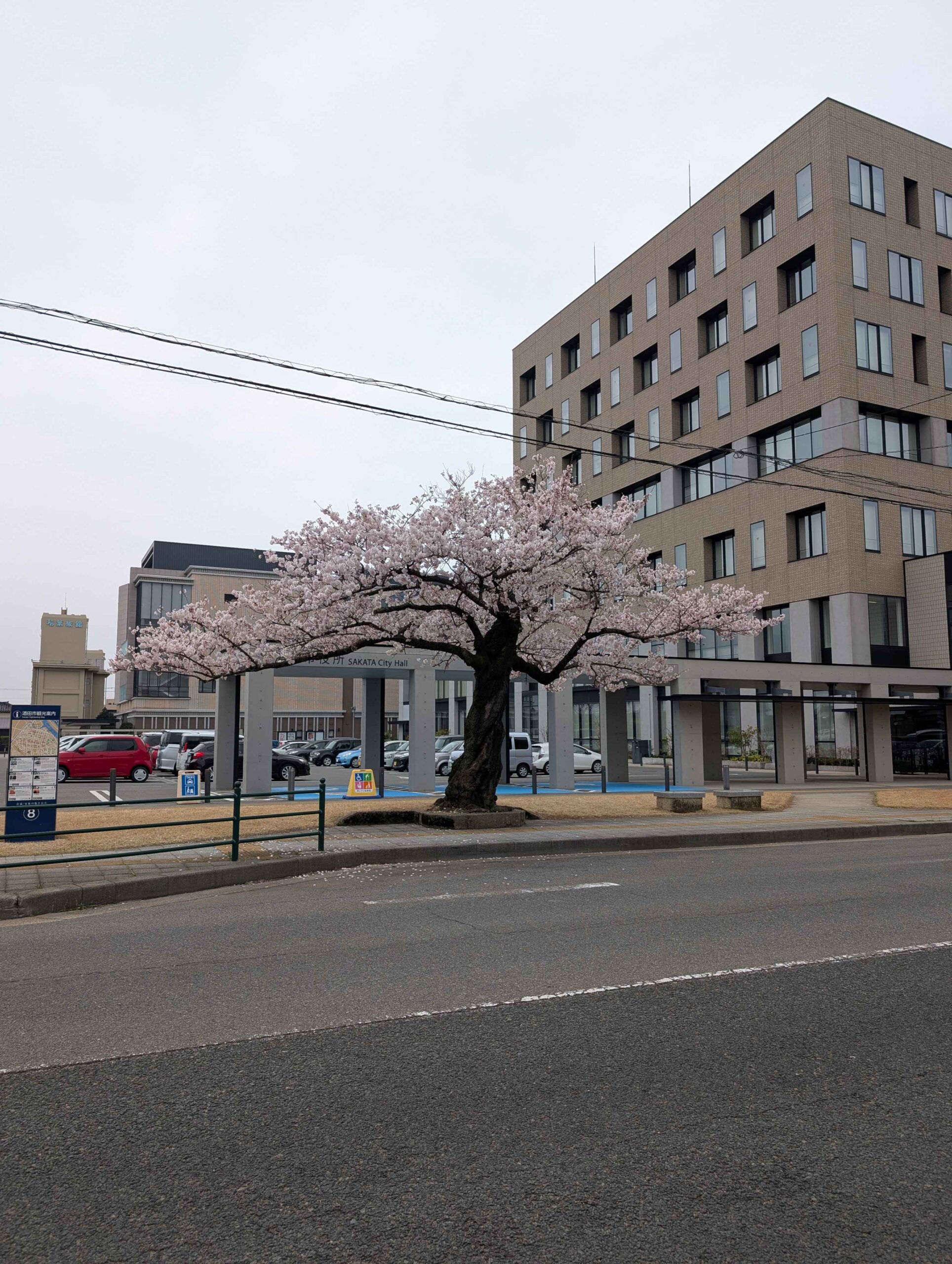
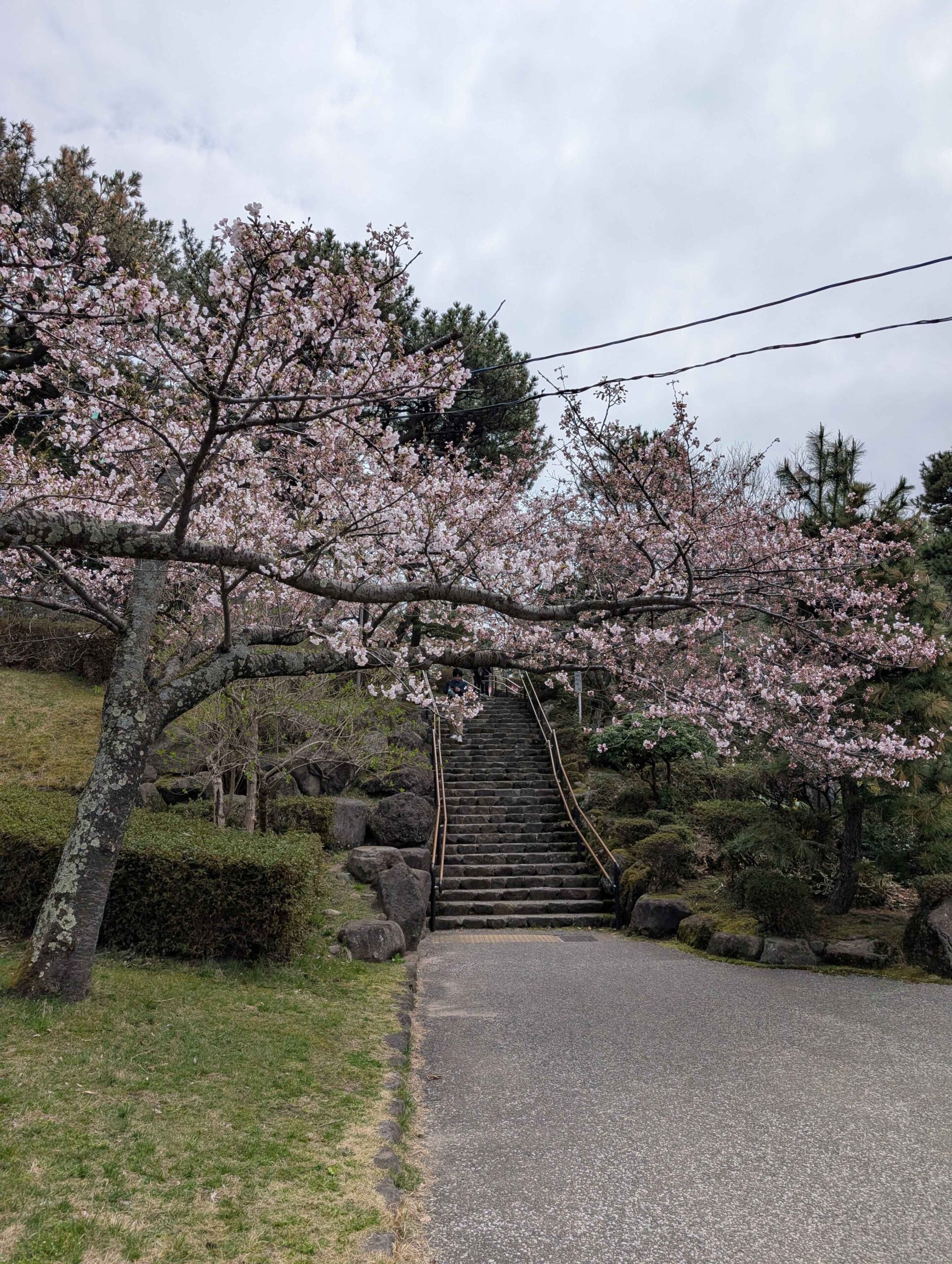
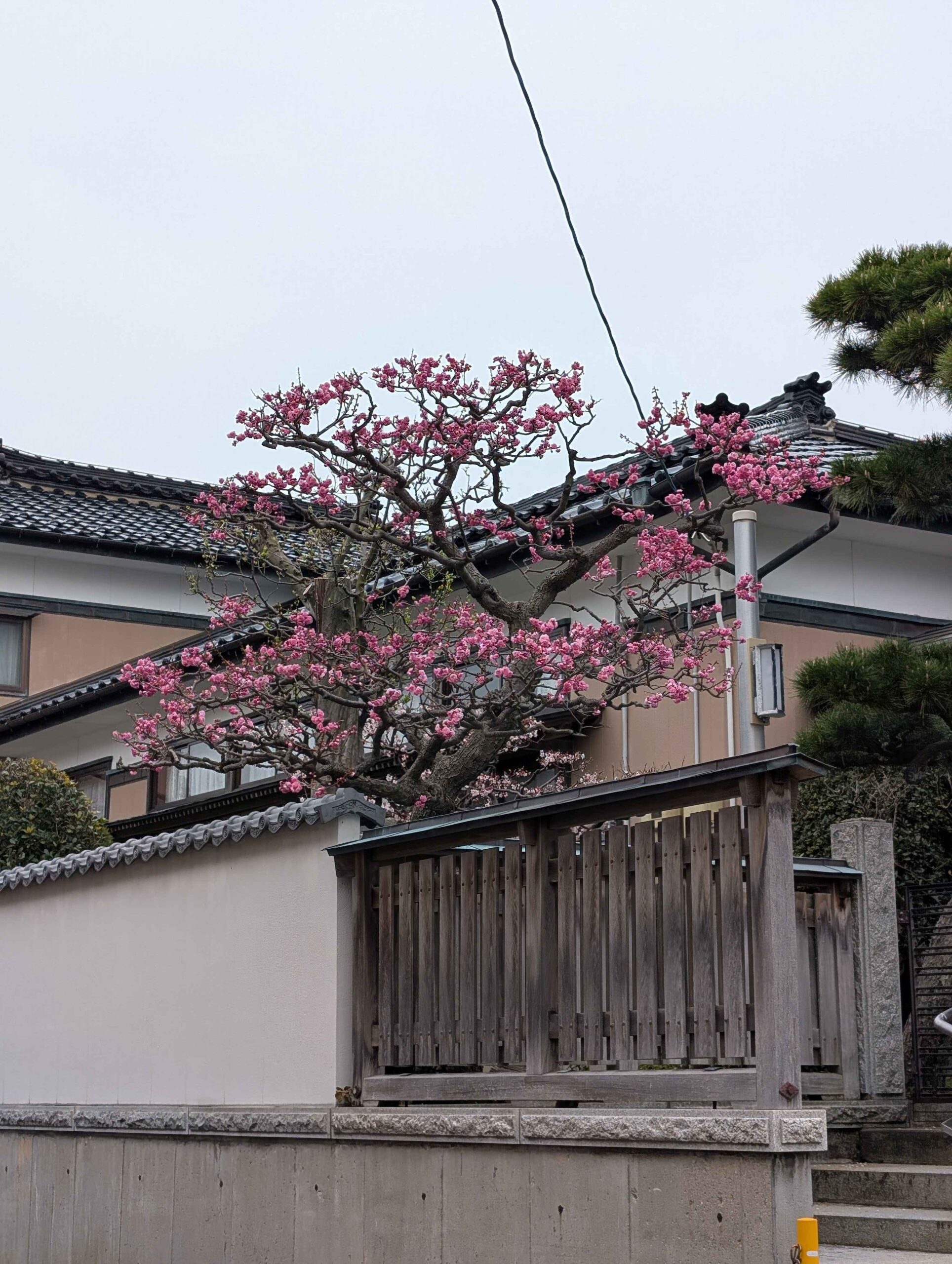
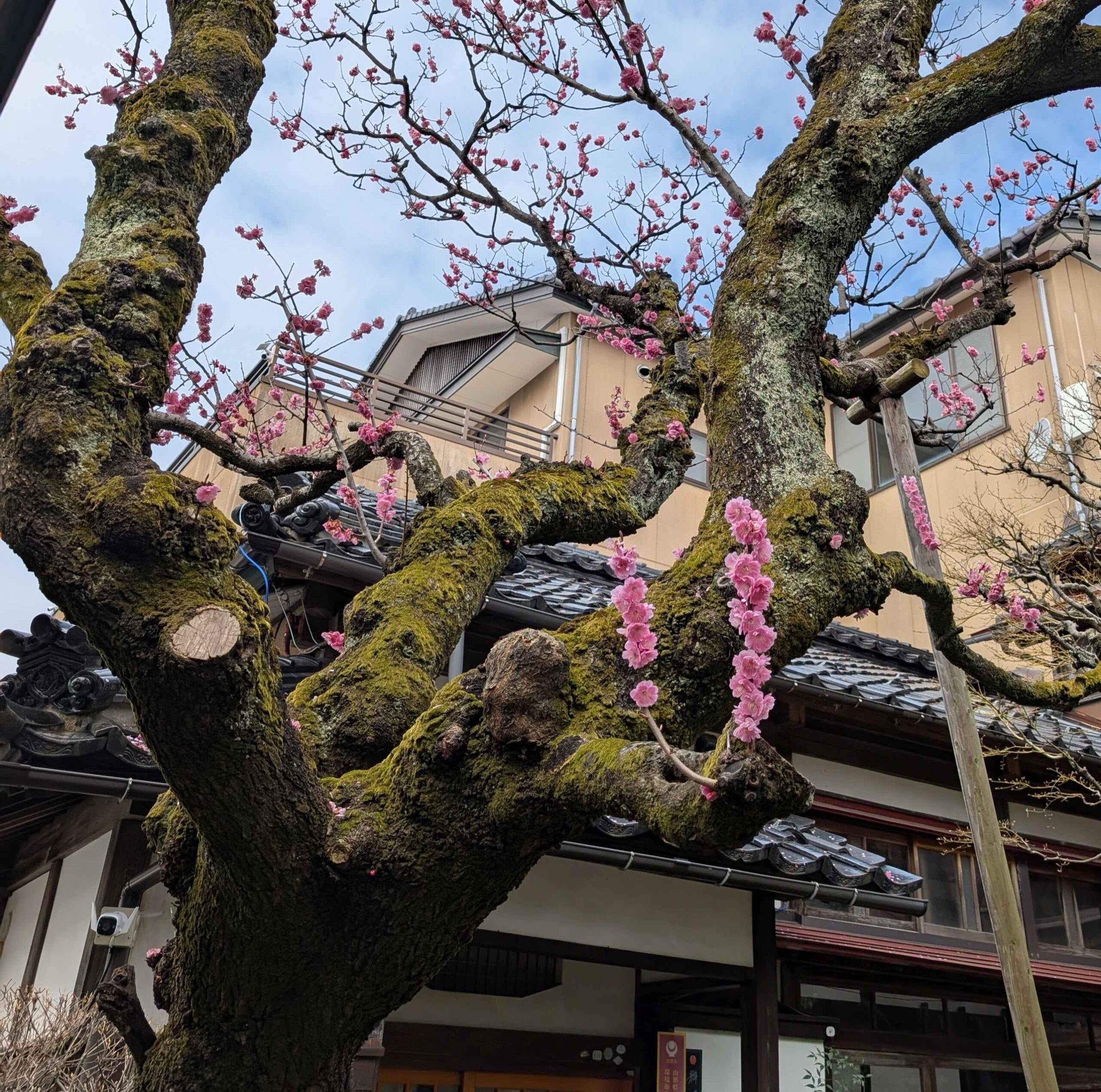
Cool spring air and the quiet rustle of cherry blossoms set the tone as I stepped off the shuttle and started walking through town. Arriving by cruise ship in Sakata gave me a relaxed day to wander with a camera and no real schedule. This port turned out to be perfect for photography, with canals, blossoms, shrines, and a lively park festival all within walking distance.
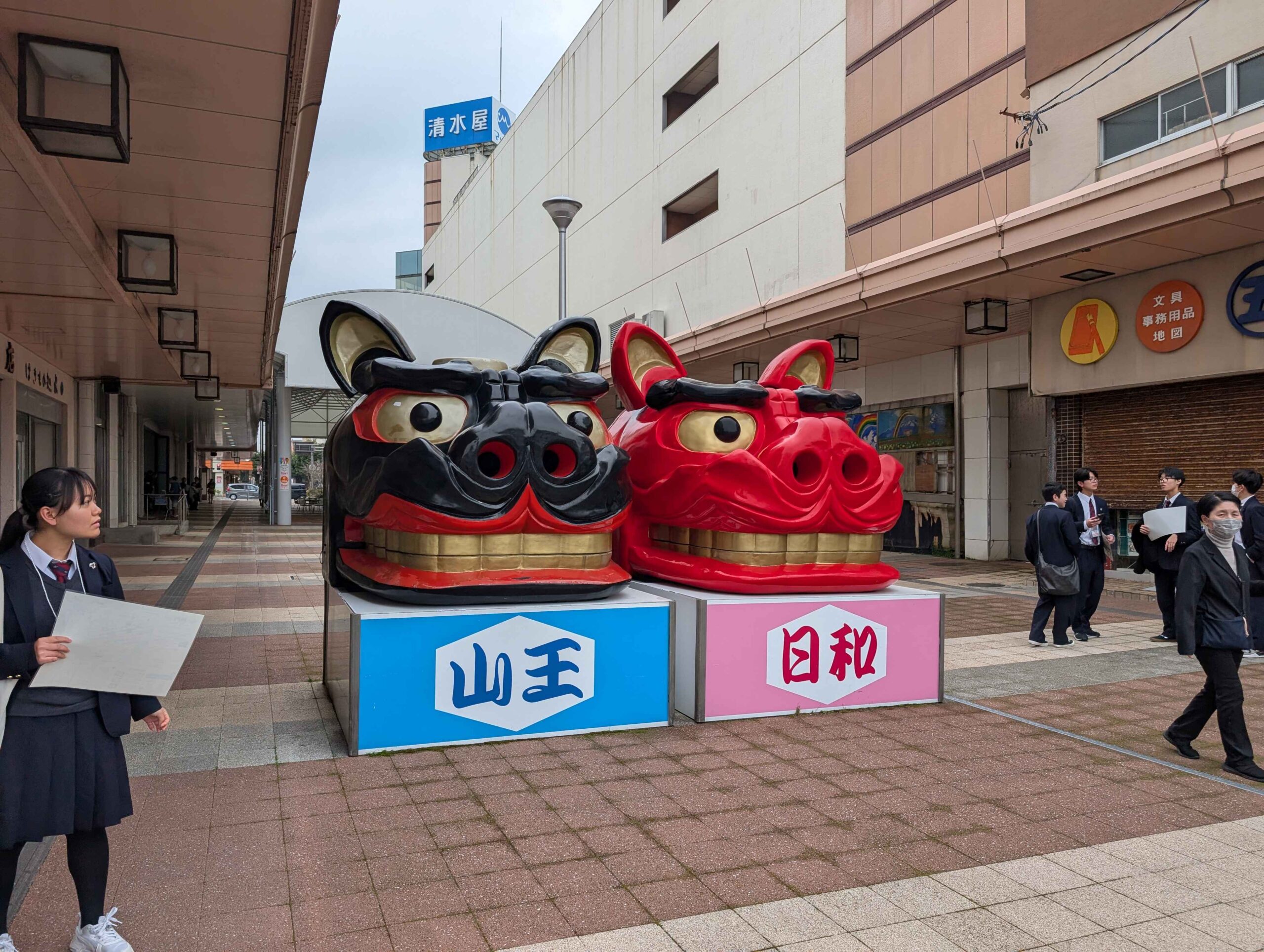
As I made my way deeper into town, I began to notice how calm everything felt compared with some of the larger Japanese ports. Sakata (酒田 – pronounced sah-kah-tah) sits on the Sea of Japan coast in Yamagata Prefecture and feels more like a quiet regional town than a busy tourist stop.
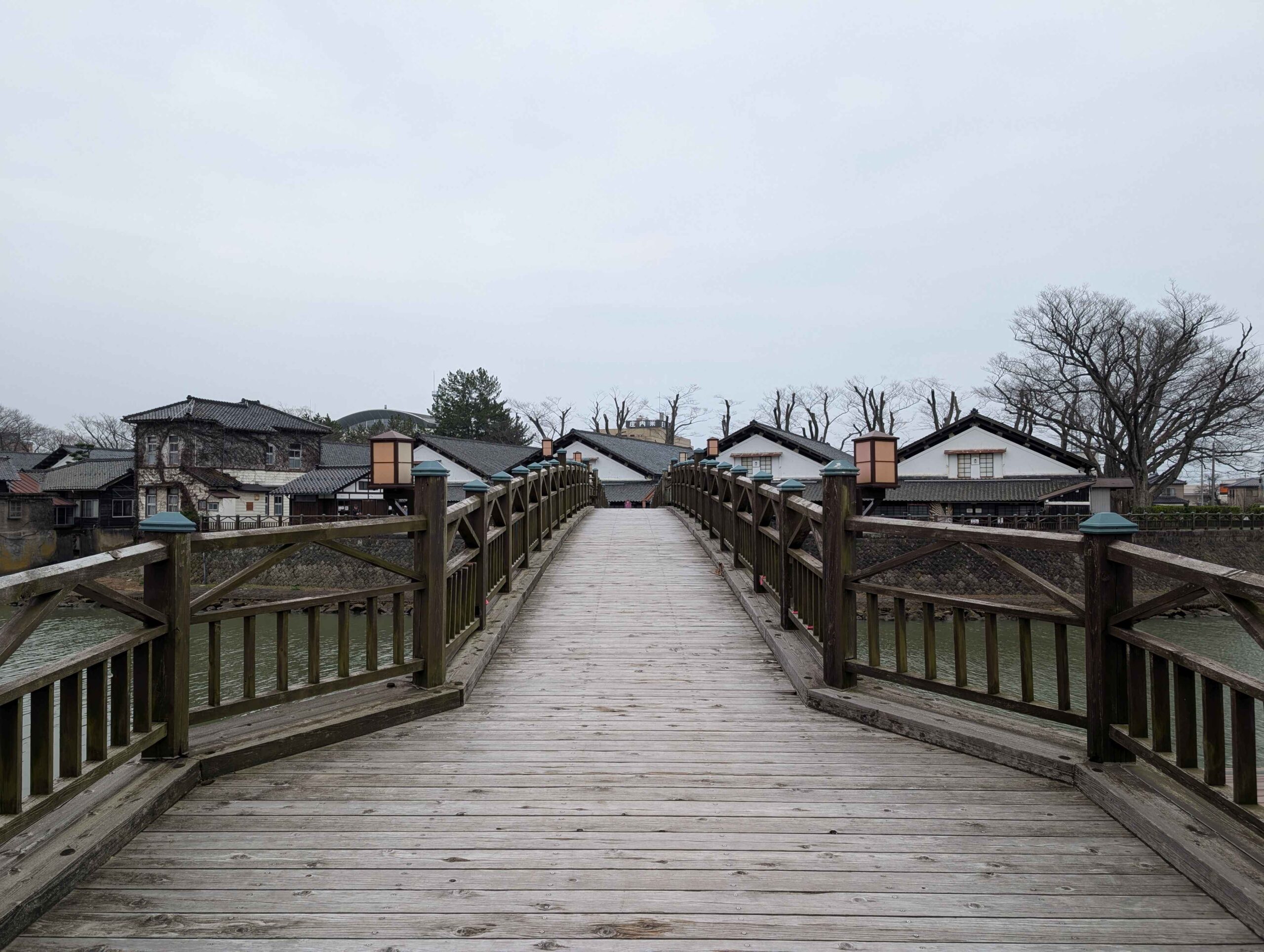
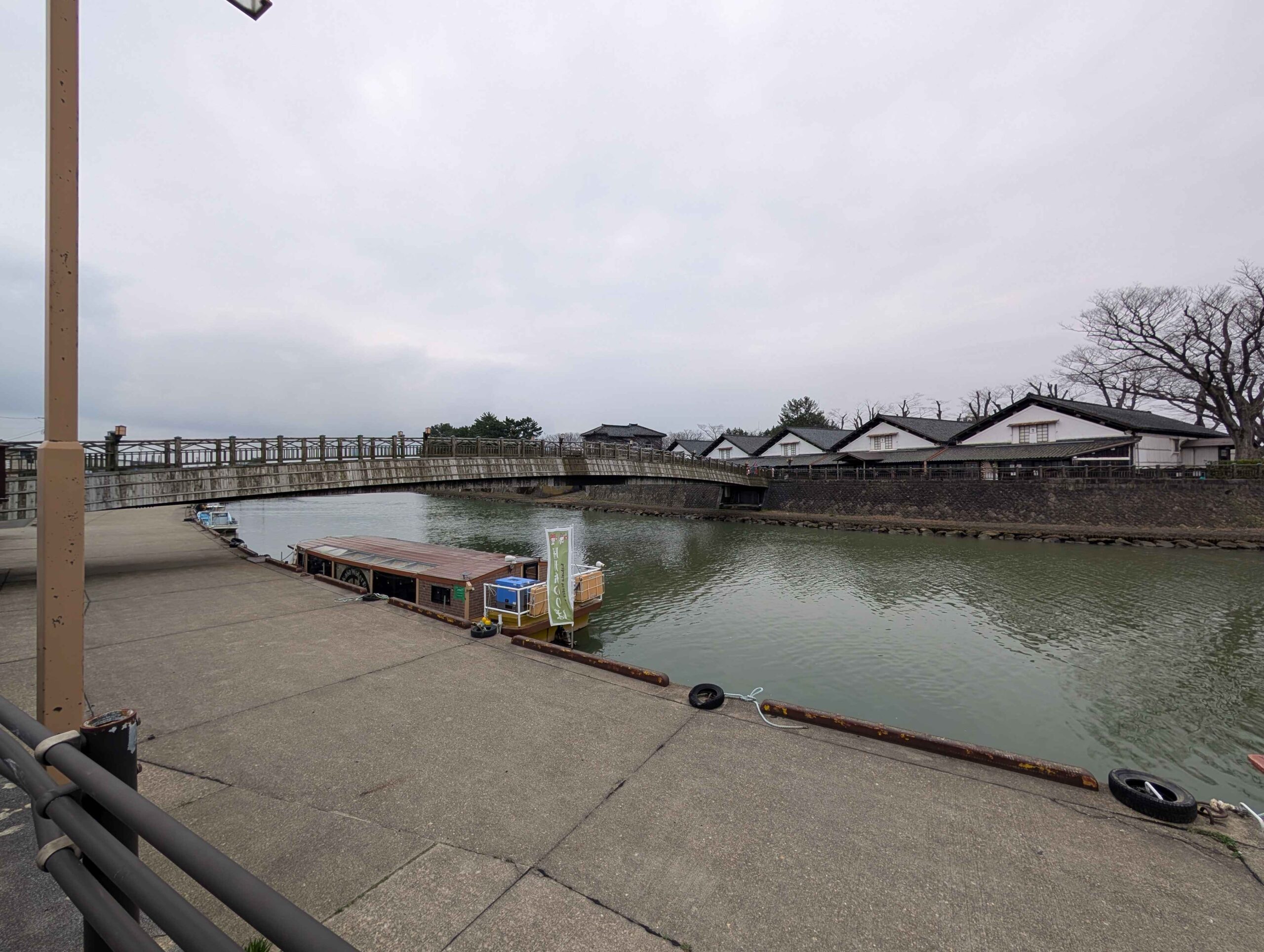
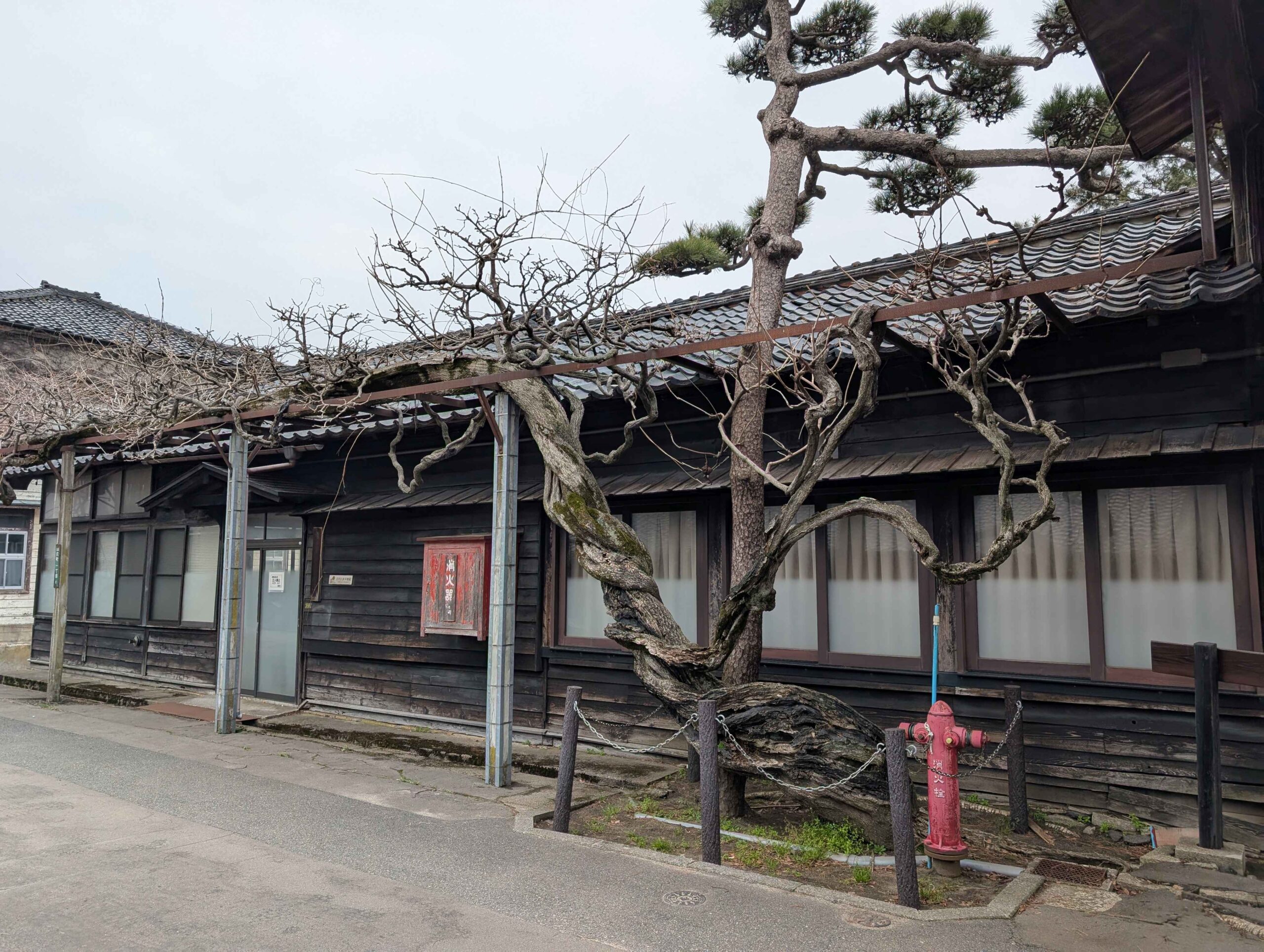
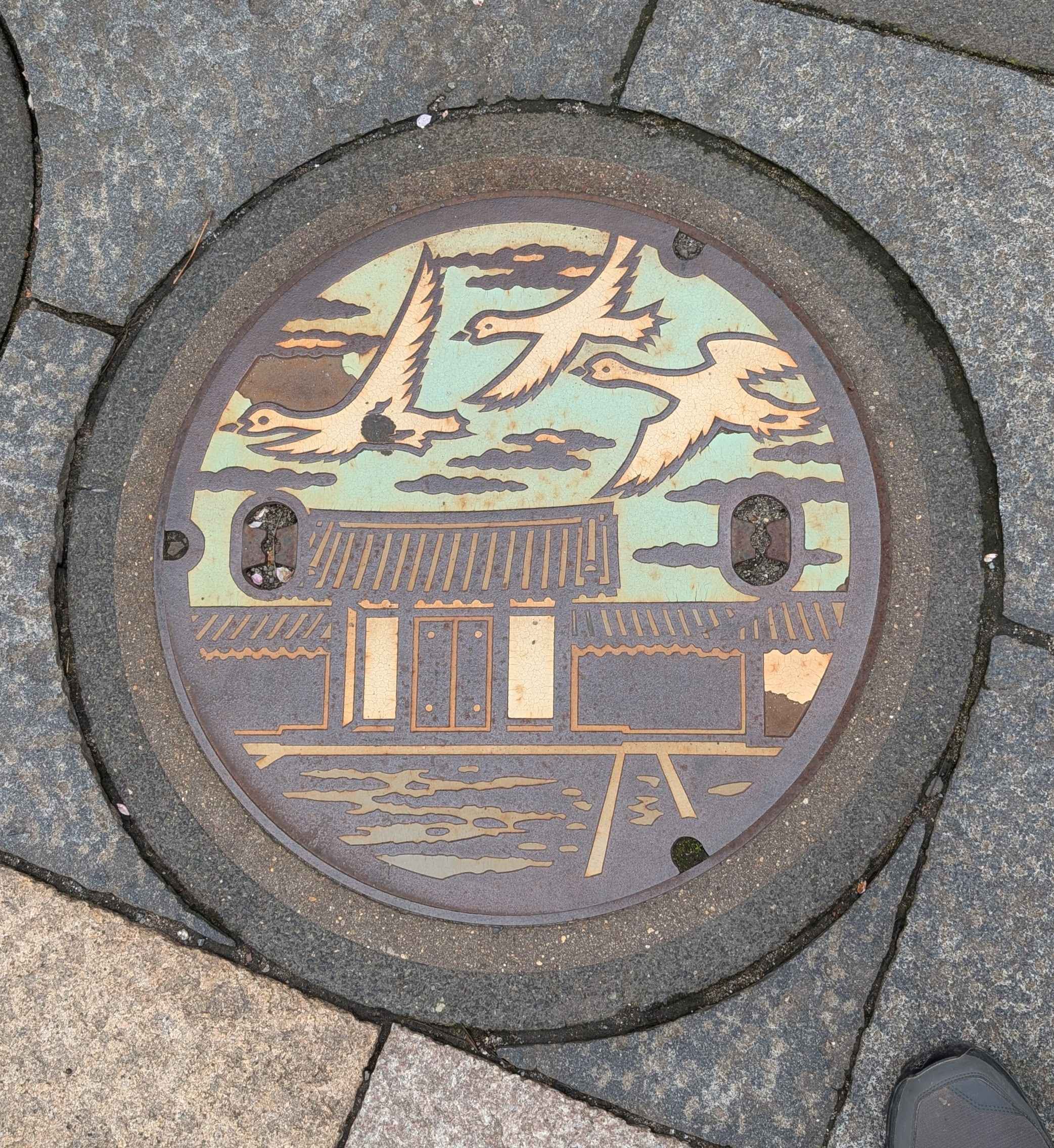
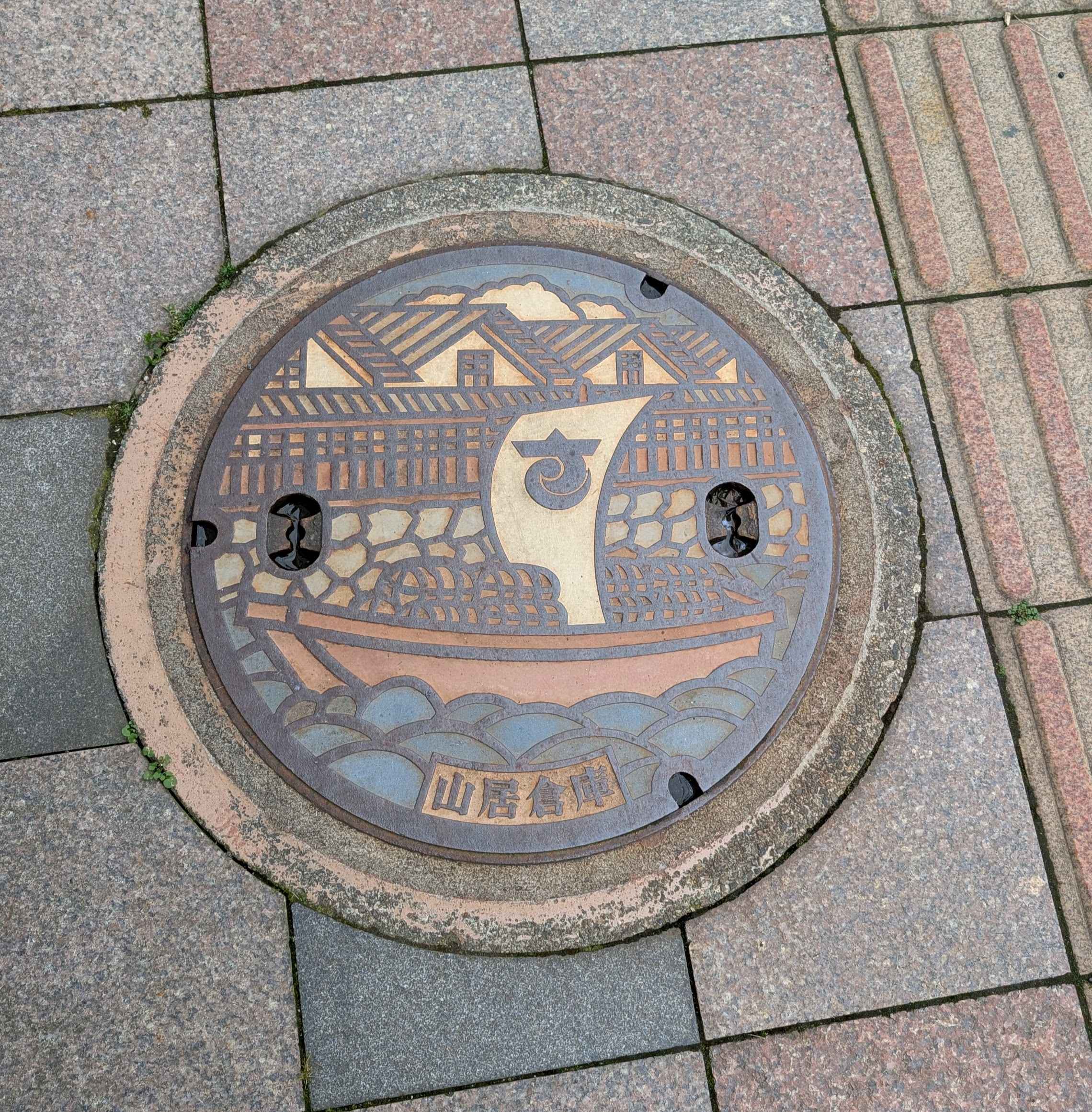
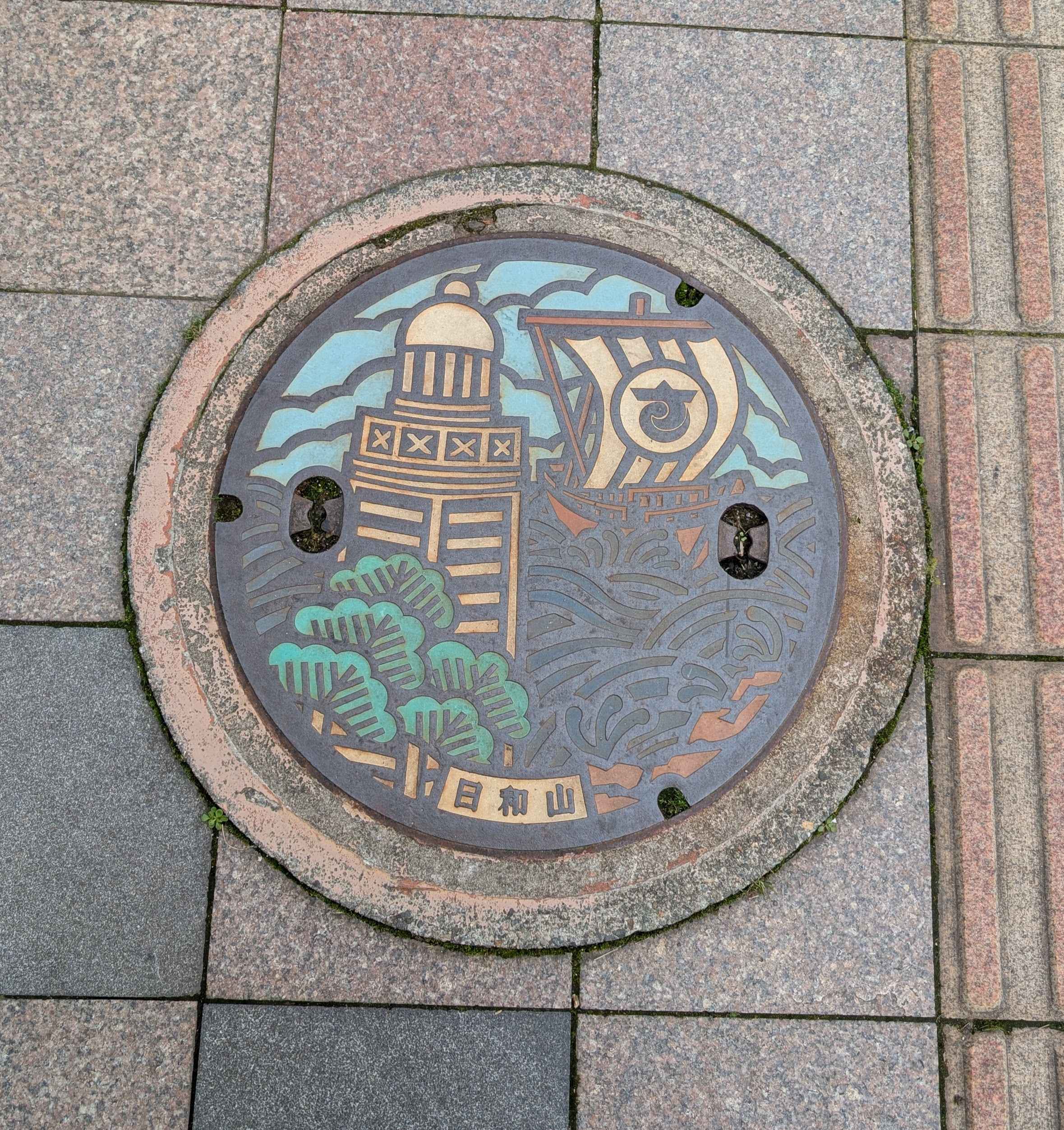
My walk began at the Sankyo Soko rice warehouses where a row of historic white buildings lines a peaceful canal. Wooden bridges crossed the water and pine trees curved along the path with branches beginning to bloom. Every few minutes I stopped for photos. Even the decorative manhole covers felt like small pieces of art scattered around town.
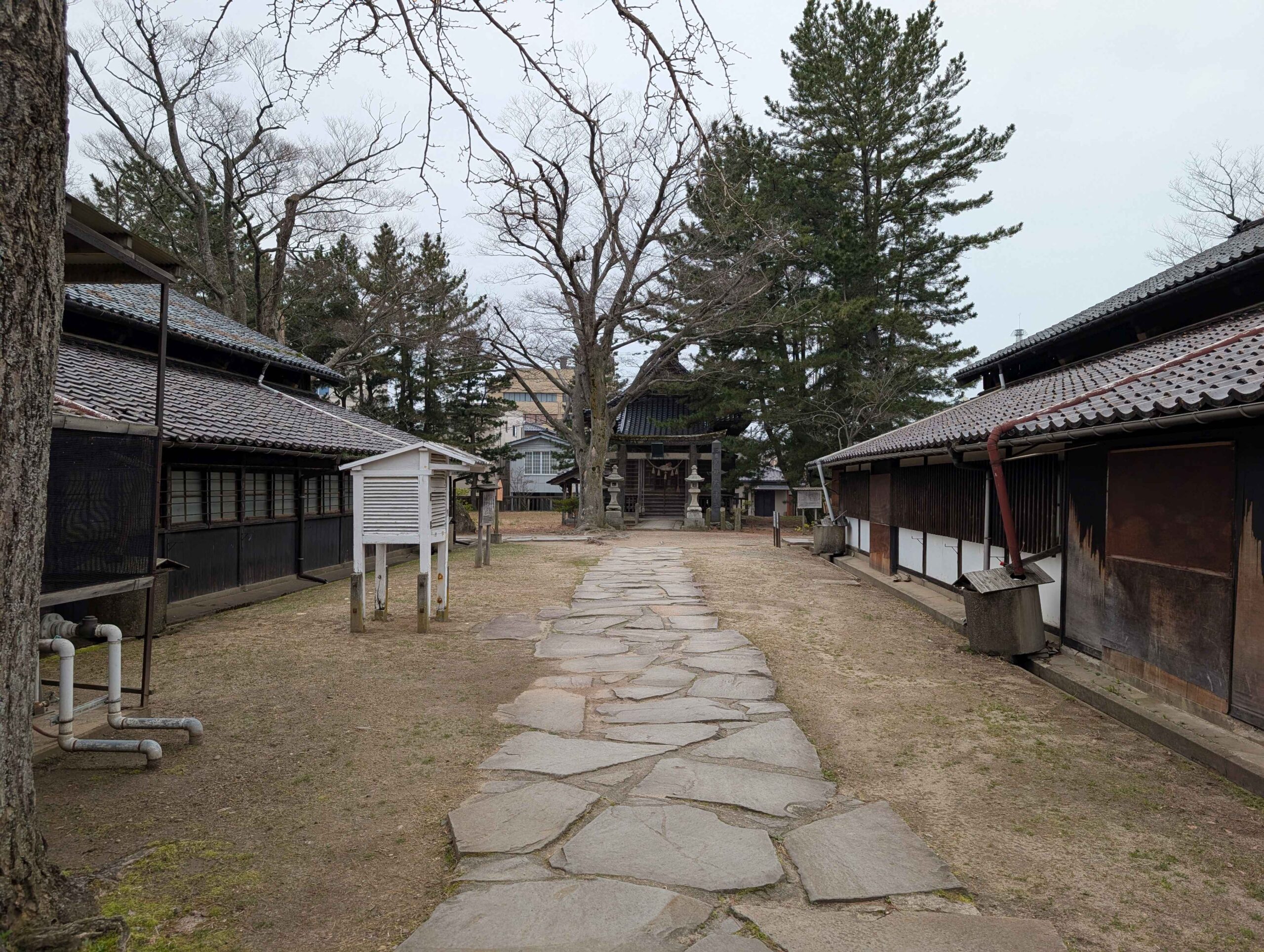
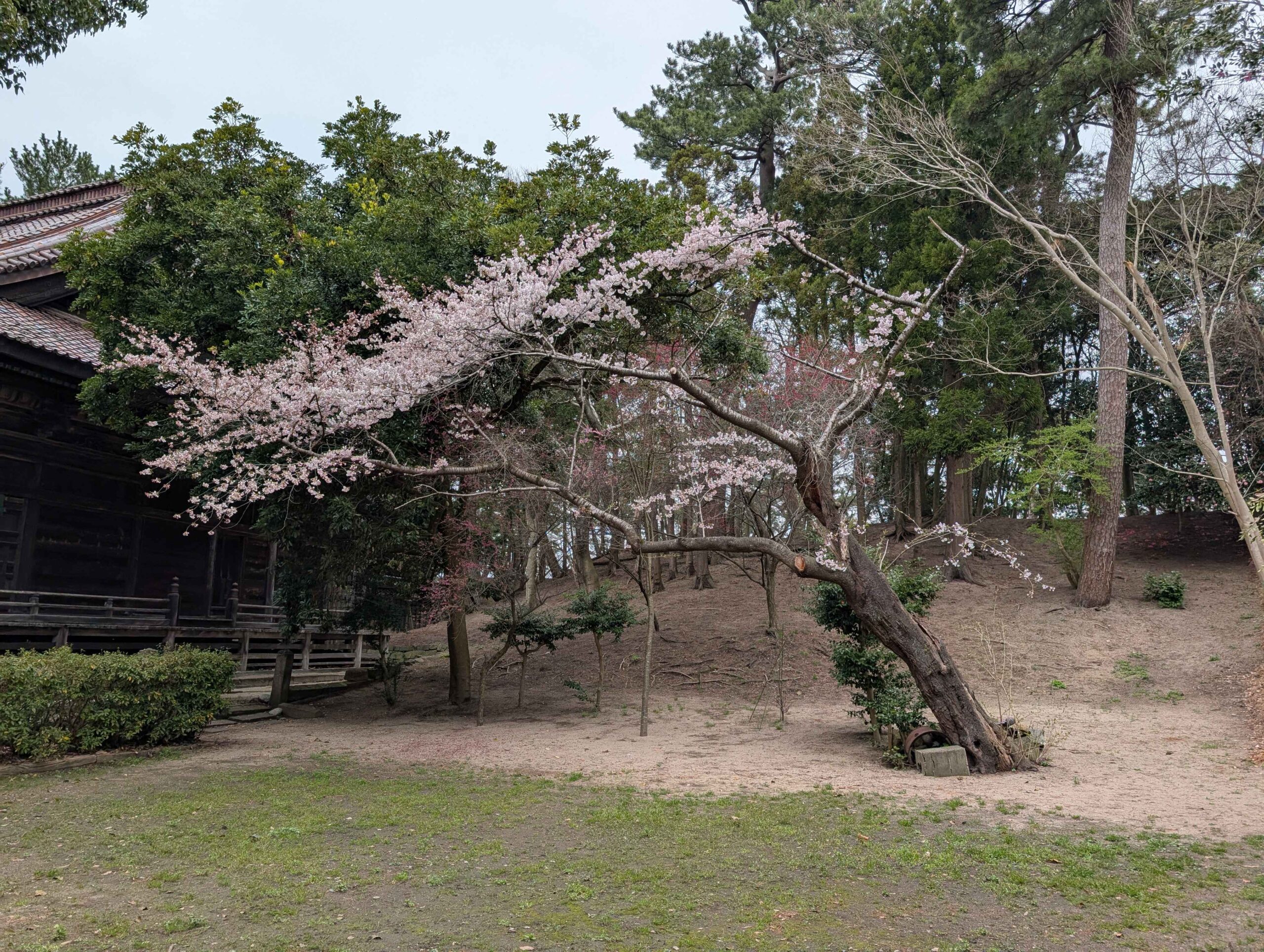
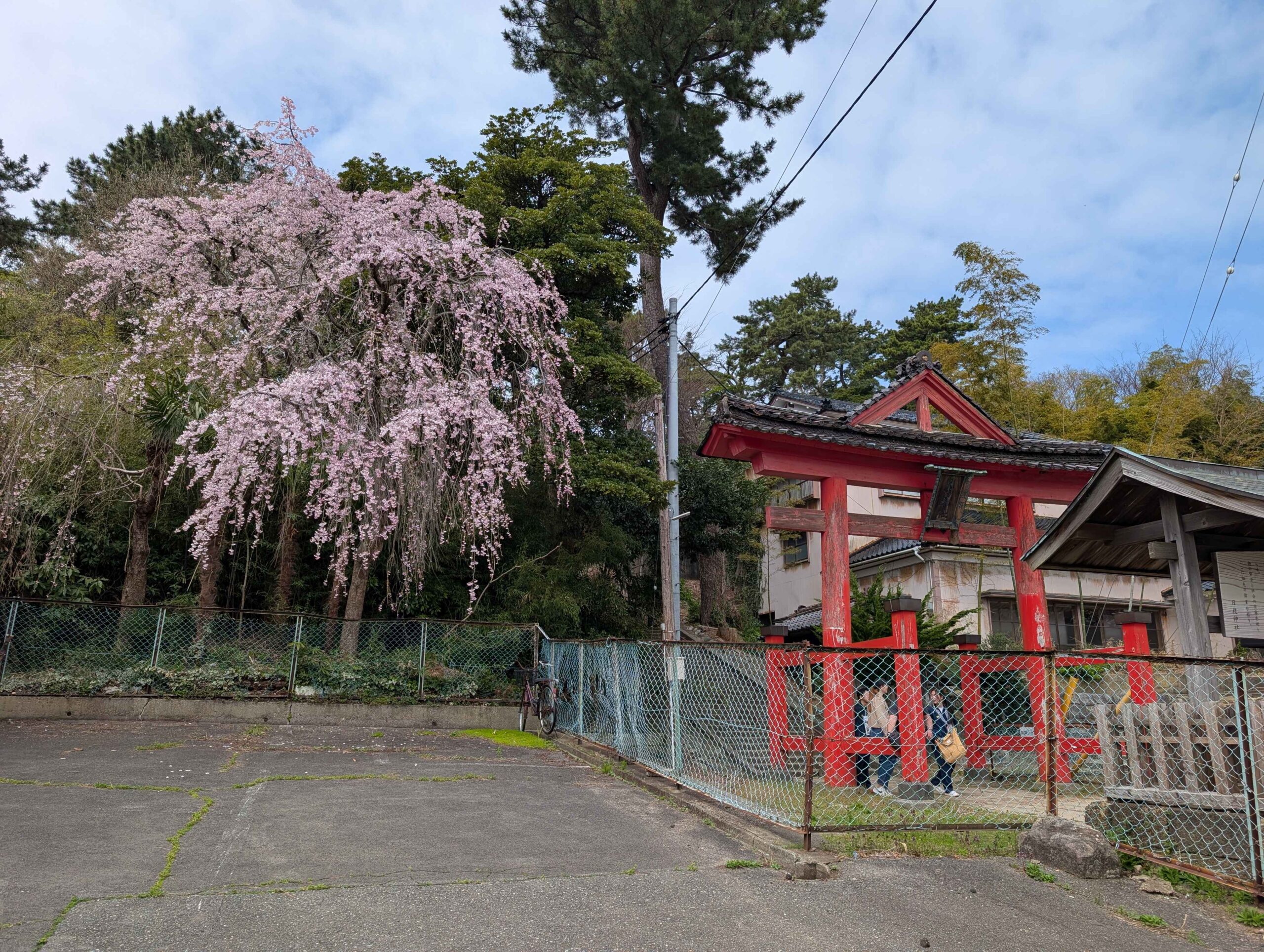
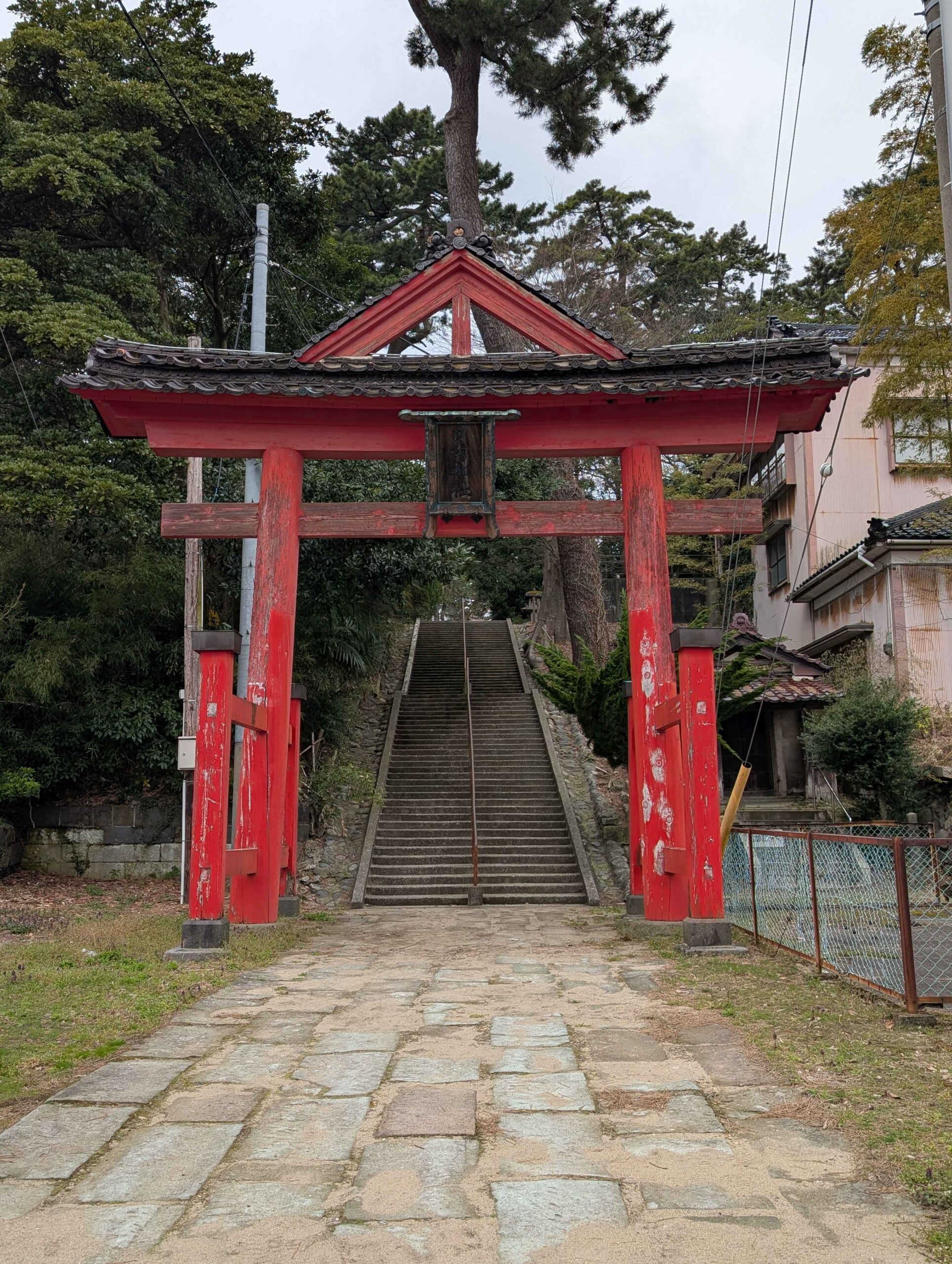
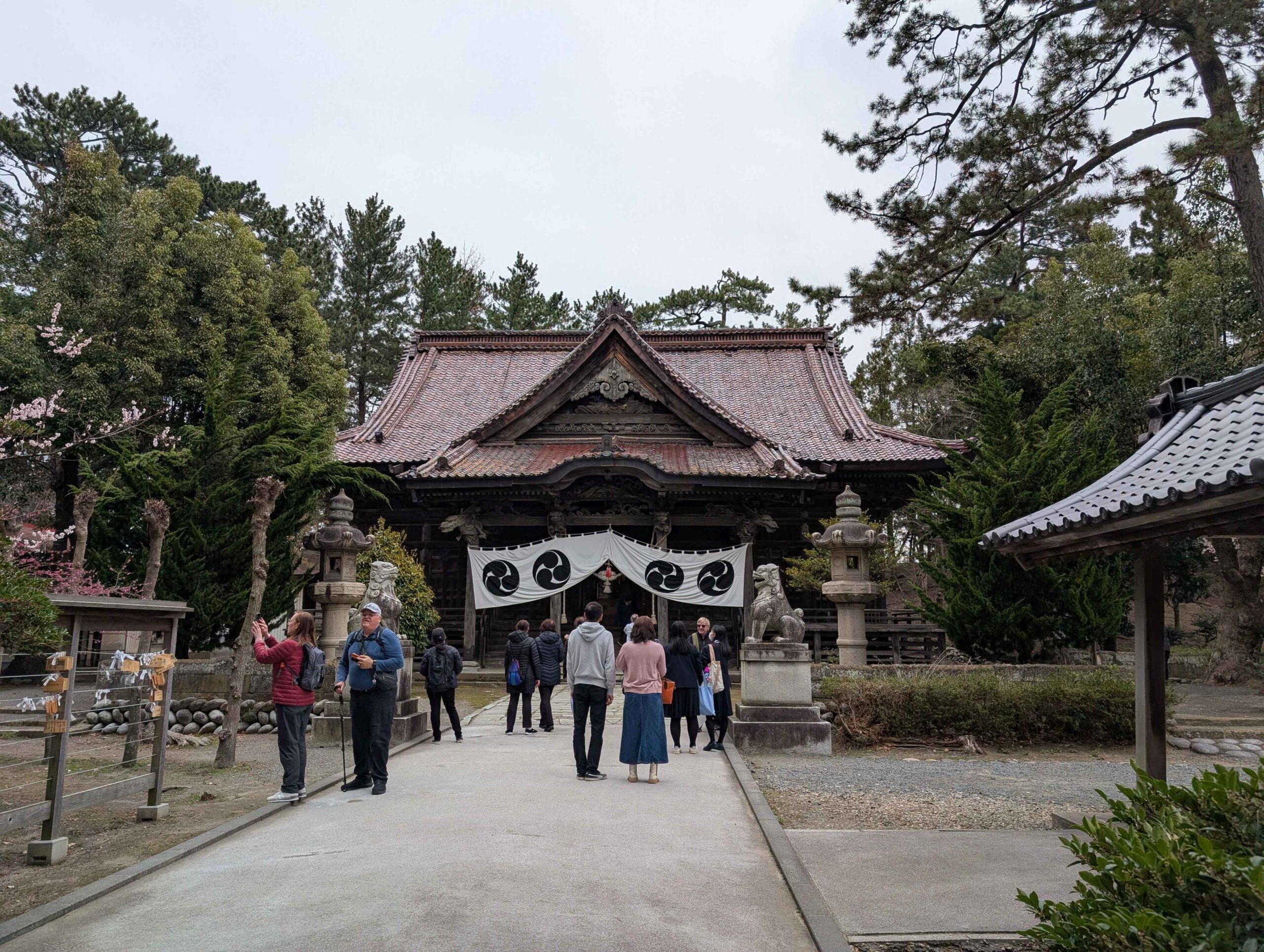
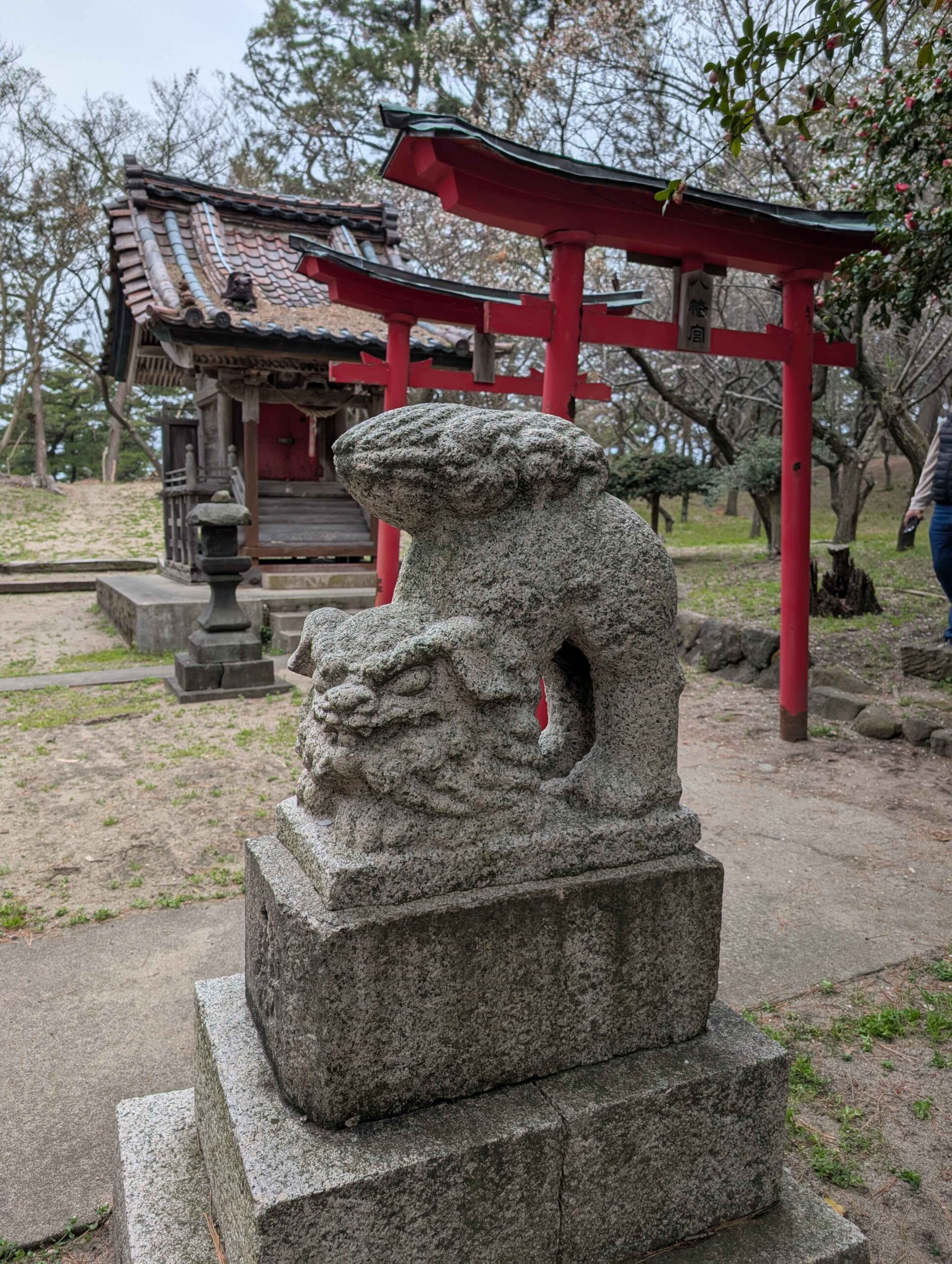
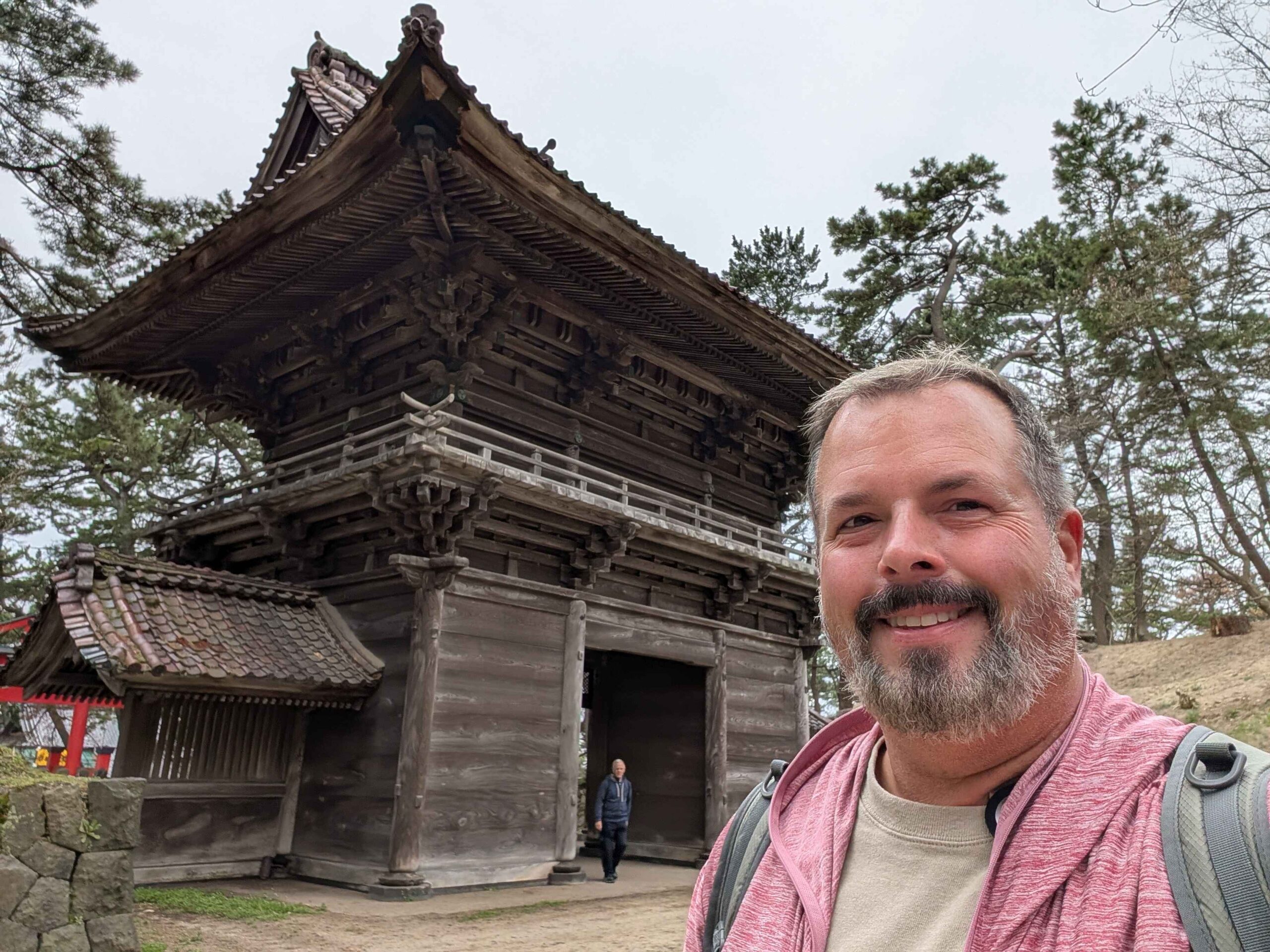
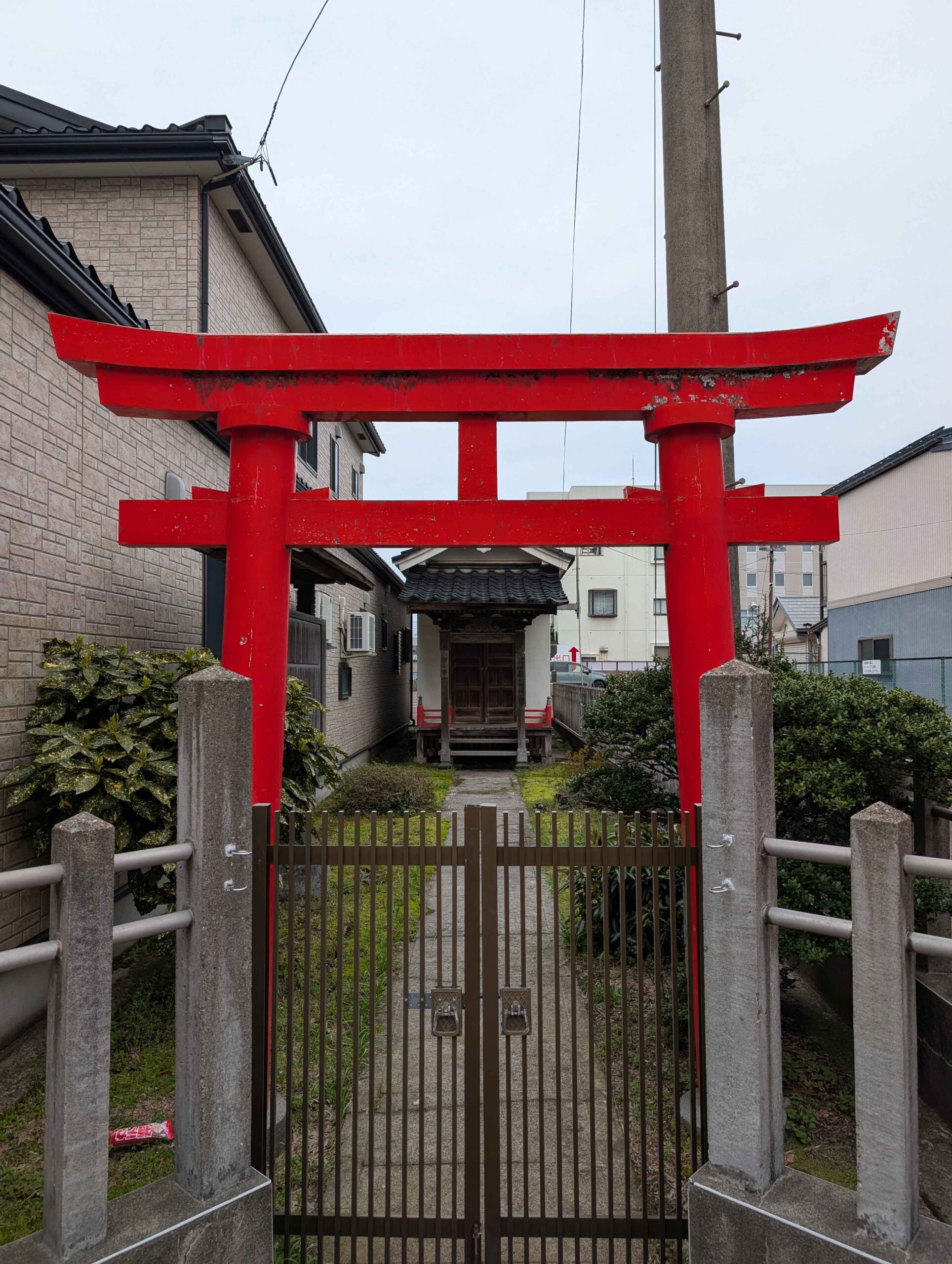
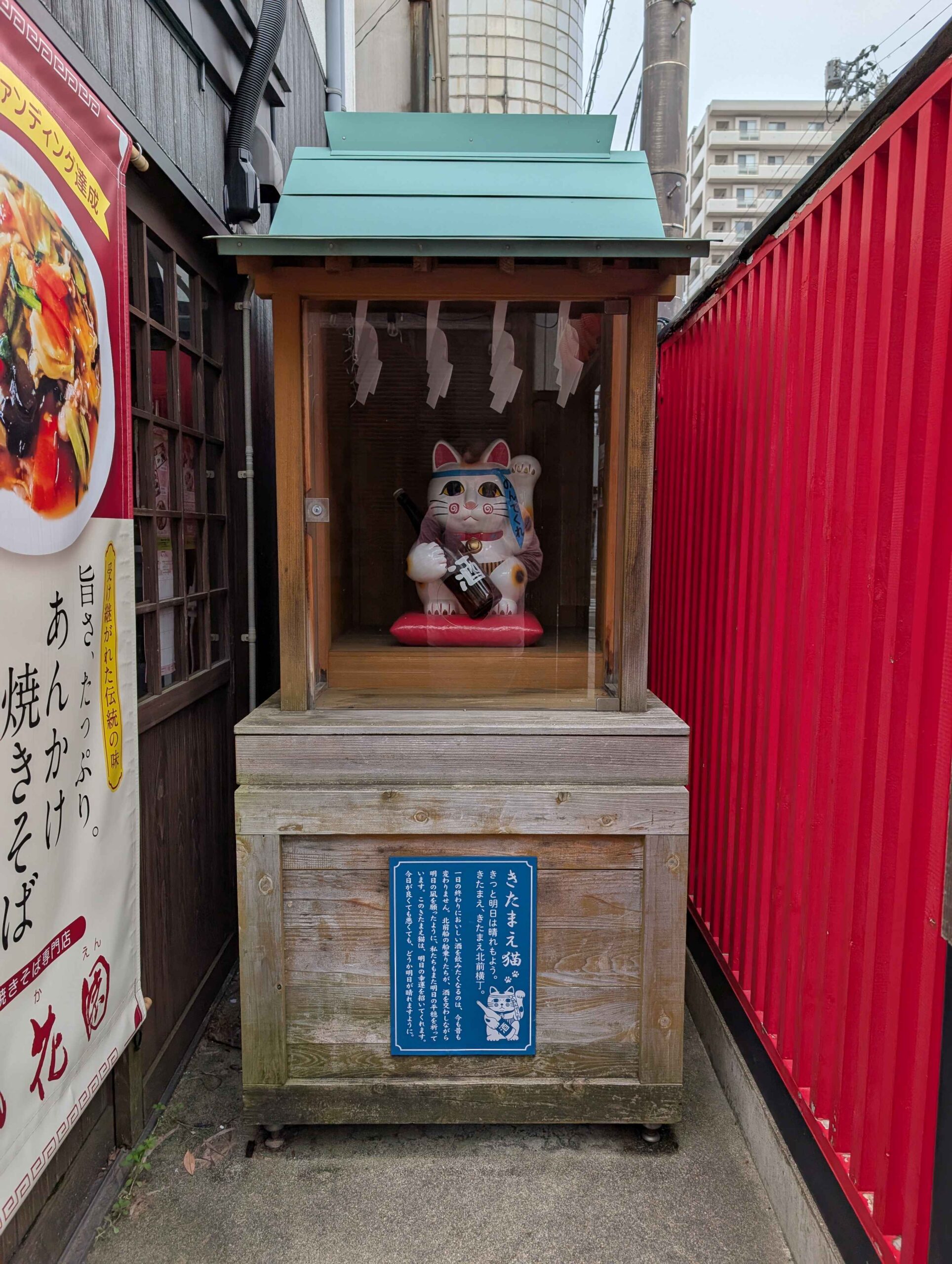
From there I wandered past the Somaro teahouse and continued uphill toward Shimohie Shrine. Red torii gates framed the entrance while stone guardian statues watched over the path. A few quiet shrine buildings sat among trees and lanterns, and I even found a small lucky cat statue tucked away near the entrance.
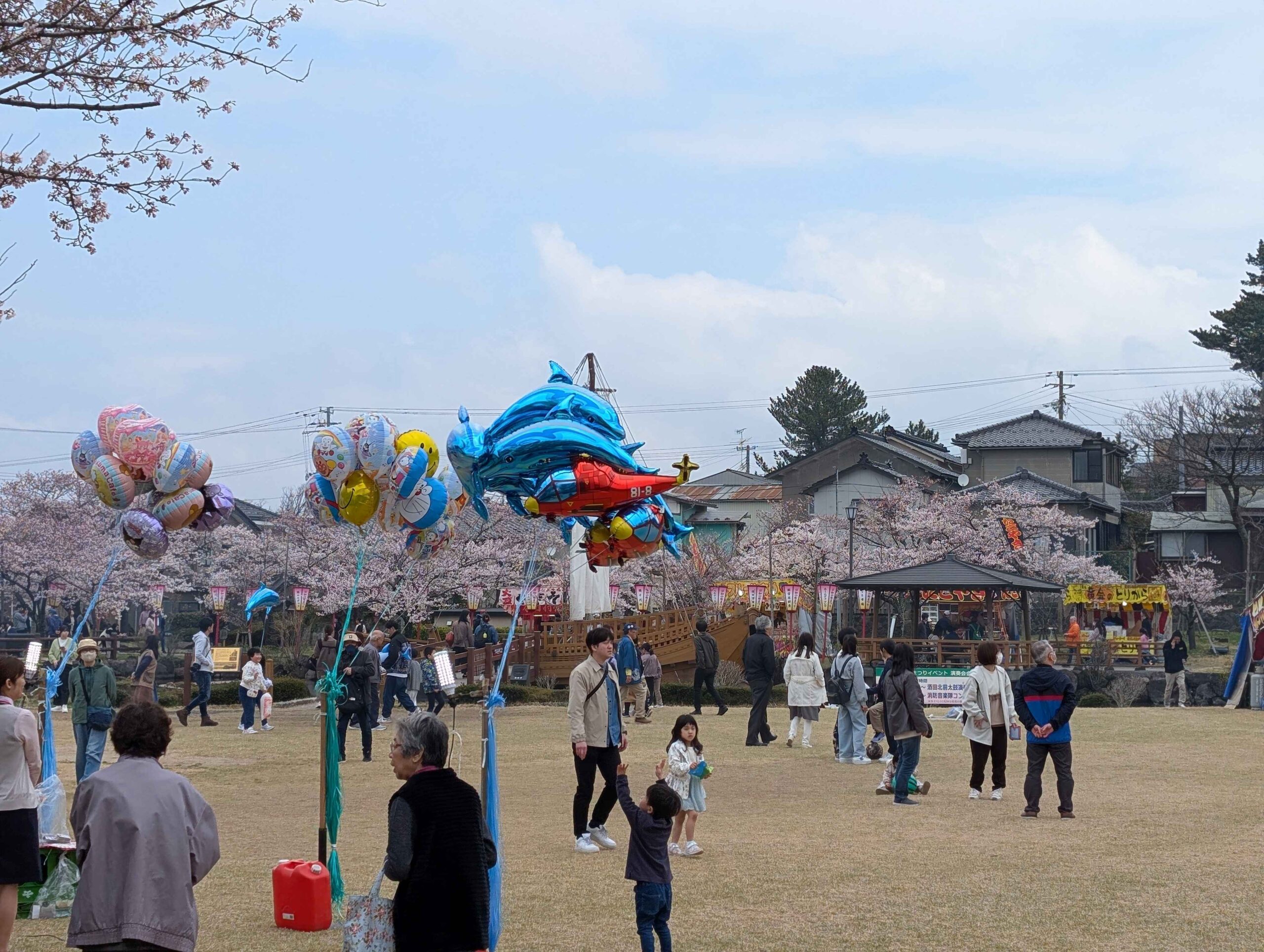
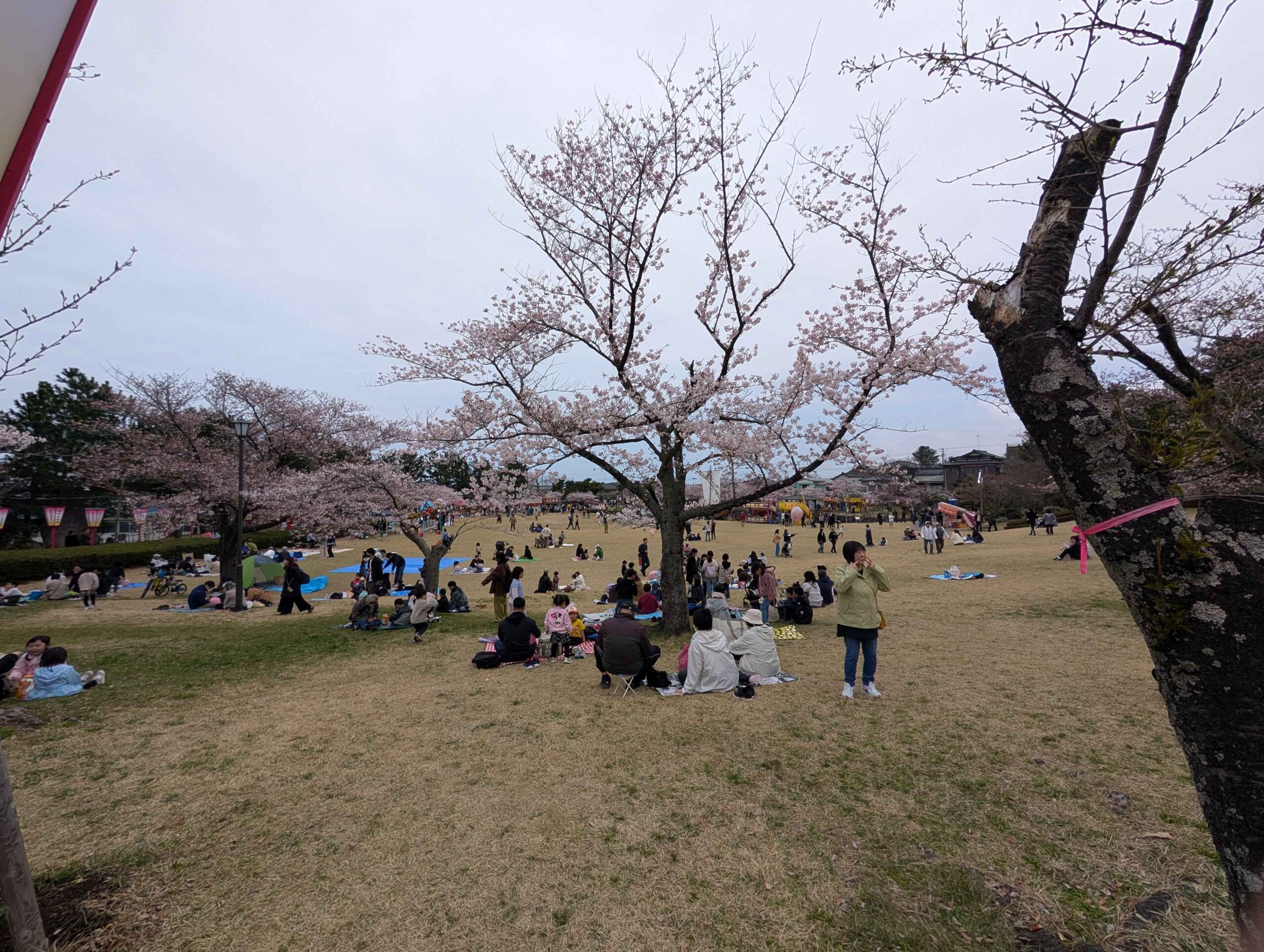
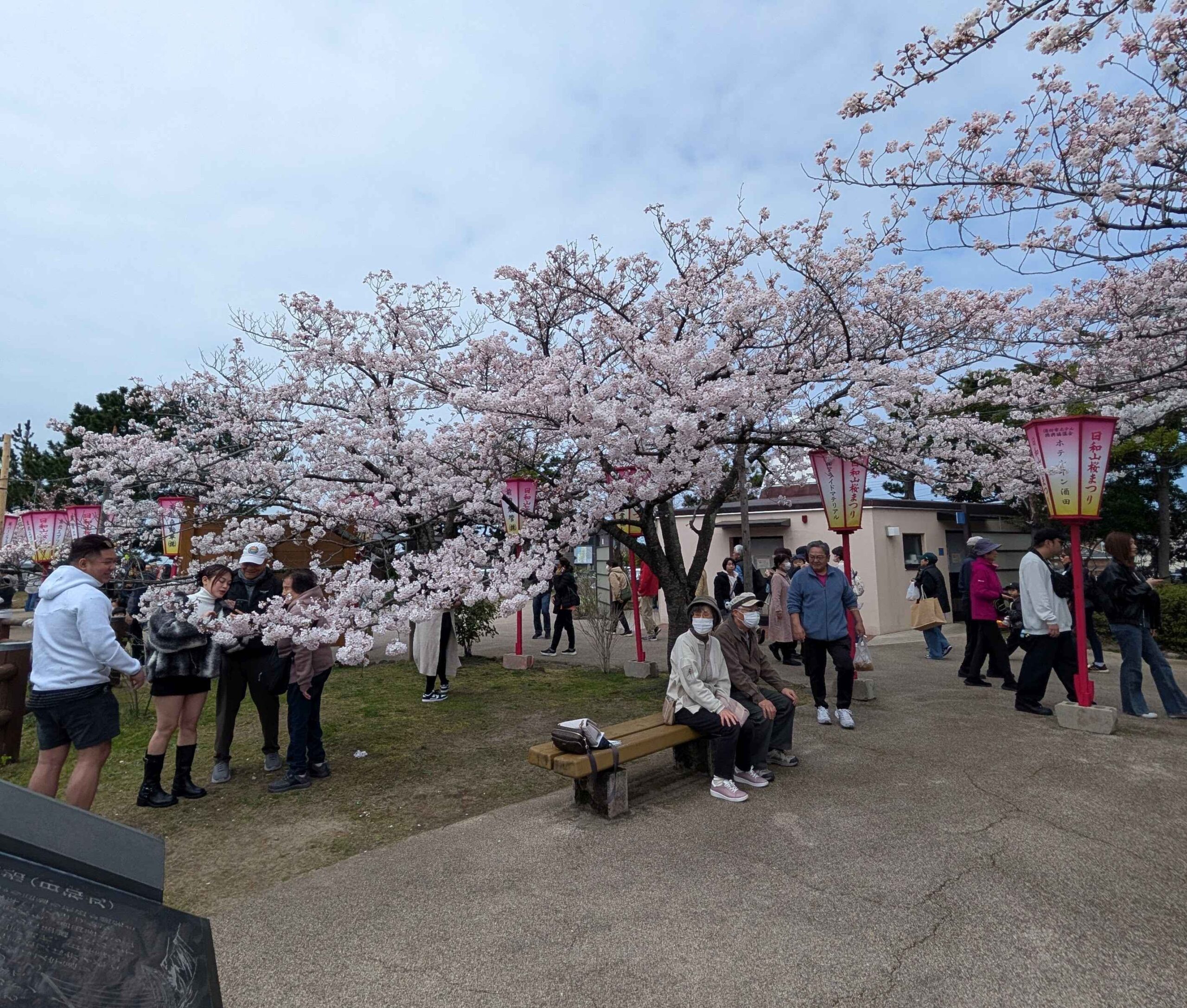
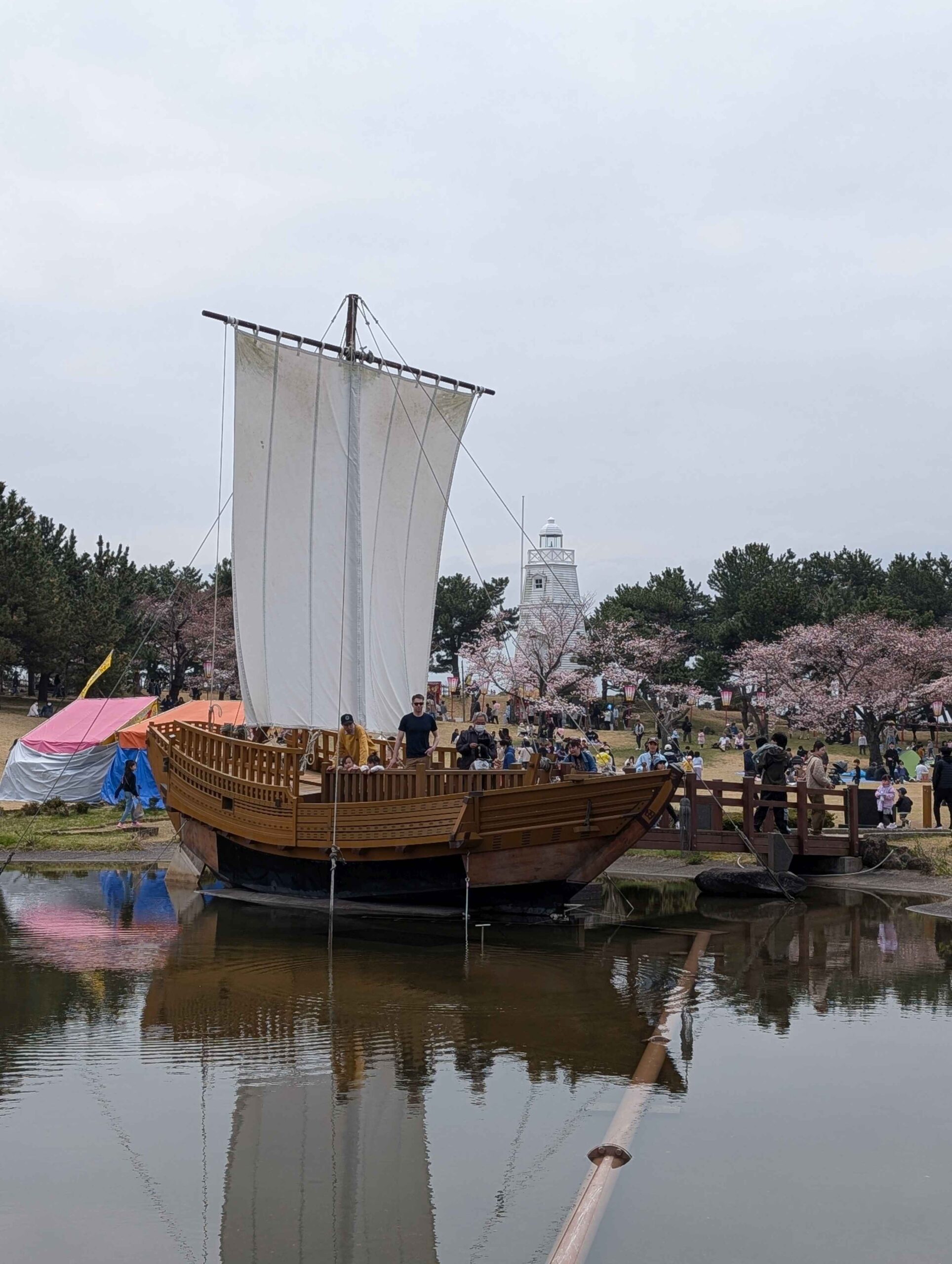
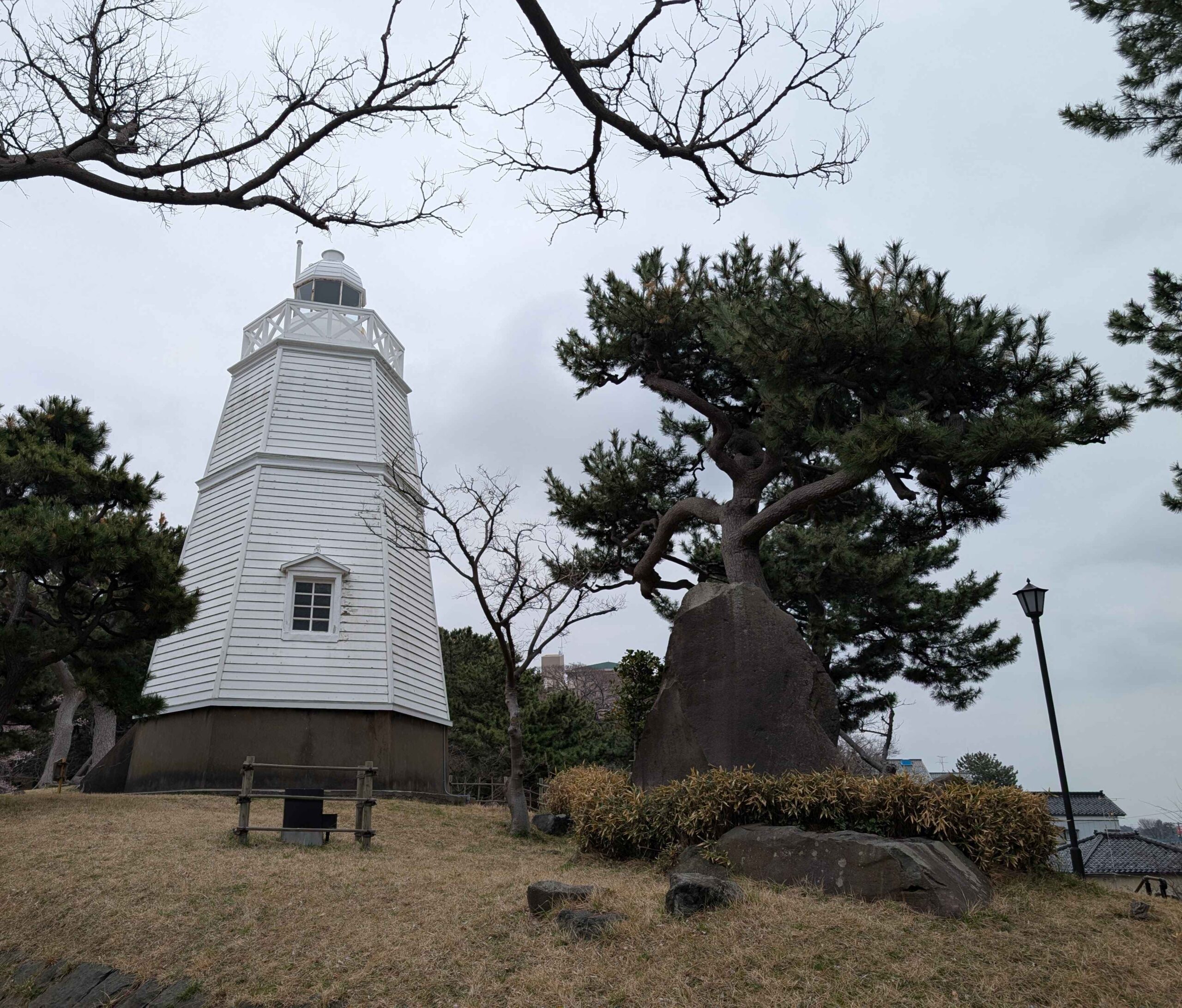
The biggest surprise of the day was Hiyoriyama Park. A spring festival was underway with locals spread across the grass enjoying hanami picnics beneath blooming cherry trees. Balloons floated above the crowd, food stalls lined the pathways, and a traditional wooden sailing ship rested in the pond near the white lighthouse. After hours of walking and photographing blossoms and shrines, I finally made my way back to the shuttle with tired feet and a full camera roll.
Sakata’s history stretches back to the Edo period when the city prospered as a major rice shipping port along the Sea of Japan trade routes. Merchants stored rice in the Sankyo warehouses before sending it onward to Osaka and other markets. Today those warehouses remain one of the city’s most recognizable landmarks and a reminder of the trade that helped shape this quiet coastal town.
If You Have More Time…
- Homma Museum of Art – One of Japan’s oldest private museums with traditional and Western art plus serene gardens.
- Kaikoji Temple (Mummies Temple) – A rare site housing the preserved remains of two self-mummified monks.
- Former Abumiya Residence – Step inside the historic home of a wealthy merchant family from Sakata’s Edo period.
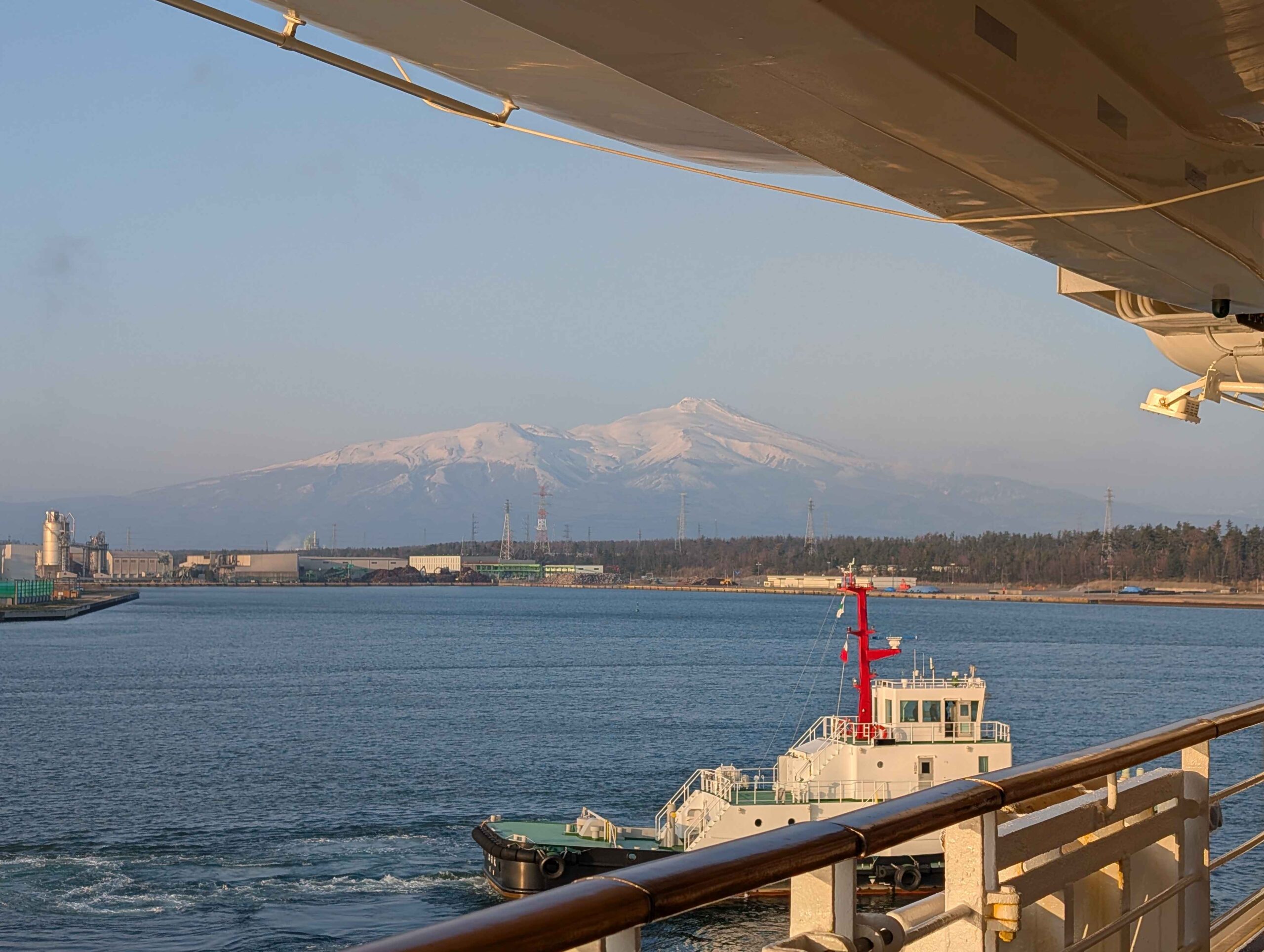
- Mount Chokai Lookout – On a clear day, the views from town or nearby lookout points showcase this stunning peak known as Dewa Fuji.
- Sanno Club – A cultural venue that preserves Sakata’s geisha legacy with seasonal performances and exhibitions.